
A Lake of Fire: On Divine Punishment and the Hereafter (The Braided River, Part 3)
The inherited picture of hell is a composite of at least four distinct things, fused by a translation history and a devotional imagination that no longer remembered which piece had come from where. The synthesis is real; the synthesis is also, very emphatically, not what it claims to be.
1. The fire that everyone pictures
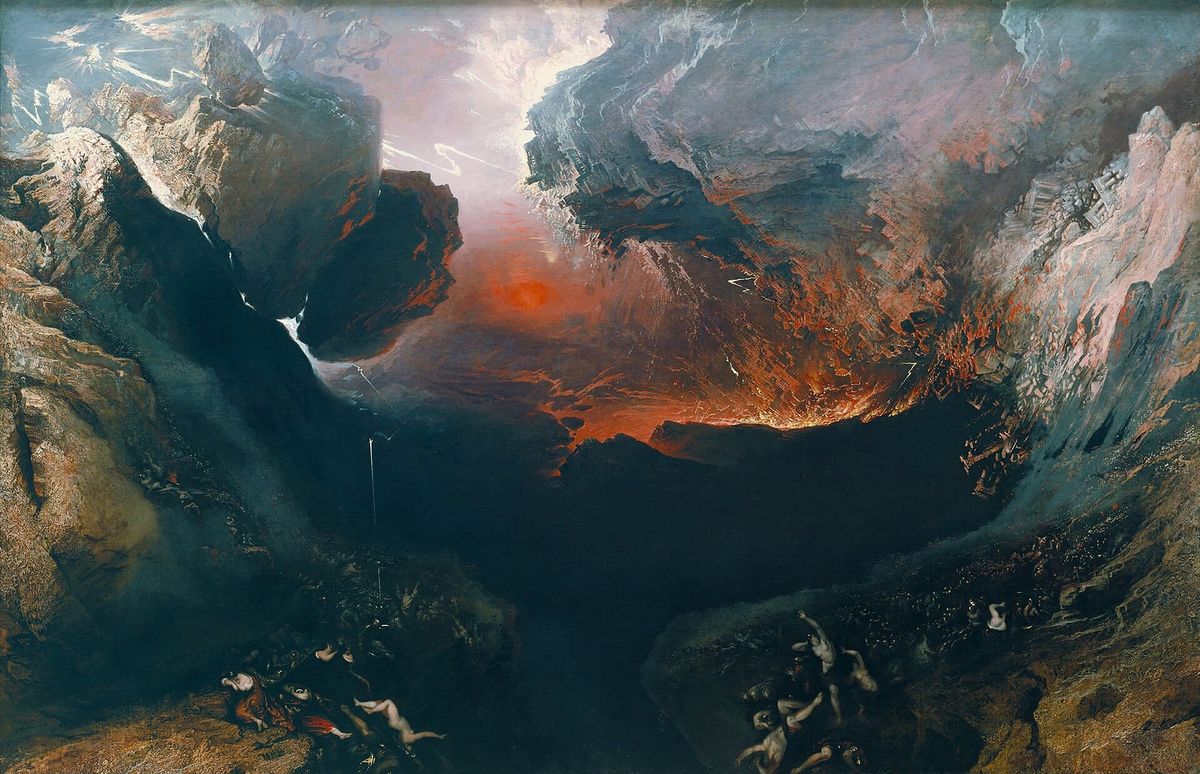
Ask a hundred people, believers and unbelievers in roughly equal measure, what hell looks like, and you will get a remarkably stable answer. There is fire. There is a lake of it, or a pit of it, presided over by a horned functionary with a pitchfork. There is permanence: whatever else hell is, it does not end. The damned are conscious, and they suffer, and they suffer forever. The picture is so widely shared that it functions less as a doctrine than as a piece of cultural furniture, something one owns without remembering having bought it.
Press a little on where the picture comes from, and the answer arrives with the same confidence as before. It comes from the Bible. It is what Jesus taught, what the prophets warned of, what Revelation describes. The picture presents itself as the plain sense of scripture, the thing any honest reader would find if they simply opened the book and read.
This is wrong, and it is wrong in the now-familiar way: not crudely, not as a fabrication out of nothing, but as a composite mistaken for a unity. The furniture is real furniture, assembled from real materials, a sort of IKEA-ized historico-philosophical/religious Poäng chair. But it is simply that the materials came from at least four different rooms, were carried in over the course of a thousand years, and were finally bolted together by a translation history and a devotional imagination that no longer remembered which piece had come from where. Dante supplied more of the inherited picture than Isaiah did, and Hieronymus Bosch more than the Gospel of Mark. To trace the genealogy is not to deny that the inheritance exists. It is to find out what one is actually holding.
2. Four words wearing one English mask
The first problem, and the one from which almost every later confusion descends, is lexical. The English word hell does the work of at least four distinct terms in the underlying languages, terms that name different things, come from different traditions, and were never synonyms.
There is Sheol, the Hebrew word for the underworld of the Hebrew Bible: the grave, the pit, the shadowy common destination of all the dead, righteous and wicked alike. There is Hades, the Greek term the Septuagint reached for when it had to render Sheol, importing along with it the whole apparatus of Hellenic ideas about the realm of the dead. There is Gehenna, which is not a cosmological term at all but a place name, a particular ravine outside Jerusalem with a particular and very ugly history. There is Tartaros, the Greek mythological abyss beneath the underworld, the prison of the Titans, which surfaces exactly once in the New Testament and not where most readers would expect. And hovering near all of these is the abyssos, the bottomless deep, and the limnē tou pyros, the lake of fire, which turns out to be the latest arrival of the lot and the one doing most of the work in the modern imagination, despite it having its first recorded expression within ancient Egyptian mythology.
English flattens every one of these into the single syllable hell, a word that derives, by way of the Old English hel, from a Germanic root for a covered or concealed place, and which therefore brings its own pre-Christian sediment to the job of translating terms it does not fit. The King James translators rendered Sheol, Hades, and Gehenna all as "hell" in various places, and the damage was done. The reader of the English Bible encounters a single undifferentiated location where the underlying texts present a set of distinct and historically layered concepts, some of which actively contradict the picture that the flattening produces. Attend to the seams, and the unity dissolves.
The remainder of this post is, in effect, an attempt to peel the four terms apart again, to ask where each came from, and to watch the moment, late and identifiable, when they were welded into the thing we inherited.
3. Sheol and its Greek disguise
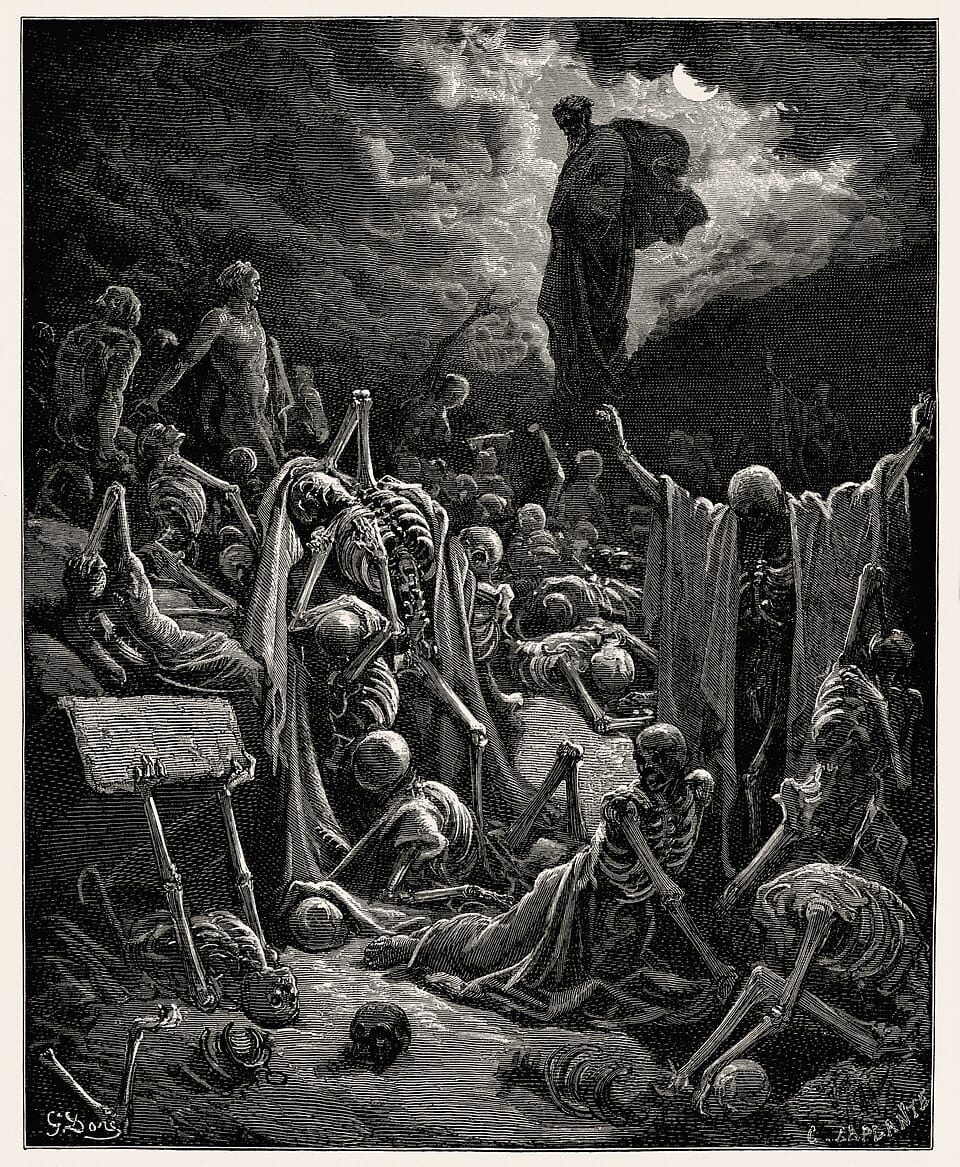
Begin at the bottom, chronologically, with Sheol. In the older strata of the Hebrew Bible, Sheol is not a place of punishment, and this is the single most important fact about it, because it is the fact the inherited picture has most thoroughly erased. Sheol is where everyone goes. The patriarch and the murderer arrive at the same destination; Jacob expects to go down to Sheol mourning, and so does the wicked man, and the destination does not distinguish between them. It is a realm of dust and silence and forgetting, a weakened half-existence rather than a torment (and in this regard, remarkably like the Mesopotamian Underworld of Kur, domain of Ereshkigal). The dead in Sheol do not praise God, not because they are being punished but because they are simply, mostly, gone. Job longs for it as a refuge from suffering, not as a threat. Qoheleth, with his usual bleak candour, observes that the same fate meets the righteous and the wicked, and that there is no work or knowledge or wisdom in Sheol whither thou goest.
This is a genuinely different cosmology from the one the tradition would later claim to have always held. There is no fire in Sheol. There is no sorting. There is, for long stretches of the Hebrew Bible, barely any afterlife worth the name, which is why the question of post-mortem justice presses so hard on the later apocalyptic writers: if the wicked prosper and die comfortably in their beds, and there is no reckoning beyond the grave, then the moral structure of the universe is in serious trouble. The developed afterlife is, in substantial part, a solution to that problem, and it is a late solution.
The Greek disguise arrives with the Septuagint. When the Hellenistic Jewish translators of the third and second centuries BCE came to render Sheol into Greek, they chose ᾅδης, Hades, the name of the Greek underworld and its presiding god. The choice was reasonable, since Hades in popular Greek usage had likewise drifted toward meaning simply the realm of the dead. But a translation is never only a substitution. To call Sheol by the name Hades is to invite the entire Greek imaginative apparatus to take up residence: the rivers, the ferryman, the judges of the dead, the geography of regions within the underworld. The Hebrew pit acquired a Greek floor plan.
By the time we reach the New Testament, Hades has been compartmentalised. The intermediate state has begun to sort its residents, as in the Lukan parable of the rich man and Lazarus, where a great gulf already divides comfort from torment within the realm of the dead. But Hades remains, structurally, what Sheol was: a holding state, a where-the-dead-are, not a final verdict. This matters enormously for reading the one New Testament book that uses the term with real precision. In Revelation, Hades appears four times, and in every case it behaves as an intermediate power rather than a final destiny: Christ holds the keys of Death and Hades; Hades follows behind the pale horse; and at the climax, Death and Hades surrender the dead who are in them to be judged, after which Death and Hades are themselves disposed of. Hades is the warehouse, not the furnace. Keep that distinction in hand, because the entire force of the book's ending depends on it.
4. Gehenna was a real place
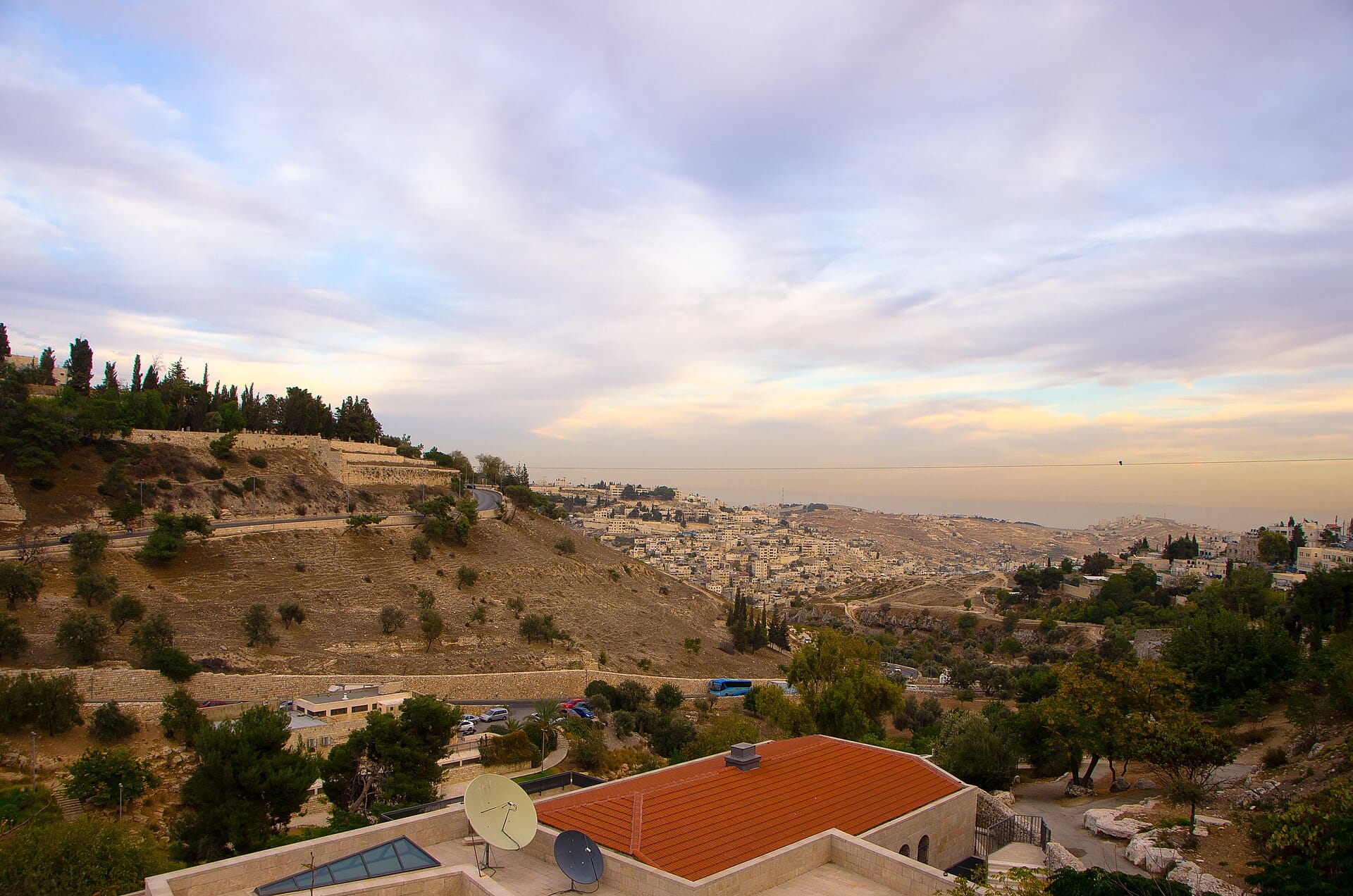
Now the strangest of the four, and the one whose history is most completely forgotten by those who use the word's descendant most often. Gehenna is a Greek transliteration of the Aramaic and Hebrew Ge-Hinnom, the Valley of Hinnom, and the Valley of Hinnom is not a metaphysical region. It is a piece of ground. It runs along the southern and south-western edge of the old city of Jerusalem, and you can walk it today.
Its reputation is earned, and earned by something concrete. The valley, and specifically a site within it called Topheth, was where, according to the prophetic and Deuteronomistic indictment, the people of Judah burned their children as offerings to a deity the texts call Molech, and sometimes Baal. The horror of this is the engine of the whole later development. Jeremiah returns to it again and again, declaring that the Lord never commanded such a thing, that it never entered the divine mind, and that the place would be renamed the Valley of Slaughter, so thick with the unburied dead that there would be no room left to bury them. The reforming king Josiah is credited with defiling Topheth precisely so that no one could any longer pass a child through the fire there. The valley was, in short, the single most cursed patch of land in the Judahite imagination, the place where the worst thing had happened, marked by fire and by the killing of the innocent.
It is worth pausing on a piece of received wisdom here, because it is both popular and almost certainly false. A great many sermons and study Bibles explain that Gehenna became an image of damnation because the Valley of Hinnom served, in the Second Temple period, as Jerusalem's perpetually smouldering rubbish dump, a place of unceasing fire and worms consuming refuse, so that Jesus' hearers would have understood the reference immediately. This is a tidy explanation, and it has the great merit of being entirely undocumented. There is no archaeological evidence and no ancient textual evidence for a continuously burning municipal tip in the valley. The earliest known source for the rubbish-dump claim is a comment by the medieval rabbi David Kimchi, writing around 1200 CE, more than a millennium after the fact.¹ The image of Gehenna did not need a garbage fire to acquire its associations. It already had child sacrifice, prophetic curse, and slaughter. The valley was a place of fire and death long before anyone imagined it as a landfill, and the later metaphysical fire is the descendant of the cultic and prophetic fire, not of municipal sanitation.
The transformation from cursed valley to eschatological symbol happens in the apocalyptic literature of the Second Temple period, where the geography near Jerusalem is reimagined as the site of the final judgement by fire. By the time of the Synoptic Gospels, Gehenna has become a name for the place of fiery destruction that awaits the wicked after judgement, and here is the crucial point for our untangling: in the Gospels, the word Jesus uses for that place is Gehenna, not Hades. The intermediate warehouse and the place of final punishment are different words for different things. English fuses them. The Greek does not.
5. Tartaros and the imprisoned angels
The third foreign term enters from a direction most readers never look. Tartaros is Greek, and it is not the underworld proper. In Hesiod it is the deep place beneath even Hades, as far below the earth as the heavens are above it, walled in bronze, the prison into which Zeus casts the defeated Titans after the war in heaven.² It is, precisely, a penal institution for divine rebels, a category distinct from the general realm of the human dead. The Greeks did not send ordinary mortals to Tartaros. They sent gods who had lost the Titanomachia.
The New Testament uses this word exactly once, and not as a noun. In the second letter attributed to Peter, the author says that God did not spare the angels who sinned but, in a single remarkable verb, tartarōsas them, "Tartarus-ed" them, consigning them to chains or pits of gloom to be kept until the judgement. The verb is a hapax, a word that occurs nowhere else in the Greek scriptures, and its appearance is one of the most concentrated little nodes of braiding in the entire canon. Consider what is happening. The author is describing the bound rebellious angels of the Enochic tradition, the very Watchers we met in Part 2 (and recall, this story is not in the canonical Bible proper for the majority of denominations), the ones Raphael chained in the desert until the great day of judgement. And to name their imprisonment, the author reaches past the Hebrew and Aramaic vocabulary of his own tradition and picks up a Greek mythological term for the prison of the Titans. The Enochic cosmology and the Hesiodic cosmology meet in a single coined verb, and the seam is right there on the surface of the text for anyone who reads the Greek.
This is the braided river in miniature. The bound-Watcher framework, which Part 2 traced from the Mesopotamian apkallu through 1 Enoch into the New Testament, surfaces here under a loanword from Greek myth, because the Greek language offered a ready-made concept for exactly this: a place of imprisonment, deeper and worse than the ordinary underworld, reserved for divine beings who rebelled and lost. The author did not have to explain the choice. His readers knew what Tartaros was. They simply may not have noticed that they were now using it to describe the fallen angels of a Jewish apocalyptic text rather than the Titans of Hesiod.
And note the structural consequence. Tartaros, the prison of the rebel powers, is conceptually the nearest cousin of the lake of fire, far nearer than Hades the warehouse of the dead. When the modern imagination pictures hell as a place of fiery punishment for the devil and his angels, it is reaching, without knowing it, for the Tartaros concept, which the New Testament uses for the bound angels and which Revelation will reconfigure into its lake. The lexeme Tartaros does not appear in Revelation. The concept is everywhere in it.
6. The lake of fire, assembled on the bench
Which brings us to the lake of fire itself, the limnē tou pyros, the single image that supplies more of the inherited picture than any other and that is, genealogically, the most thoroughly manufactured. It is not a primitive datum of the tradition. It is a late assembly, and the parts are identifiable.
The closest single source is the Book of the Watchers and the rest of 1 Enoch, where the apocalyptic geography is full of pits and abysses and pools of fire prepared for the rebellious angels and the wicked.³ Enoch is shown, on his cosmic tour, a chasm of fire where the disobedient stars and the fallen Watchers are confined; he sees the place of punishment as a fiery abyss, and he sees the valley near Jerusalem, the Gehenna site again, marked as the place of final judgement. The Enochic literature does for the lake of fire exactly what it did, in Part 2, for the demon: it supplies the load-bearing imaginative structure that the canonical texts then presuppose without explaining.
To the Enochic fire-abyss, the tradition adds further materials. Daniel contributes the image of the beast slain and its body given to the burning flame, the destruction of the rebellious power by fire as the culmination of judgement. Isaiah contributes, with a directness that is easy to miss, the Topheth imagery again: a burning place prepared, deep and wide, its pyre fire and abundant wood, kindled by the breath of the Lord like a stream of brimstone. The Hebrew prophet is describing the destruction of a specific historical enemy, but the language, fire and sulphur and a prepared burning place, becomes raw material for the later eschatological image. And behind all of it, in the cultural background rather than the textual foreground, sits the Greco-Roman Tartaros, the fiery prison of the rebel powers, mediated into Jewish apocalyptic thought rather than imported neat.
The lake of fire, in other words, is a composite of a composite. It draws its fire from Topheth and Isaiah, its function as a prison for rebel powers from the Enochic Watcher tradition and behind that from Tartaros, its role as the culmination of judgement from Daniel, and its specific image of a lake, a body of fire rather than a pit or a furnace, from the apocalyptic imagination's own elaboration of these inherited parts. By the time the seer of Patmos sits down to write, every component is available, and the work of Revelation is not invention but synthesis: the gathering of a millennium of accumulated imagery into a single climactic image. This is why the lake of fire feels so primordial and so biblical to the inheritor. It is the distillate of everything upstream. It is also, for precisely that reason, the latest thing in the system, the terminus of a long process rather than its source.
And beyond that, it has now become ubiquitous in the language and ideology of human interaction: "go to hell!" "that scared the hell out of me!" "oh my god, I'm going to hell!" and depictions of the fiery underworld exist across all forms of media and discourse. Such a basic, foundational concept that we reference daily in casual and formal speech is received by us not cleanly off the pages of history or religion or philosophy but as this entire giant complex of ideas, the vast majority of which we are unaware of, and certainly almost never consider in the conjunction necessary to understand them. Why do we employ concepts such as this? As we saw last time, it's not the only one. The vast majority of our cultural touchstones fall into this category, and we are still explicating and iterating them today. Culture has not stopped; it marches on, an invincible machine, and the river continues to flow. Even now, pieces such as this add to the mythology that future generations will inherit and utilize. By simply learning the lesson I am imparting here, you are stepping into the Braided River and what you take away from it, what you transmit to someone else you discuss this with, continues the flow.
This is why the concept under discussion here is so potent and powerful. Only once we realize the topography and nature of the river's flow can we hope to plot a course down it.
7. Revelation 20 and the death of Hades
Now we can read the famous passage properly, and find that it is doing something far more sophisticated than the inherited picture allows. The twentieth chapter of Revelation stages a two-stage eschatology of exactly the kind we find across Second Temple apocalyptic, and of the kind that has clear parallels in the roughly contemporary 4 Ezra and 2 Baruch: first an intermediate state, then a final judgement, then a terminus.⁴ The structure is the key to the meaning.
In the sequence, Death and Hades give up the dead who are in them. This is the warehouse releasing its contents for the assize. The dead are judged according to their works. And then comes the move that the casual reader passes over and the careful reader cannot get past: Death and Hades are themselves thrown into the lake of fire. The personified powers, the realm of the dead and the death that fed it, are consigned to the same fire as the beast and the false prophet and the dragon. And the text glosses the lake of fire, at this exact point, as the second death.
Attend to the logic, because it is exact. You cannot throw a thing into itself. If Hades is cast into the lake of fire, then Hades and the lake of fire are not the same place, and the entire flattening that produces the inherited picture is refuted by the grammar of the sentence that the inherited picture most relies on. Hades, the intermediate realm of the dead, is here abolished. The Greek underworld, the warehouse, the whole apparatus of the holding-state, is itself destroyed in the eschatological fire, leaving, in the chapters that follow, only the new creation on one side and the second death on the other.
Richard Bauckham and David Aune both read this, persuasively, as a deliberate piece of demythologising on the seer's part.⁵ The author has inherited the entire vocabulary of the afterlife, Sheol and Hades and the lake of fire, and rather than simply deploying it, he stages its supersession. The realm of the dead is not eternal; it is a temporary structure that the final act dissolves. Death itself dies. This is a theologically radical move dressed in the most traditional imagery available, and it is the precise opposite of the static, eternal, furnished hell of the inherited picture. The text that supposedly founds the doctrine of an everlasting underworld of torment is, read in its own terms and its own Greek, narrating the demolition of the underworld.
What survives the demolition is the second death and the lake of fire, and here the text is genuinely reticent in ways the tradition would later refuse to be. Whether the second death is unending conscious torment, or annihilation, or something the imagery is not designed to resolve, the text does not say with the precision that later systematics demanded of it. The image is doing apocalyptic work, the dramatic and final defeat of every power hostile to God, and apocalyptic images are not propositions in a doctrinal manual. The hardening of the lake of fire into a specified eternal-conscious-torment mechanism is a later development, the product of centuries of theological elaboration working on an image that, in its scriptural setting, was pointed in a notably different direction: toward the death of death.
8. The braided river of the afterlife
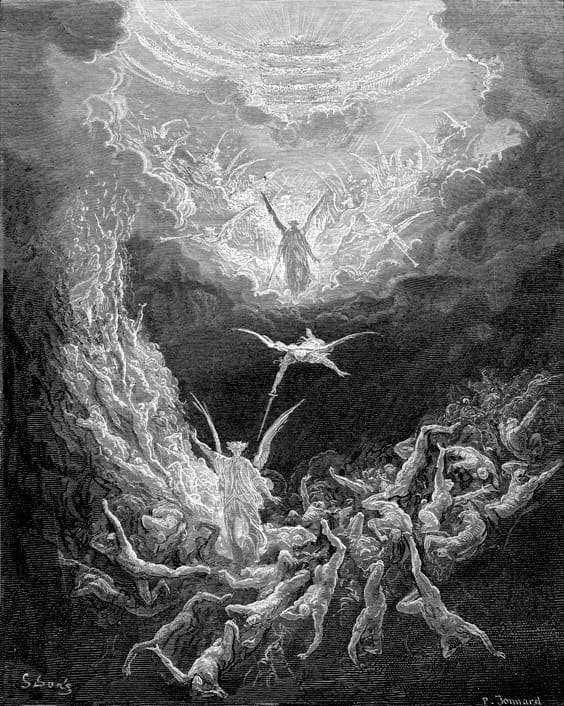
Stand back and look at what the genealogy has shown. The inherited hell, the lake of fire that believer and secularist alike can picture without effort, is a composite of at least four distinct things that the English word hell fused into one. It is Sheol, the morally neutral Hebrew grave where everyone went and no one burned. It is Hades, the Greek mask the Septuagint placed over Sheol, an intermediate warehouse of the dead. It is Gehenna, a literal cursed valley outside Jerusalem, a place of child sacrifice and prophetic slaughter whose fire was cultic and historical long before it was metaphysical. And it is Tartaros, the Greek prison of the rebel gods, surfacing once as a coined verb to describe the bound Watchers of a Jewish apocalyptic text. Over and behind these sits the lake of fire, the latest arrival, assembled from Enochic abysses and Danielic flame and Isaian Topheth and the cultural memory of Tartaros, and then, in the one text that deploys it most fully, deployed in order to be transcended, the underworld consigned to its own fire so that death might die.
The inheritor of the modern picture holds all of this at once and as one thing, and could not, asked on the street, name a single one of the four sources or the line of fusion that joined them. The picture presents itself as the plain sense of a single book. It is in fact a thousand-year synthesis, carried across two languages and at least three religious cultures, hardened into doctrine by centuries of elaboration that the scriptural texts themselves do not require and in places actively resist. This is not a debunking. The synthesis is real; people have lived and died inside it; it has shaped law and art and conscience for two millennia. It is simply that the synthesis is a synthesis, a braided river and not a spring, and to know that is to know what one is actually working with.
The methodological observation is the same one Part 2 reached by the other braid, and the convergence is the point: trace the demon and trace the fire, and both lead back into the same Second Temple apocalyptic literature, which is itself drawing on inputs older and more various than its inheritors imagine, from Ancient Egyptian, Babylonian, and Zoroastrian sources, as well as what we now believe to be some form of proto-Indo-European mythology, all of which encountered each other in the ancient Bronze Age, intermixed, and split back off to their various heimat to grow, change, and recombine later down the centuries.
Christian eschatology is, in its bones, Second Temple Jewish apocalyptic eschatology, and that body of thought was not handed down intact from Sinai. It was assembled, in the Persian and Hellenistic periods, out of native Israelite materials and a great deal that was not native at all.
Which is the thread the next instalment will pull. We have now twice found ourselves arriving at the Second Temple synthesis and treating it as a kind of bedrock. It is not bedrock. The developed apocalyptic framework, the cosmic dualism, the periodised history moving toward a final judgement, the resurrection of the dead, the elaborate angelology and its mirror in a developed demonology, has a genealogy of its own, and a substantial part of that genealogy runs east, through the encounter between the Judahite exiles and the empire that returned them, into the religious world of Iran. Part 4 follows the river upstream into Persia, and asks how much of what the West has called Christian was, at a decisive moment, Zoroastrian. In this regard, I am pulling us out of a single broader cultural movement (spawned in the Fertile Crescent and the Mediterranean Sea) and introduce the river to the wider world.
1. The attribution of the rubbish-dump etymology to Rabbi David Kimchi (Radak), in his comment on Psalm 27, and the absence of any earlier or archaeological support for it, are set out in Lloyd R. Bailey, "Gehenna: The Topography of Hell," Biblical Archaeologist 49 (1986): 187–191. The claim has been repeated uncritically in a great deal of homiletic and study-Bible literature ever since. ↩
2. Hesiod, Theogony 720–819, on Tartaros as the bronze-walled prison of the Titans, situated as far beneath Hades as earth is beneath heaven. ↩
3. On the fiery abysses and places of punishment in 1 Enoch, see in particular the Book of the Watchers and the journey material (10:13, 18:9–16, 21:7–10, 54:1–6) and the judgement scenes (90:24–27). George Nickelsburg's two-volume Hermeneia commentary on 1 Enoch remains the standard English-language reference, as noted in Part 2. ↩
4. On the two-stage eschatology (intermediate state, judgement, terminus) and its parallels in 4 Ezra and 2 Baruch, see the broader treatments in Alan E. Bernstein, The Formation of Hell: Death and Retribution in the Ancient and Early Christian Worlds (Ithaca: Cornell University Press, 1993). ↩
5. Richard Bauckham, The Climax of Prophecy: Studies on the Book of Revelation (Edinburgh: T&T Clark, 1993), and David E. Aune, Revelation, Word Biblical Commentary (3 vols., Dallas: Word, 1997–1998), both read 20:14 as a deliberate demythologising of the inherited underworld, the consigning of Hades itself to the eschatological fire. ↩