
Stage Four: The Trump Simulacrum and Attention Economy Decay
The contemporary media apparatus has completed Baudrillard's fourth stage of simulation: coverage no longer reflects, distorts, or substitutes for political reality — it generates one. Donald Trump did not cause this. He is its perfect product.
There is a debate that has consumed American political commentary for the better part of a decade, and it goes something like this: is the media too hard on Donald Trump, or not hard enough? Does the press hate him and work to undermine him, or does it secretly love him and work to amplify him? A recent thesis has emerged that "the media likes Trump and wants to help him."
It took me a long to get there, but I am now fully on board with the mtsw diagnosis that the media likes trump and wants to help him. It’s counterintuitive because they WERE tough on him in 2016 but the key is that he was hurting the republican brand then and needed to be… https://t.co/EaN4060u5T
— Denis B. Huppert 🇫🇷 (@dennisbhooper) January 22, 2026
And it's true.
Taking this as our argument, we must inquire into whether this is actually true. In doing so, we are not going be able to give a straightforward answer, because, as always, the context of our language game matters.
To begin our answer, let us take up my first thesis: the participants in this debate are serious people, and they produce serious arguments, and they are asking entirely the wrong question.
1. Asking the Wrong Question
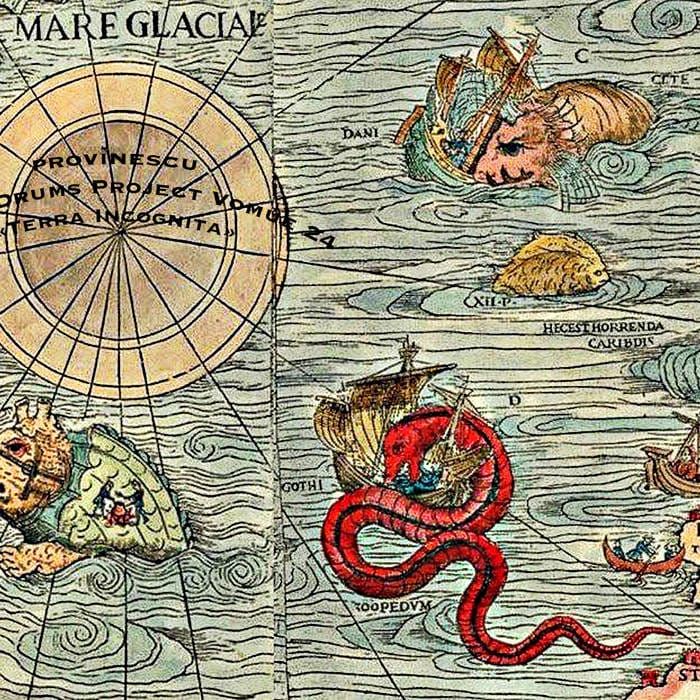
The question of media bias assumes that the press has a stable political orientation that explains its behavior toward any given political figure. Cover too favorable? Bias in his direction. Cover too hostile? Bias against. This is a framework built for a media environment that no longer exists. It is the framework of the map-reader who has not noticed that the map has replaced the territory: who is still trying to navigate by a document that no longer refers to anything outside itself.
The better question is structural: what does the contemporary media apparatus actually optimize for, and what kind of political figure does that optimization produce as its ideal object? Answer that question and the Trump coverage problem dissolves. It doesn't need a bias explanation. It has a much simpler one.
But to get there, we need to understand how we arrived at the media environment we actually inhabit, and that requires taking a detour through some unfashionable theory. Attend.
In which we present our argument
In exacting detail and prolix fullness, naturally.
2. The Medium Shapes the Mind
2.1 McLuhan and the Cognitive History of Mass Media
Before we can diagnose the current moment, we need Marshall McLuhan's prior question: what does a medium do to the mind that uses it?
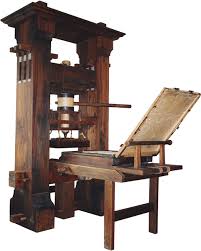
McLuhan's central argument in The Gutenberg Galaxy (1962) is one of those ideas that sounds like an exaggeration until you sit with it long enough to see that it isn't. The printing press, he argued, didn't simply distribute information more efficiently. It restructured human cognition. Print is linear. It is sequential, uniform, repeatable, and consumed in solitude and silence. It demands that the reader follow a chain of argument from premise to conclusion across hundreds of pages, holding earlier sections in memory while processing later ones, building cumulative understanding through sustained engagement. It trains what McLuhan calls "typographic man" — private, analytical, capable of abstraction, habituated to the idea that truth is something you arrive at by following a logical sequence, not something that simply presents itself to you in a flash.
This sounds like a description of a cognitive style, which it is. But McLuhan's larger claim is that this cognitive style was not natural or inevitable; it was produced by the medium. The Renaissance individual, the Protestant conscience with its emphasis on personal interpretation of Scripture, the Enlightenment rationalist with his faith in reason's sequential march from evidence to conclusion… these are not timeless human types. They are the products of approximately four centuries of print culture shaping and reshaping the minds that grew up inside it.
Why does this matter for a discussion of Donald Trump and the modern media? Because the press freedom the Founders enshrined in the First Amendment, the "informed citizenry" that every civics class identifies as the foundation of democratic self-governance, the whole idea of a reading public capable of encountering an argument, evaluating its evidence, and reaching a considered judgment… all of this presupposes the cognitive habits that print culture produced. The newspaper, the pamphlet, the long-form essay: these were not just delivery mechanisms for information. They were the infrastructure of a particular kind of democratic mind.
McLuhan was genuinely ambivalent about what came after print. He thought television was a "cool" medium—low-definition, requiring viewer participation to complete the image—and he was oddly optimistic about its potential to retribalize society in productive ways. He was wrong about that, or at least he was premature. But the trajectory he identified was correct: each successive medium reorganizes the human sensorium, redistributes cognitive emphasis, and produces a different kind of perceiver. The newspaper reader and the television viewer are not the same animal. And neither of them is the same animal as the person whose primary cognitive environment is an algorithmically curated, perpetually scrolling, short-form video feed.
McLuhan's question, updated for the present is: what is that environment is producing?
2.2 The Attention Collapse and the Death of Irony
The research on this is not comfortable reading. Paltaratskaya (2023) documented what researchers are beginning to call attentional conditioning: as users scroll rapidly through short-form video applications, the brain learns to expect quick, high-reward stimuli, and reorganizes itself to favor brief attention bursts over sustained concentration.¹ A 2024 study from the University of Science and Technology of China found something more alarming still: subjects who watched short-form videos for thirty minutes before attempting a reading comprehension task showed a 31% reduction in sustained reading attention and scored 22% lower on comprehension of complex multi-paragraph texts, and the impairment persisted for approximately 45 minutes after video exposure ended.² The medium doesn't just occupy your attention while you're using it. It damages your capacity for a different kind of attention for nearly an hour afterward.
The research on digital reading more broadly tells a similar story. Mangen and Kuiken (2014) documented what they called a shift from deep to superficial reading processes in digital environments, finding that habitual print readers are significantly less likely to multitask during reading than habitual screen readers — which is another way of saying that print readers are more capable of the sustained, single-channel attention that comprehension of complex text requires.³ Haliti-Sylaj and Sadiku (2024), in a study of 150 college students, found that frequent short-form video consumers reported significantly reduced capacity for sustained attention, with measurable effects on their ability to engage with tasks requiring extended focus.⁴
What gets lost, specifically, in this attentional environment? Many things, of course, but the one I want to focus on is irony.
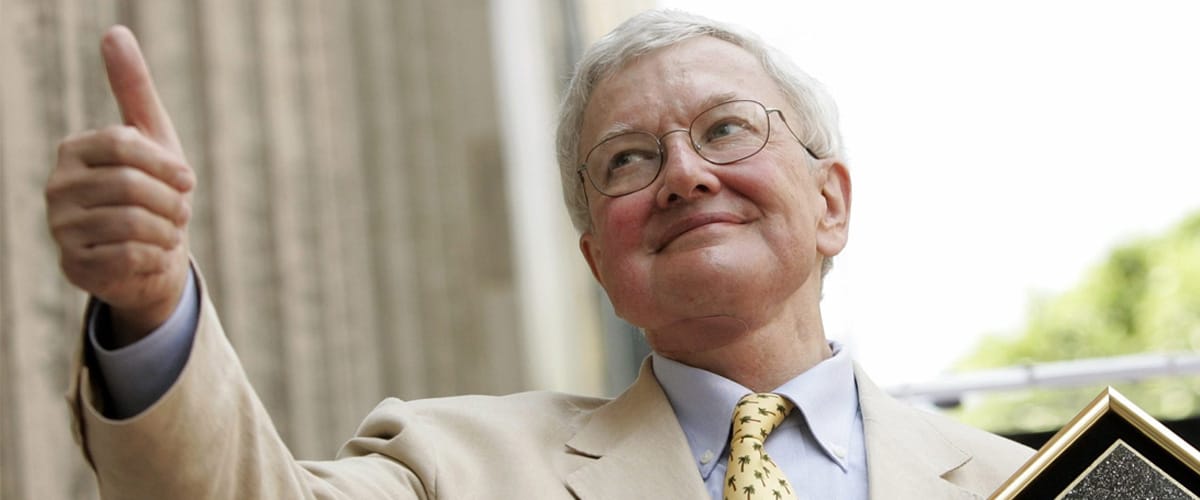
In September 2008, Roger Ebert published a piece on his blog at RogerEbert.com titled "This Is the Dawning of the Age of Credulity." The occasion was a satirical piece he had written, presented without explicit irony markers, mimicking the rhetoric of creationism. A significant portion of his readership had taken it literally. His diagnosis was characteristically direct: "We may be leaving an age of irony and entering an age of credulity. In a time of shortened attention spans and instant gratification, trained by web surfing and movies with an average shot length of seconds, we absorb rather than contemplate."⁵
The essay invokes Jonathan Swift's "A Modest Proposal" as the classical model: a work whose irony was perceptible because eighteenth-century readers were trained to pause, to hold the surface meaning in suspension, to interrogate what they were reading against their knowledge of the author, the genre, and the world. That pause, Ebert suggested, was becoming culturally unavailable. Writing in 2008, before TikTok, before Instagram Reels, before the algorithmic feed had become the primary environment of public cognition, his prescience is striking. The mechanism he identified was already visible in the early architecture of the web. What has followed is its acceleration to something qualitatively different.
It is worth noting that some critics at the time argued Ebert's creationism piece was simply bad satire: too deadpan, too close to the thing it was parodying, insufficiently marked. I find this unpersuasive. Reading the original piece, it is not difficult to divine Ebert's actual position. The tells are there for anyone who pauses to look for them. That many readers did not pause is precisely Ebert's point, and—I would argue—precisely the critics' error. They diagnosed a failure of the text when the failure was in the reading.
Irony is a slow cognitive operation. To recognize it, the reader must parse the surface meaning, hold it in working memory while scanning for contextual incongruity, retrieve relevant background knowledge about the author, the genre, and the situation, and then resolve the tension between surface presentation and context in favor of the non-literal reading. None of this is cognitively demanding for a practiced reader. But it requires a deliberate deceleration, a moment where you resist the impulse to react to what is in front of you and instead hold it in suspension against what you know.
The attention economy is a machine for eliminating that moment. The feed is designed so that the cost of moving on is always zero and the reward for moving on is immediate. The cognitive habit being trained across billions of interactions every day is: process surface, react, move. The step where you hold the surface reading in suspension and interrogate it against context is exactly the step that the medium selects against. Do it too often and you fall behind. The feed does not wait.
What emerges from this training regime is what I'll call radical immediacy: a perceptual mode in which the surface presentation simply is the content, full stop. There is no beneath. Or rather (and this is the important formulation) the neural architecture required to look beneath has atrophied from disuse, in the same way that a muscle atrophies when the body learns to accomplish the same task with a different one.
This is how the internet's specific modality extends and deepens McLuhan's insight. Print is single-medium, sequential, and gated by publisher discretion; it imposes friction by its nature. You cannot scroll past a paragraph. You cannot get a dopamine hit by switching to something else. The friction, which we have retrospectively come to think of as a limitation, was cognitively productive in ways we did not understand until we removed it. The internet is mixed-media, simultaneous, and instantaneous on demand. Text competes with image, video, sound, and interactive elements in the same viewport, and it loses. Even when someone does pause to read, they read in the rapid-scan mode that the surrounding environment has trained.
Here is the consequence for democratic epistemology, and it is the bridge between McLuhan and the argument that follows: a polity trained to process only surfaces cannot evaluate the relationship between a representation and what it represents. It cannot ask whether the map matches the territory, because that question requires holding the map and the territory in tension simultaneously, suspending the immediate presentation long enough to compare it against an independent referent. That is precisely the kind of comparative, suspended judgment that radical immediacy forecloses.
A civilization of surface-readers is not merely susceptible to the fourth stage of simulation. It is the cognitive substrate that the fourth stage requires.
The Return of Simulacra and Simlulation
In which we investigate an earlier train of thought.
3. Baudrillard and the Simulation
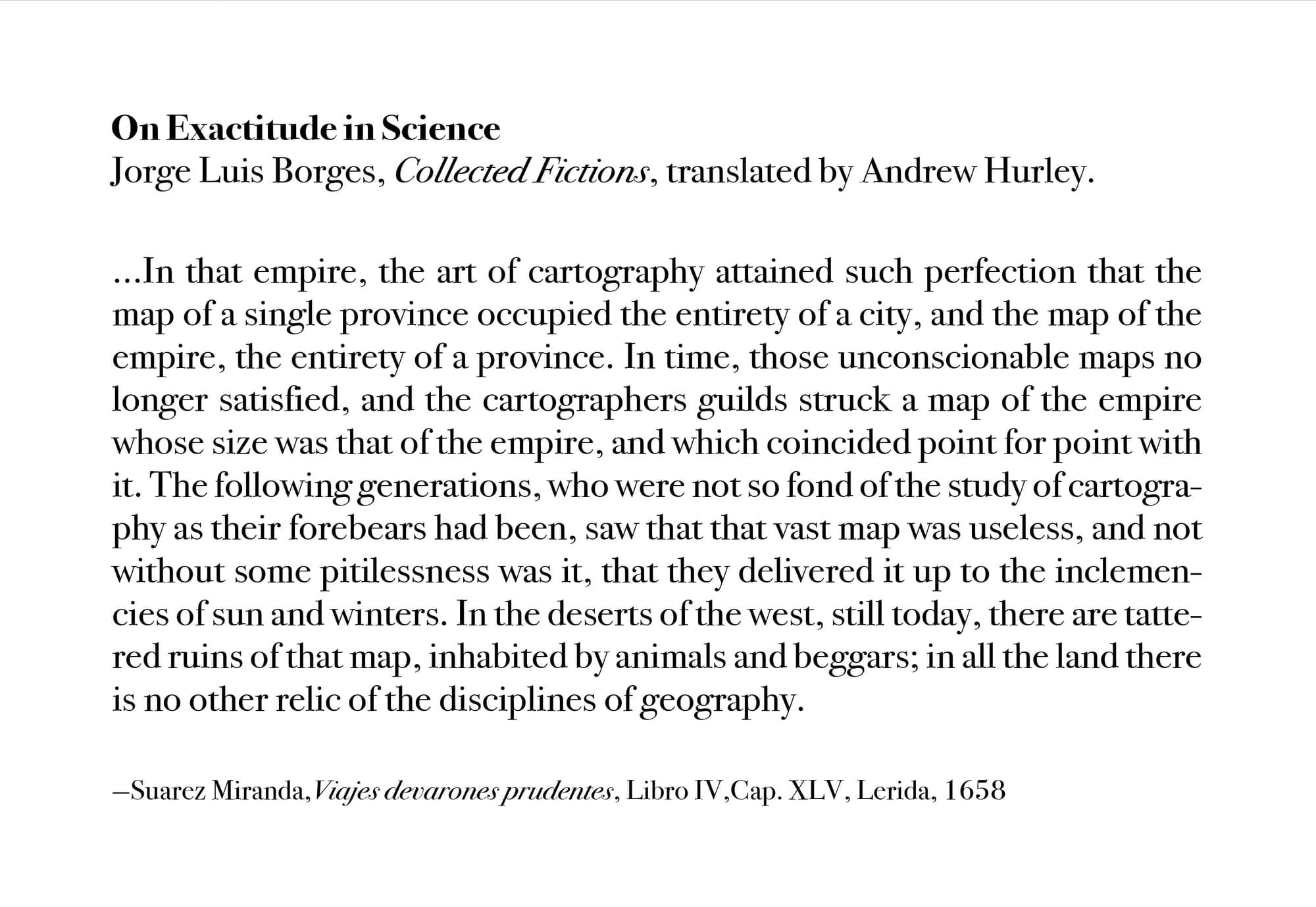
Jean Baudrillard's Simulacra and Simulation (1981) opens with a short fable by Jorge Luis Borges about an empire whose cartographers become so ambitious that they construct a map at a scale of one-to-one, a map the exact size of the empire itself, which we read back in Section 1. The map eventually supplants the territory, and it is the map, not the land, that rots in the desert sun. Baudrillard's move is to invert the fable: in the postmodern condition, the map does not come after the territory. It comes first. What we take to be reality is generated by representations that precede and produce it.
This is a difficult idea, and Baudrillard does not always make it easier. It has to do with semiotic theory, or the substitution of signs for units of semantic meaning, much in the same way a medieval grimoire would use a sigil for the name of a spirit of the air to be conjured. The sigil is not the spirit. It does not resemble the spirit. It functions as an operational shorthand that, through repeated ritual use, comes to carry more semantic weight than the thing it is to represent, to the point where the spirit's existence is secondary to the reality of the sigil. This is Baudrillard's trajectory in miniature: the sign begins as a representation of something real, then distorts it, then substitutes for it, and finally comes to replace it by generating a reality in which it refers only to itself. The grimoire doesn't describe the spirit. It summons something. Whether that something is what the grimoire claims is a question the tradition eventually stops asking.
As I have noted elsewhere, our society is one of narrative construction and semantic satiation that goes beyond our ability to encapsulate things in mere language. But for our purposes, his most useful contribution is a taxonomy of four stages through which an image (any image, any representation) can be related to whatever it purports to represent.
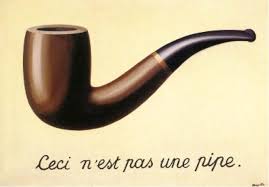
In the first stage, the image is a reflection of a basic reality. It is imperfect, necessarily selective, distorted by the limitations of the medium and the perspective of the observer, but it refers to something real outside itself, and that reference is its purpose and its measure. Think of Edward R. Murrow broadcasting from London during the Blitz, or Walter Cronkite's voice cracking slightly when he announced the death of John Kennedy. The image was a window. A smudged, imperfect window, but nevertheless a window through which we perceived the latent semantic content described by Husserl (in the piece linked earlier regarding the "surplus of meaning").
In the second stage, the image begins to mask and pervert a basic reality. It still refers to something outside itself, but it distorts that referent in the service of interests it does not acknowledge. William Randolph Hearst's newspapers manufacturing the public appetite for the Spanish-American War. Cold War journalism that processed every global conflict as a move in a Soviet chess game, whether or not that frame illuminated or obscured what was actually happening on the ground. The image here is not a window but a funhouse mirror: reality is still there, but systematically deformed by the glass.
The obvious question about this stage is: why don't people simply see the distortion? If the Cold War press is systematically misrepresenting events by filtering them through an ideological lens, why don't readers notice the lens? The Marxist answer (false consciousness, manufactured consent) is available but unsatisfying, because it requires positing a true reality that the ideology conceals, which second stage of simulation technically allows but does not explain why the concealment works so reliably.
Martin Heidegger's account of das Man gives a better mechanism. We do not encounter the world as isolated cognizing subjects who then receive media representations and compare them against unmediated reality. We are always already thrown into a social world: geworfen into a pre-given horizon of meanings, values, and interpretive frameworks that determine what shows up as real, significant, and worth attending to in the first place. This is the Lichtung, the clearing: Being is never nakedly given but always disclosed within a particular historical and social horizon, which means what we perceive as simply how things are is always the product of a prior social formation of perception itself.
Das Man, defined by Heidegger as the anonymous They-self, the public interpretation, what "one" thinks and says and notices, is not an external force that distorts an otherwise undistorted perception. It is the medium within which perception occurs. Heidegger's Gerede, idle talk, is not falsehood: it is the leveling-down of discourse to what the They-self already, in some sense, knows. And this is precisely how the second stage funhouse mirror operates. It does not need to be clever. It has no need to argue. It simply speaks in the language of das Man by presenting its systematic distortions in the idiom of common sense, of what everyone knows, of how things obviously are. The distortion isn't experienced as distortion because the viewers' very perceptual apparatus has been formed by the same social world that built the mirror. You cannot see the frame from inside the frame.
This is also why Hearst's war or the Cold War frame does not feel like propaganda to the people inside it. Propaganda implies a gap between the image and a reality the propagandist knows to be different. But if the propagandist is himself formed by das Man (if the editors and publishers are themselves thrown into the same horizon as their readers)the distortion is not cynically manufactured. It is simply how the world discloses itself within that social horizon. The funhouse mirror is built into the clearing.
In the third stage, the image masks the absence of a basic reality. This is where Neil Postman's Amusing Ourselves to Death (1985) becomes the essential American companion text to Baudrillard. Television, Postman argued, did something categorically different to political discourse than print had done. It transformed politics into entertainment, not by covering political entertainment, but by making entertainment the only available mode of political communication. The thirty-second attack ad. The presidential debate as performance. The State of the Union as spectacle. In each case, the image of politics substituted for the activity of politics, but the image still gestured toward something it claimed to represent. You could, in principle, point behind the curtain. The curtain was there all along.
Previously, the semantic content is present (but distorted) and yet still organized around a genuine signified, a genuine referent. Now that we have progressed to the third stage, however, the clearing begins to organize itself around the absence of the signified. The media apparatus no longer discloses or reveals a world distorted by its thrownness; instead, it discloses a world in which the political referent has been evacuated and replaced by the image-as-entertainment, the spectacle for spectacle's sake. We no longer possess authenticity in the Heideggerean sense (wresting one's ownmost Being from das Man); to grasp that would be structurally much more difficult, because the They-self is now constituted entirely by the image-consumption as we progress into the fourth stage of simulation.
In the fourth stage, the image bears no relation to any reality whatsoever. It is a pure simulacrum: the copy without an original, the boundless simulated. It does not reflect, distort, or substitute for reality. It generates a reality that consists entirely of media events referring to other media events, with no outside. The coverage does not represent the political world. It is the political world. Or rather, for the overwhelming majority of citizens whose only access to events is through media, there is no meaningful distinction between the two.
The transition from the third to fourth stage is not a matter of degree. It is qualitative. In the third stage, the curtain is still there, even if what's behind it is thin. In the final stage, there is no backstage. And (crucially, in light of Section 2, supra) the audience has lost the cognitive habit of looking for one.
The Attention Economy
In which capitalism vies for your eyes and brain
4. The Attention Economy as Material Base
Baudrillard's analysis is brilliant and, in a characteristic continental-philosophy way, frustratingly uninterested in explaining why things work the way they do. He describes the cultural logic of simulation with precision, but he does not give a particularly satisfying account of the material forces that produced it. That gap is worth filling, because the mechanism turns out to be remarkably simple.
In 1971, the economist Herbert Simon observed something that seems obvious in retrospect but was genuinely novel at the time: "a wealth of information creates a poverty of attention."⁶ Information, in other words, is not a uniformly valuable resource. Past a certain point of abundance, it stops being scarce and becomes cheap. What becomes scarce instead is the human attention required to process it. Attention is the bottleneck. Whoever controls attention controls everything downstream of it, the formation of opinion, the direction of consumption, the shape of political reality.
For most of media history, the bottleneck was on the supply side. Distribution was expensive. Printing presses, broadcast licenses, cable infrastructure, these created natural scarcity in the supply of information, which gave the entities that controlled distribution enormous power and, incidentally, imposed a rough market discipline on quality. If you had a limited number of channels and limited broadcast hours, you could not afford to fill them with garbage. The scarcity was on the supply side, and it created accountability.
The internet collapsed that scarcity overnight. Distribution became effectively free. The bottleneck shifted entirely to the demand side (to human attention) and suddenly every publisher, broadcaster, blogger, and algorithm was competing for the same finite resource. In this new environment, the question is not "how do we produce the best information?" The question is "how do we capture and hold attention?" These are not the same question, and they have different answers.
The answer to the attention question, it turns out, is to bypass the deliberative, rational-processing parts of the human mind and appeal directly to the older, faster systems, what the evolutionary psychologists, with their unfortunate penchant for dramatic nomenclature, call the "lizard brain." Outrage. Fear. Tribal solidarity and tribal threat. Sexual interest. The visceral satisfaction of watching an enemy humiliated. These stimuli capture attention faster and hold it longer than any amount of careful, accurate, contextually rich reporting on what is actually happening in the world. Not because human beings are stupid (they are not, as individuals at least) but because these systems evolved to respond quickly and they remain very good at their original job.

The psychological mechanisms here are not accidents. They are not the moral failures of individual editors, journalists, or media executives who happen to be bad people. They are the optimization target of an entire industry responding rationally to the incentive structure created by the attention economy. Every click, every page view, every minute of watch time is a unit of measurement. Every unit of measurement flows directly to revenue. The industry that maximizes those measurements survives. The industry that does not, doesn't.
Algorithms are the purest expression of this logic because they remove the human element entirely. A human editor might occasionally override the engagement gradient because of professional norms, institutional reputation, or a simple belief that some stories matter even if they don't get clicks. An algorithm has no such override. It optimizes for the metric because that is the only thing it can do. And as algorithmic curation has become the dominant delivery mechanism for news and political information (e.g., Facebook, Twitter/X, YouTube, Google News) the engagement gradient has become more and more nakedly the thing that determines what political reality looks like for the average citizen.
None of this is a conspiracy. That point deserves emphasis, because the conspiracy interpretation is always available and always wrong. No group of people sat in a room and decided to degrade democratic discourse in exchange for profit. What happened instead is that millions of individually rational decisions—publishers maximizing revenue, platforms maximizing engagement, advertisers following audience metrics, journalists internalizing the lesson that certain kinds of stories get traction and certain kinds do not—produced a collectively pathological outcome. The market worked exactly as advertised. It efficiently allocated attention to whatever was best at capturing attention. Unfortunately, "best at capturing attention" and "most valuable to an informed citizenry" are not the same criterion, and optimizing for the first systematically degrades the second.
What you are left with is a media apparatus that has arrived at Stage 4 not through conspiracy or malice but through the operation of ordinary economic incentives on a new technological substrate. Baudrillard's cultural diagnosis and Simon's economic observation are two descriptions of the same phenomenon from different angles. Together, they explain how we got here.
Trump as Subject and Sympton
In which we encounter the Beast
5. Trump as Perfect Fourth-Order Simulacrum
Which brings us, finally, to Donald Trump.

The standard media-bias debate—Trump is covered too harshly by a liberal press, or Trump is covered too generously by a press that profits from his outrages—accepts a premise that the foregoing analysis should make us suspicious of. It assumes that media coverage of Trump can be evaluated on a scale from favorable to unfavorable, and that where coverage falls on that scale tells us something about the political orientation of the outlet producing it. But if the analysis in the preceding sections is correct, this is a category error. The relevant axis is not favorable/unfavorable. It is high-engagement/low-engagement. And on that axis, Donald Trump is in a category of his own.
Consider the biographical fact first. Trump did not enter politics as a private citizen who then attracted media attention. He arrived as a media construction that subsequently entered politics. The Trump of the 1980s New York tabloids (the brash dealmaker, the gossip-column fixture, the man whose romantic entanglements and financial overextensions were reliably front-page material for the Post and the Daily News) was not a real estate developer who happened to be covered by the press. He was a persona produced in and by the press, existing as a media image as much as a flesh-and-blood person. The Trump of the World Wrestling Federation, who engaged in kayfabe feuds with Vince McMahon and body-slammed a man in a suit with a CNN logo on his head. The Trump of The Apprentice, the fictional billionaire whose fictional decisiveness and fictional business acumen were performed weekly for an audience of millions, an audience that, as research later showed, genuinely updated their beliefs about Trump's competence based on his portrayal in a scripted reality television program.
These are not masks over a real person. They are simulations without an original. By the time Trump announced his candidacy on that escalator in June 2015, he had been a fourth-order image for three decades. He did not enter Fourth Stage media. He was already made of it; it constituted his Being in a very Heideggerean sense.
But the more important observation is the one about attention, and it is the key to everything. Most political figures generate significant attention from one side of the partisan divide. A charismatic liberal generates enthusiasm from liberals and irritation from conservatives. A charismatic conservative does the reverse. The attention is real and the engagement is genuine, but it is roughly limited to one valence—positive on one side, negative on the other—which means any given outlet captures only the fraction of the audience that shares the appropriate political orientation.
Trump is different, and the difference is structural. He generates maximum emotional arousal simultaneously at both poles. His supporters experience a specific and powerful satisfaction in watching him; he attacks the people they believe deserve attacking, he transgresses the norms they believe were designed to exclude them, he says the unsayable with a theatrical relish that functions as a kind of political entertainment unlike anything the system had previously produced. But his opponents are not merely irritated. They are activated. The outrage is genuine, the stakes feel existential, the compulsion to follow the latest development is experienced not as entertainment but as civic duty, and the result is engagement metrics indistinguishable from the engagement of enthusiastic supporters.
For a media apparatus optimizing for attention, this is an extraordinary property. Trump does not capture the attention of a partisan slice. He captures everyone's attention simultaneously, including people who despise him, including people who find coverage of him exhausting, including people who have, at various points, announced their intention to stop following the news until he is no longer in it. He captures their attention anyway. He is, in the vocabulary of the attention economy, a superstimulus, something that triggers the engagement response so reliably and so powerfully that the normal mechanisms of editorial discretion, journalistic restraint, and audience fatigue are systematically overridden.
This is why the economic equivalence of ostensibly hostile and ostensibly favorable coverage matters so much. CNN spending eight years covering Trump in a tone of sustained outrage and Fox News spending eight years covering Trump in a tone of sustained celebration are, at the level of the attention economy, performing the same act. Both are harvesting the attention that the Trump image generates. Both are converting that attention into revenue. The difference in editorial valence—hostile versus favorable—is real at the level of content, and it has real effects on audience belief. But it is irrelevant at the level of economic incentive. The hostility is as profitable as the celebration.
Barack Hussein Obama is the useful counterexample. Obama generated enormous media attention and was himself a genuine media phenomenon. His 2008 campaign produced sustained engagement across multiple platforms in ways that were, at the time, unprecedented. But Obama's attention-generating capacity was primarily positive and aspirational. His supporters were activated; his opponents were irritated but not consistently outraged in the way that drives compulsive engagement. More importantly, Obama's salience was contextual; it peaked during campaigns and significant policy moments and then subsided. He did not generate a daily compulsion to check what he had done now. He did not produce the specific quality of outrage that keeps opponents glued to coverage even as they insist they can't stand to look.
The media isn't for Trump or against Trump. It is addicted to Trump in the way that any apparatus built to maximize engagement is addicted to any content that maximizes engagement. The difference between Trump and every other political figure of his era is not ideological. It is pharmacological.
The Critical Conflict
An end to Part One, but a view for the argument to come
6. Conclusion: The Debate That Proves the Thesis
I want to end by observing something about the debate this essay will be absorbed into, because I think it illustrates the argument more efficiently than any additional exposition could.
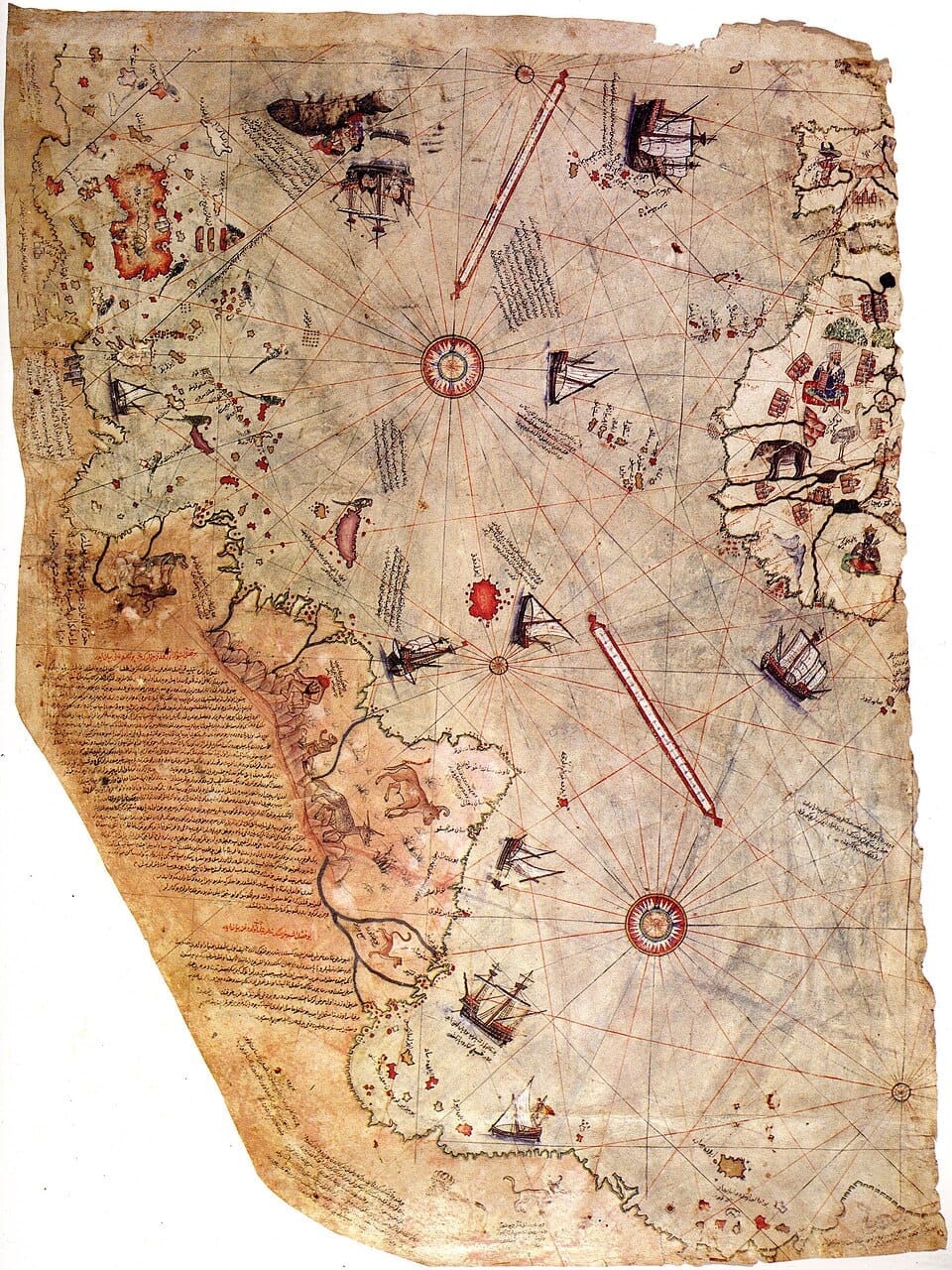
When this piece circulates (if it circulates, I suspect my readership is small and kept so by my haranguing tone and incapacity for brevity or wit) it will be processed, by most readers, as a contribution to the Trump-and-media discourse. It will be read as either an indictment of the media's treatment of Trump (Stage 4 is just another way of saying the press abandoned its responsibilities, which confirms what conservatives have been saying all along) or as a sophisticated rationalization for Trump's continued media dominance (the author is explaining why the press can't help itself, which is either an excuse or an accusation depending on your priors). These two readings will probably generate some argument. That argument will generate some engagement. The engagement will be harvested.
The possibility that the essay is actually about the structural conditions under which a democratic media apparatus becomes incapable of performing its democratic function—that it is, at bottom, about accountability and cognitive infrastructure and the slow erosion of the epistemological preconditions of self-governance—will not be the reading that travels. It will not be the reading that travels because it is not the reading that the current media environment is built to transmit. It is too slow. It requires too much suspension. It demands that the reader hold a complex argument in tension with their existing priors for long enough to evaluate it, which is precisely the cognitive operation that four decades of progressively more frictionless media have been systematically training us not to perform.
Ebert saw it coming in 2008, from the vantage point of a film critic watching the average shot length of Hollywood movies shrink toward seconds. McLuhan saw the mechanism in 1962, in the cognitive habits produced by a medium most of us now treat as quaint. Baudrillard mapped the destination in 1981, in prose so deliberately obscure that it is almost certainly read less now than when it was published.
The map has eaten the territory. The question (which we will take up in Part Two) is what that costs, and who pays the price. Look for its coming on the horizon.
¹ Paltaratskaya, V. (2023). Informing current models of time perception by looking at cognitive load during the use of short form video applications (SVAs). Doctoral dissertation, University of Illinois at Urbana-Champaign.
² University of Science and Technology of China findings as compiled in: Short‑form Video Use and Sustained Attention: A Narrative Review (2019–2025). ResearchGate (2025). The 31% reading attention reduction and approximately 45-minute duration of impairment are drawn from this source.
³ Mangen, A., & Kuiken, D. (2014). Lost in the tablet: Narrative absorption on paper and tablet. Scientific Study of Literature, 4(2), 150–177. See also Mangen, A., Walgermo, B.R., & Brønnick, K. (2013). Reading linear texts on paper versus computer screen: Effects on reading comprehension. International Journal of Educational Research, 58, 61–68.
⁴ Haliti-Sylaj, T., & Sadiku, A. (2024). Impact of Short Reels on Attention Span and Academic Performance of Undergraduate Students. Eurasian Journal of Applied Linguistics, 10(3), 60–68.
⁵ Ebert, R. (2008, September 22). This is the dawning of the Age of Credulity. RogerEbert.com. https://www.rogerebert.com/roger-ebert/this-is-the-dawning-of-the-age-of-credulity
⁶ Simon, H.A. (1971). Designing organizations for an information-rich world. In M. Greenberger (Ed.), Computers, Communications, and the Public Interest. Johns Hopkins University Press.