
There Was Never an Original Odyssey: On Nolan, Homer, and the Manufactured Authenticity of a Composite Text
A critical examination of Nolan's retelling of the Odyssey and why everyone should shut up about it.
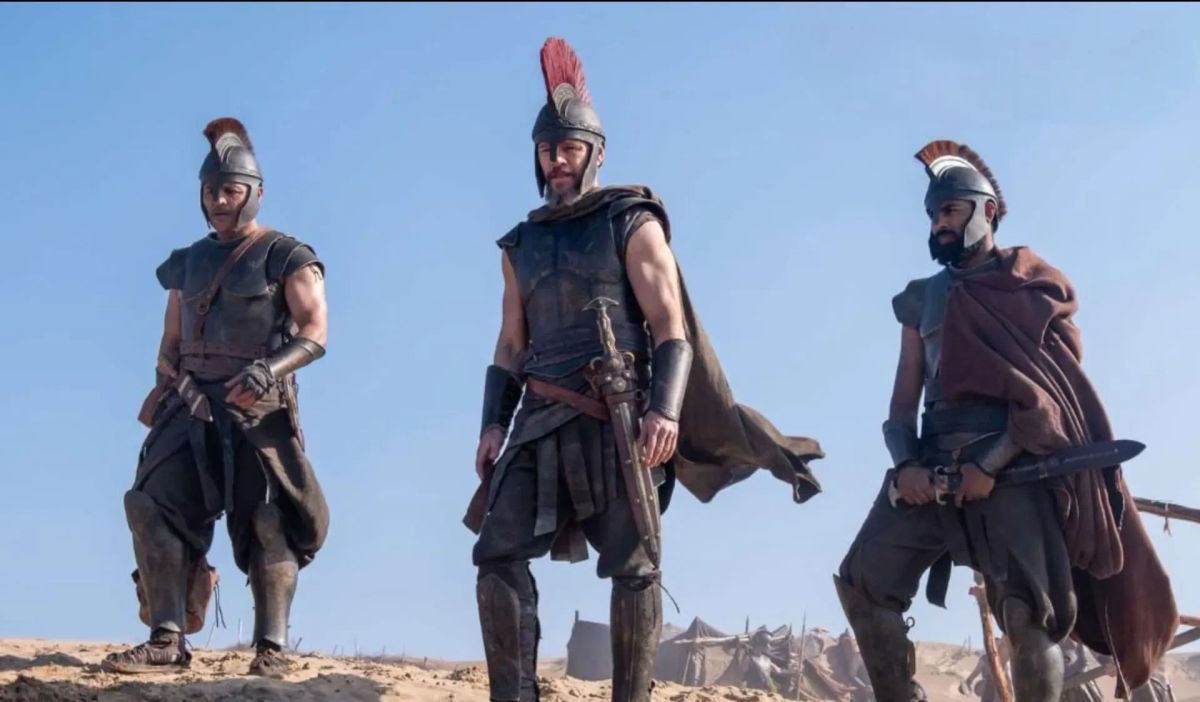
The trailer for Christopher Nolan's Odyssey dropped on May 5, and within forty-eight hours the discourse had cycled through its now-predictable stations of the cross: a glimpse of Elliot Page's face, mud-streaked, half-lit, asking a haggard Matt Damon "who's looking after your wife and son?"; the inference that Page is playing the ghost of Achilles in the Nekyia; a parallel rumor that Lupita Nyong'o has been cast as Helen of Troy; Elon Musk weighing in to declare that Nolan has "lost his integrity"; the inevitable hashtag (some wag came up with "Helen of DeTROYt," which I could link to but shan't); and a great deal of bellowing from people who have not read the poem in any translation, in any decade, about the inviolability of an "original" that they could not produce in court under subpoena.

It is worth stating up front that neither casting has been confirmed by Universal. Page is in the film; his role is unannounced. Nyong'o is in the film; her role is unannounced. The Achilles theory rests on a trailer beat that fits Book XI rather neatly, and on Nolan's long pattern of returning to past collaborators. The Helen theory rests on, as far as I can tell, an image circulating on social media and an assumption. The actual furor, in other words, is responding to a fantasy. That is fitting, in a way I will get to.
What I want to do in this post is several things at once. First, I want to take the two casting controversies seriously enough to actually engage them—because the arguments against the castings are, for the most part, very bad arguments that depend on a vision of the Homeric texts that has nothing to do with the Homeric texts. Second, I want to walk through what we actually know and don't know about the so-called Homeric Question, because the casual confidence with which culture-war combatants invoke "what Homer wrote" is almost grotesque in light of two and a half centuries of philological work. Third, I want to make the case that the Odyssey was always, on its own terms, a work of fantasy rather than history or even historical fiction, and that this fact was understood by sophisticated ancient readers. And finally, I want to argue that the tradition of substantive interpretive reworking—updating geography, updating dialogue, updating sensibilities—is not a degradation of some pristine source but the continuation of a practice as old as the poems themselves. When Nolan puts modern dialogue in a Greek hero's mouth, he is doing what every reader, performer, scribe, and translator of the Odyssey has done since the eighth century BCE.
Achilles en femme: The Skyros Episode and the Brittle Masculinity of His Defenders
Begin with Achilles. The objection to Elliot Page playing him—even hypothetically, even as a ghost—is grounded in an assumption about what Achilles is supposed to be: tall, muscled, blond, bellicose, the platonic ideal of a certain mid-century vision of Greek heroic masculinity. Brad Pitt in Troy, basically. This Achilles exists in the popular imagination as the icon of unproblematic martial manhood, and any deviation from him reads as a deviation from the source.
The source does not support the source.
The Iliad's Achilles is, among many other things, a man who weeps. He weeps openly and at length. He sulks in his tent. He cradles the corpse of his "beloved" Patroklos and refuses to eat or wash. His grief is so violent and so embodied that it dishonors the dead by being excessive even by the standards of a culture that expected ostentatious mourning. When Priam comes to ransom Hektor's body, the two men weep together. Achilles is not stoic. He is not laconic. He is the most emotionally volatile character in the poem. His μῆνις—the wrath that is the first word of the Iliad—is not the ordinary register of heroic anger (which the Greeks called χόλος or κότος) but a specifically marked, almost cultic kind of wrath, the kind that ordinarily belongs to gods rather than men. Demeter's grief-rage at the loss of Persephone is μῆνις; Apollo's plague-wrath in Iliad 1 is μῆνις. To open the Iliad with Achilles's μῆνις as the named subject of the song is to mark him from the first line as occupying a register more cosmic and more "divine" than that of an ordinary fighting man—an unstable, theophanic figure rather than the buffed-up icon of martial maleness later iconography made him.
His relationship with Patroklos has been read as erotic since at least Aeschylus's lost Myrmidons, and Plato in the Symposium (179e–180a) has Phaedrus puzzle over which of the two was the erastēs and which the erōmenos—a debate that presupposes the relationship was sexual. Aeschines in Against Timarchos (1.142) cites the pair as paradigmatic of noble erotic love. Madeline Miller's 2011 novel The Song of Achilles did not invent the queer Achilles; it recovered a reading that had been the default in the classical world and was suppressed only by later moralizing tradition.
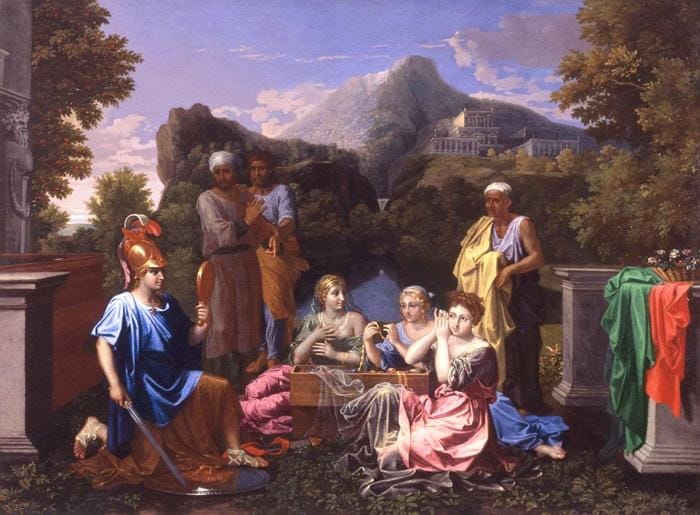
Then there is Skyros. The episode is not in Homer—it appears in the lost Cypria of the Epic Cycle, and is treated at length in Statius's incomplete Achilleid (ca. 95 CE) and summarized in Pseudo-Apollodorus's Bibliotheca (3.13.8) and Hyginus's Fabulae (96). But it was unambiguously part of the broader Trojan tradition that ancient audiences knew and that comprised "Homer" in the looser sense. Thetis, foreseeing her son's death at Troy, hid him on the island of Skyros at the court of King Lycomedes, dressed as a girl among Lycomedes's daughters. He lived among them, took the name Pyrrha ("the red-haired girl"), and fathered Neoptolemos on Deidamia—not, notably, as an episode of violation or disguise-piercing, but as part of his sustained life as a member of that household. Odysseus eventually exposes him, depending on the version, by laying out weapons among feminine adornments or by sounding a war trumpet, and Achilles instinctively reaches for the sword. But by then he had lived as a young woman for years.
To put it as plainly as possible: a trans actor playing Achilles is not a violation of the character. It is, if anything, a more attentive reading of the character than the buffed-up Brad Pitt version. The figure who comes down to us through the full Trojan tradition is someone whose gendered self-presentation was, at minimum, episodic and contextual; who was raised by his goddess mother in such a way that hiding among women was a viable strategy for survival; whose closest relationship was with another man and was read as erotic for two millennia before Victorian editors decided otherwise; whose grief and rage and beauty are all rendered in a register that the archaic Greek imagination would not have classified as straightforwardly andric.
The objection "Achilles wasn't like that" turns out to depend on a version of Achilles that was constructed quite recently and is shallower than the version available to anyone willing to read for ten minutes.
"White-Armed Helen" and the Long Shadow of Memnon
The objections to Nyong'o tend to lead with two claims: Helen is described in the poems as fair-skinned and golden-haired, and the entire Trojan world was, racially, a Mediterranean-European affair from which a Black actress is excluded by historical reality. Both claims fall apart under any pressure.
The "fair" descriptor most commonly cited is the formulaic epithet λευκώλενος, "white-armed." This is a stock Homeric epithet, by which I mean it is part of the oral-formulaic system of fixed phrases that the poet (or poets) deploys to fill metrical positions in the hexameter line. The most frequent bearer of λευκώλενος in Homer is not Helen at all—it is Hera, who is "white-armed" dozens of times across both poems. It is also used of Andromache, Arete, Nausikaa's handmaidens, and basically any well-born woman the poet has occasion to mention. Treating it as a literal ethnographic description is approximately like reading a country song that calls some woman "fair as a rose" and concluding that her skin must be petal-textured. It is a metrical filler with a positive connotation, drawn from a stock kit. The "blonde" of Helen comes from ξανθή, which the same epic vocabulary applies to Menelaos, Meleager, Demeter (!), Agamede, and Rhadamanthys—a word that covers a chromatic range from honey-colored to chestnut and is, again, a register of nobility more than a forensic skin-and-hair report.
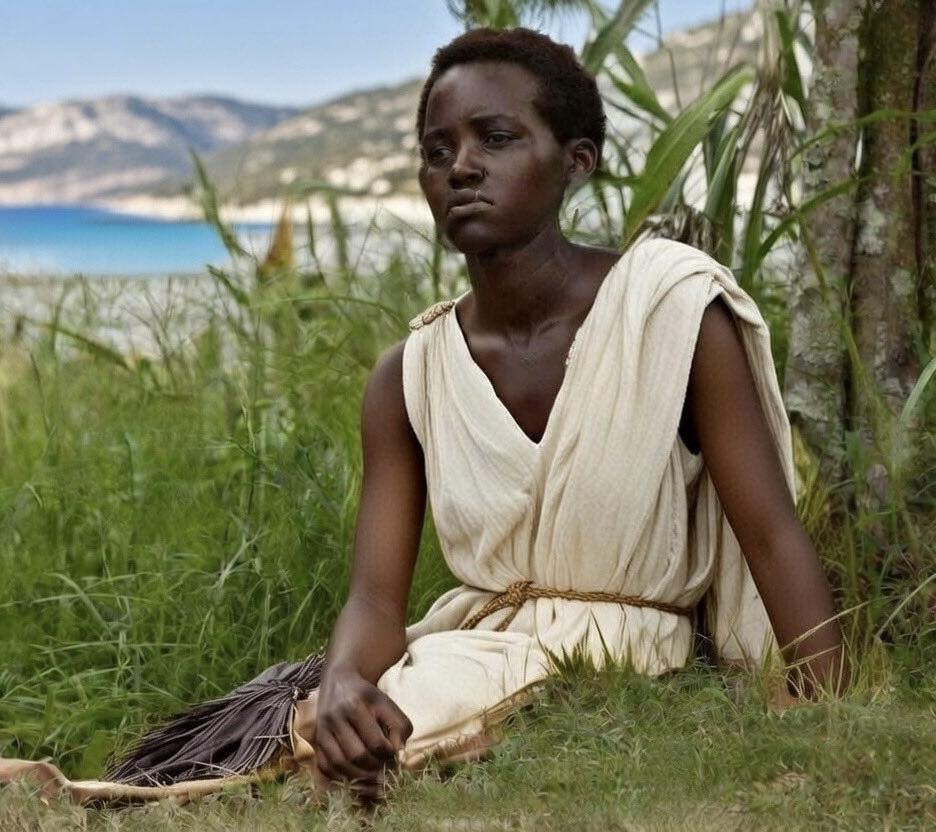
But suppose, charitably, that we grant the literal reading. Suppose the poet did mean that Helen was specifically pale and specifically golden. The argument that follows—that therefore no Black actress can portray her—runs immediately into the problem that the poem itself includes characters who are dark-skinned and whom it treats as figures of striking beauty.
The most obvious is Memnon, king of the Aithiopes, son of Eos (the Dawn) and Tithonos (a Trojan prince and brother of Priam). He does not appear in the Iliad proper but is the central figure of the lost Aithiopis, the Epic Cycle poem that picked up where the Iliad left off; he is mentioned twice in the Odyssey. At 4.187–188, Nestor's son Antilochos is named as having been killed by Memnon. At 11.522 (and this is the passage that deserves dwelling on) Odysseus, recounting Neoptolemos's exploits to the shade of Achilles in the underworld, describes one of Neoptolemos's kills, the Mysian hero Eurypylos, as "the handsomest man I ever saw, except for Memnon." Eurypylos is the second-handsomest man Odysseus has ever seen. The standard of comparison, the man whose beauty was the unsurpassed benchmark of the Trojan war, is the Black king of the Aithiopes. Aithiops itself is from αἴθω, "to burn," and ὤψ, "face," or, the "burnt-faced people." Black-figure and red-figure vase painting from the sixth and fifth centuries consistently depicts Memnon and his warriors with darker skin and sub-Saharan features; the British Museum has multiple amphorae showing this. The Greeks distinguished an eastern and western Aithiopia, but in either case the visual tradition is clear.
This is not a hidden detail. It is in the poem. The poem says explicitly that the most beautiful man at Troy was a Black king. Whatever Helen looked like, the Homeric world is not a monochromatic one, and the most strenuous reading of pigmentary cues in the text still leaves us with a polychromatic cast of which a Black Helen would be neither anomalous nor unprecedented.
The deeper problem with the "race-erasure" complaint is that it imports a modern, taxonomically rigid conception of race into an archaic Mediterranean society that did not organize human difference along those lines. The Greeks distinguished Hellenes from barbaroi, in-group from out-group, free from enslaved, and they had ethnographic stereotypes (Herodotus is full of them), but the construction of "whiteness" as a stable transhistorical category is a product of the early modern Atlantic slave trade and its ideological apparatus. To insist that an eighth-century-BCE poem be cast in twenty-first-century American racial terms—and then accuse anyone deviating from that anachronism of betraying the source—is a kind of double inversion that would be funny if it were not so wearying.
What is actually motivating the objection is not faithfulness to the text. It is colorism. The specific anger directed at Nyong'o, a dark-skinned Kenyan-Mexican actress, is not the same anger that would be directed at, say, a light-skinned Spanish or Lebanese actress, neither of whom would be "Greek" by the standards being invoked. The "white Helen" standard is doing the work of policing a hierarchy of pigmentation that has nothing to do with Mycenaean Greece and everything to do with present-day racialized aesthetics.
Anachronisms Abound and You Ain't Said Shit
I should, in the spirit of full disclosure, register one complaint about Nolan's Odyssey that I think has actual historical teeth—offered in the spirit of a gentle ribbing rather than a serious indictment, because everything I have argued so far obviously cuts against the whole notion of "historical accuracy" as a meaningful criterion for adapting this material. But as a martial artist, fencer, and Sword Guy, and as someone who has spent more time than is healthy looking at Aegean Bronze Age material culture, I cannot let it pass without comment.
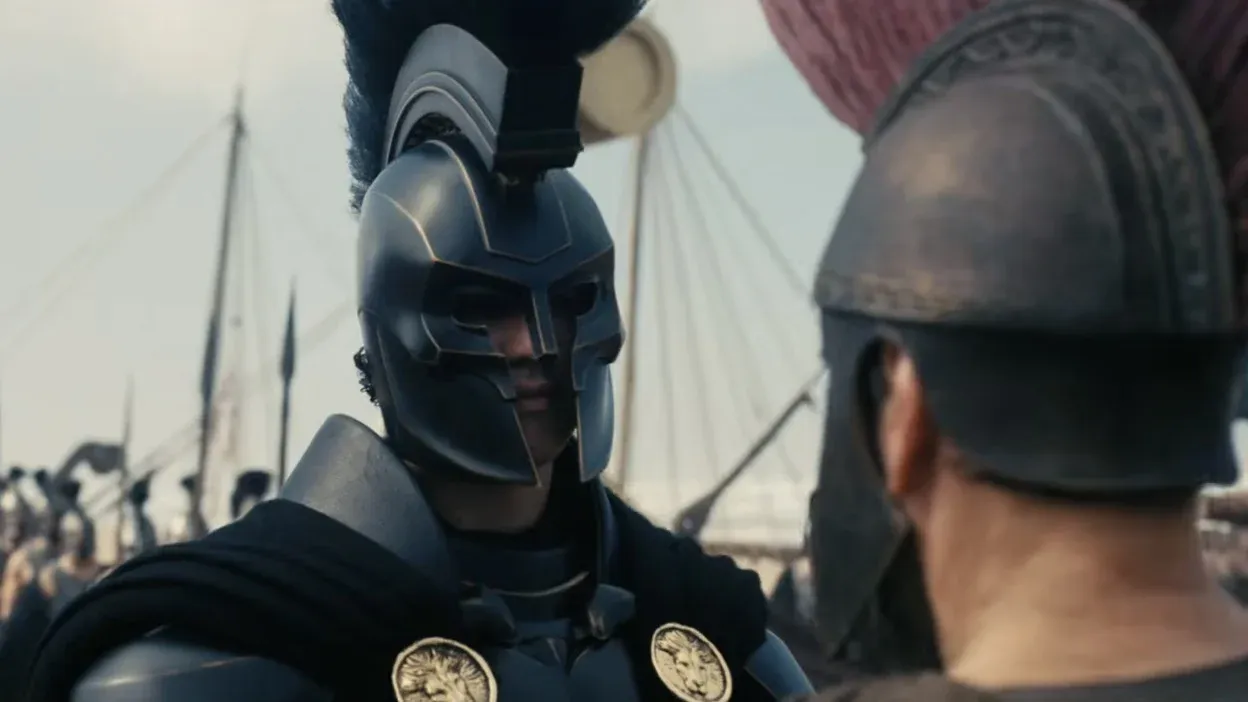
The arms in the trailer are steel. The armor is steel. Some of it is recognizably plate steel. The Trojan War, to the extent that anything resembling it actually happened, took place in the Late Bronze Age—somewhere around the thirteenth or twelfth century BCE—several centuries before reliable iron-working in the Aegean and over two millennia before anything we would recognize as steel plate. The Mycenaean material record is unambiguous. The Dendra panoply, excavated in 1960 in the Argolid and dated to about 1400 BCE, is a complete suit of bronze armor—shoulder-pieces, breastplate, backplate, all hammered bronze—paired with a boar's-tusk helmet of exactly the sort Homer himself describes Meriones handing to Odysseus at Iliad 10.261–271. Mycenaean swords were bronze, often ceremonially inlaid with gold or lapis. The figure-of-eight body-shield of the period—a large leather-and-bronze plate covering the warrior from neck to ankle—has left its fossilized trace in the Homeric vocabulary as the σάκος ἠΰτε πύργον, the "shield like a tower": a Bronze Age object preserved in oral formula long after the actual object had passed out of use. None of this is in Nolan's film. His heroes are swinging what look like medieval longswords.

And then there is the palette. Lord help me, the palette. Nolan's Odyssey is, on the visual evidence of the trailer, dim, desaturated, and dressed in the standard prestige-cinema muddy brown-and-grey. The Greek heroes look like they are preparing to make a beach landing in Normandy. The actual visual world of the Aegean Bronze Age, as anyone who has spent ten minutes with the Knossos frescoes, the Akrotiri wall paintings on Thera, or the surviving palace frescoes at Pylos and Tiryns can attest, was riotously polychromatic. Vivid red ochre, Egyptian blue, saffron yellow, brilliant white. Intricate dyed and patterned cloth. Painted ships. Painted statuary. Painted temples—everything in the classical world that we now imagine as severe white marble was originally polychromed in bright pigments, a fact that has been the consensus position in classical archaeology for forty years and that the museum-going public is only now beginning to absorb. Tyrian purple was a luxury good in the Bronze Age. The Mycenaean palace world, visually, looked less like a North Sea fishing village in November and more like a dyed-silk pageant. Nolan has filmed it as the former.
This is the actually-defensible historical complaint about Nolan's Odyssey. It is also, with conspicuous exactness, the complaint that no one in the casting discourse is making. The traditionalists losing their minds about a Black Helen and a trans Achilles are not, so far as I can find, also losing their minds about steel swords in a bronze war or about the grimdark color-grading of a Mediterranean culture that lived in red ochre and Egyptian blue. The total absence of complaint on the actually-historical points is the tell. They were never interested in authenticity. They were interested in pigment and gender, in the specific narrow senses they wanted those things to be controlled.
In Nolan's defense—and this is the joke turning serious—he is doing precisely what every previous depicter of this material has always done. Botticelli's Trojans wear quattrocento clothes. The Trojans on a sixth-century-BCE Attic black-figure vase wear the armor of a sixth-century Greek hoplite, not the panoply of a thirteenth-century Mycenaean warlord. Medieval illuminations of the Roman de Troie put Hektor and Achilles in plate harness on caparisoned destriers. Every visual rendering of this material in the last twenty-five hundred years has reached for the idiom of its own moment. Nolan's idiom is the muted, desaturated palette and the conventional steel armor of contemporary prestige cinema, because that is what our period has decided antiquity must have looked like. He is, like everyone before him, updating. The bronze complaint is, on reflection, just another instance of the broader principle this whole post is concerned with. I just happen, idiosyncratically, to wish he had updated toward the actual material record rather than away from it.
The Homeric Question: Who, or What, Was Homer
It is at this point useful to step back and ask: when the people screaming about "what Homer wrote" invoke Homer, what do they think they are invoking? The answer in most cases appears to be: a single inspired author, working at a single moment, producing a single fixed text that has come down to us unaltered. The actual scholarly picture is, gently, somewhat different.
The Homeric Question—the bundle of problems concerning the authorship, composition, and transmission of the Iliad and Odyssey—was opened up in its modern form by Friedrich August Wolf's Prolegomena ad Homerum (1795), which argued on textual and historical grounds that the poems as we have them could not be the work of a single author writing in a single sitting. Wolf's argument launched what is sometimes called the Analyst school, which sought to decompose the poems into their constituent layers and identify the seams. Against the Analysts stood the Unitarians, who insisted on the artistic coherence of each poem and argued that whatever messy oral prehistory might lie behind them, the final shape bears the imprint of a controlling intelligence.
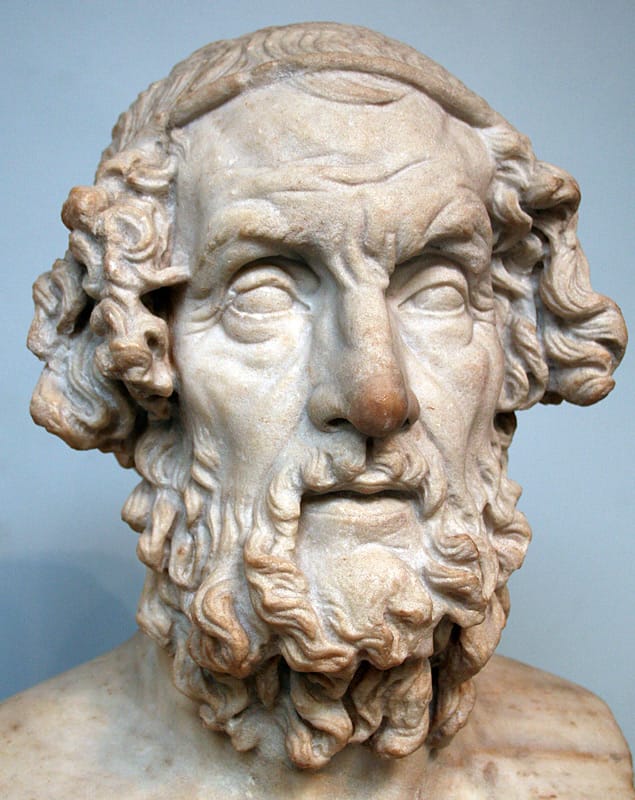
The most consequential intervention came in the late 1920s and 1930s from Milman Parry, a young American classicist working in Paris. Parry's doctoral thesis L'épithète traditionnelle dans Homère (1928) demonstrated that the system of fixed epithets and formulae in Homer is so economical, so non-redundant, so perfectly fitted to the metrical positions of the hexameter line, that it could only be the product of a long tradition of oral composition-in-performance. Parry then traveled to the former Yugoslavia in the early 1930s, in the company of Albert Lord, and recorded living South Slavic bards composing thousand-line epics in performance, on the fly, using exactly the same kind of formulaic system. Lord's The Singer of Tales (1960) consolidated the findings: the Homeric poems are oral compositions—not memorized from a fixed text but generated in real time using the deep formulaic competence of trained singers. There may have been a "Homer" who was an unusually gifted bard. There may have been many of them. There may have been a moment of fixation—when the poems were dictated to writing—but there cannot have been a singular authorial act of composition in the sense familiar to modern literature.
Subsequent scholarship has refined and complicated this picture. Gregory Nagy at Harvard has developed an evolutionary model in which the poems passed through multiple stages: a fully fluid oral stage, a panhellenic stage of relative stabilization through performance at festivals (especially the Panathenaia at Athens), a transcript stage, and finally a textual stage under the Alexandrian editors. Nagy's term multitextuality captures something crucial: even the fixed-text moment was not the production of a single canonical version. The papyri we have from before the Alexandrian standardization—the so-called "wild" papyri—show substantial variation: lines that aren't in our received text, lines missing from our received text, different line orders. The text our culture inherited as the Homer is largely the text constructed by Aristarchos of Samothrace in the second century BCE.
Aristarchos and his predecessors—Zenodotus of Ephesus, the first librarian at Alexandria, and Aristophanes of Byzantium—were not transcribers. They were editors. They compared manuscripts, marked lines they suspected were spurious with the obelos (a horizontal stroke, the origin of the word "obelisk"), and wrote elaborate marginal commentary. Some of these scholia survive, most spectacularly in the tenth-century Venetus A manuscript of the Iliad, where the margins record the Alexandrian editors' arguments about what Homer "really" wrote and what was a later interpolation. They were doing, in other words, exactly the kind of work that the people invoking Homer today imagine has never been necessary: deciding, on philological and aesthetic grounds, what counted.
There is a separate ancient tradition—reported by Cicero, Pausanias, and others—that the tyrant Pisistratos of Athens in the sixth century BCE ordered the Homeric poems to be collected and edited, the so-called Pisistratean Recension. Modern scholarship is divided on whether this happened or whether it is a later fabrication, but the very existence of the tradition tells us that ancient readers themselves understood the texts to be the product of editorial intervention.
So when someone bellows about "what Homer wrote," the honest answer is that we do not know with certainty what any single person at any single moment "wrote." What we have is the residue of centuries of oral performance, several rounds of editorial standardization, two and a half millennia of manuscript transmission with predictable copying errors and interpolations, and a modern critical edition (West's Teubner Iliad, 1998–2000, and his Odyssey, 2017) that represents the editor's best reconstruction of an Alexandrian text that was itself a reconstruction. The "original" recedes infinitely. There never was one in the sense being invoked.
The Odyssey as Fantasy Fiction
A separate but related point: the Odyssey, even by the standards of its original audience, was not understood as history. It was understood as something more like what we would call fantasy. This is worth dwelling on because part of the resistance to Nolan's project rests on a confused intuition that he is making a "fantasy film" of a "real story," and that this is a category violation. It is not, because the poem itself is not in the category that the objection requires.
Consider what is in the Odyssey. A one-eyed giant cannibal. A witch who turns men into pigs. A goddess who keeps a man as her lover on an enchanted island for seven years. Sea monsters guarding straits. Sirens whose song kills. A bag containing all the winds of the world. A trip to the underworld to consult the dead. Athena disguising herself as various humans throughout. Hermes flying down on his winged sandals. A bow that no one but Odysseus can string. None of this was understood by sophisticated ancient readers as a literal account of recent events. It was understood as μῦθος in a strong sense—the kind of storied, fabulous discourse that operates by its own narrative logic and is not subject to factual verification.
There is a wonderful exchange recorded in Strabo's Geographika (1.2.15). Eratosthenes, the third-century-BCE polymath and head librarian at Alexandria, was asked where Odysseus's wanderings took place. He famously replied: "You will find the scene of Odysseus's wanderings when you find the cobbler who sewed up the bag of winds." This is from a senior figure of Hellenistic scholarship, telling questioners that the geography of the Odyssey is no more findable on a map than the cobbler is. Strabo himself disagreed and tried to relocate Odysseus's voyage in real Mediterranean coordinates, but the very fact that this was a debate (and that Eratosthenes's mocking dismissal was a famous and quotable line) tells us that the question of the Odyssey's literal historicity was already open and already contested in the ancient world.
The poem was also subjected, beginning in the late classical period, to extensive allegorical interpretation, on the assumption that its surface narrative was a vehicle for deeper symbolic or philosophical meaning. Heraclitus the Allegorist (first century CE) read it as a code for Stoic ethics. The Neoplatonists, especially Plotinus and Porphyry, read Odysseus's journey home as the soul's return to the One. Porphyry's On the Cave of the Nymphs (a meditation on a single passage in Odyssey 13) is a virtuoso piece of allegorical exegesis. These readers were not literalists. They understood that the poem operated as a kind of mythopoetic structure whose meaning was generated through metaphor, allegory, and ritual resonance.
In short: modern fantasy is not a violation of the Odyssey; modern fantasy is a species of the same genus to which the Odyssey belongs. When Nolan stages the Cyclops or the Sirens or the Nekyia with all the IMAX wizardry he can muster, he is doing nothing more or less than what the poem's earliest performers and listeners did with their own imaginative resources. The poem's fantastical content is not a bug to be apologized for. It is the mode in which the poem operates.
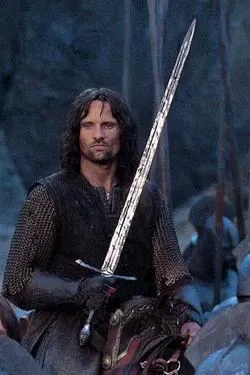
It is worth saying, while we are on this point, that the entire genre we now call epic fantasy—Tolkien, Le Guin, T. H. White's Once and Future King (which I am about to begin covering on Critical Readings), and on down to the contemporary stack of secondary-world fiction—is in a meaningful sense the continuation of the Homeric mode under modern conditions. To complain that Nolan is "making the Odyssey into a fantasy" is like complaining that a chef is making bread into food.
Pope, Arnold, and the Manufactured Sanctity of the Text by Sentiment
So how did we get here? How did a fundamentally oral, fundamentally multitextual, fundamentally mythic-fantastic body of material come to be treated as a sealed canonical Holy Writ in whose face any modernization is a sacrilege? Well, in short, romantic sentimentality from English-speaking racists (if you can believe such a thing).
The proximate culprit is the eighteenth- and nineteenth-century reception. Alexander Pope's translation of the Iliad (1715–1720), and then of the Odyssey (1725–26, with collaborators), was the publishing event of its century and made Pope a wealthy man. It rendered Homer into heroic couplets—the Augustan meter par excellence—and remade the savage, formulaic, repetitive Homeric voice into something stately, balanced, and decorous, suitable for the library of a country gentleman. Pope's Homer is magnificent on its own terms; it is also, as the classicist Richard Bentley famously told him to his face, "a pretty poem, Mr. Pope, but you must not call it Homer." Bentley was right. But Pope's Homer became the Homer for the English-reading public for over a century, and through Pope the texts acquired a specific cultural valence: refined, Augustan, civilized, embedded in a particular vision of European cultural patrimony.
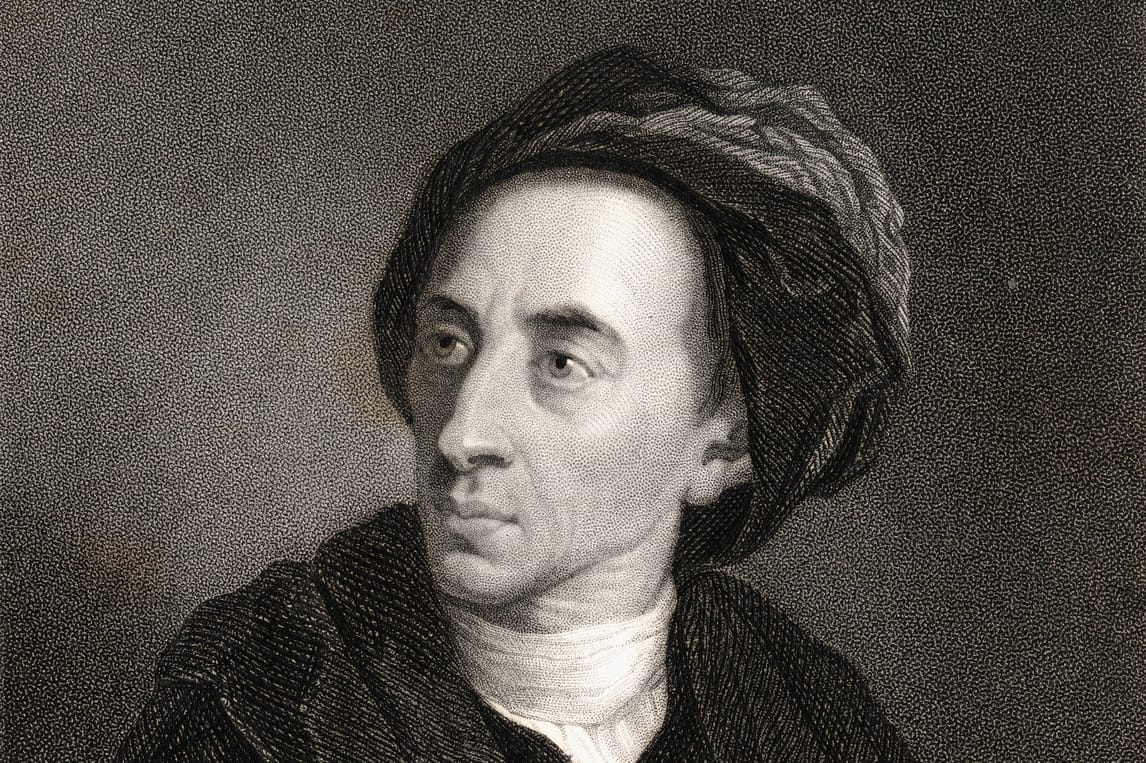
The Victorians extended this. Matthew Arnold's lectures On Translating Homer (1861), delivered at Oxford, codified the view of Homer as embodying a specific suite of literary virtues—rapidity, plainness, nobility, directness—that aligned suspiciously well with the Victorian gentleman's self-image. Homer became the gold standard of literary greatness, the headwaters of the Western canon, the secular scripture of an educated class that took its classical training as a marker of caste and continuity. The poems came to be treated with the kind of reverence usually reserved for sacred texts: not to be paraphrased, not to be updated, not to be "violated" by modern hands. The fact that they had been continually updated and violated for thirty centuries before this was conveniently forgotten.
What I want to insist on is that this attitude is recent. The reverence for a fixed, untouchable Homeric text is a Victorian acquisition. It is not an ancient or medieval or even Renaissance attitude. Chapman's 1611 Iliad—the one Keats discovered—is wildly unfaithful by modern standards and gleefully Elizabethan in its diction. Earlier still, medieval and Byzantine writers freely allegorized, expanded, contracted, and reworked the material. The Roman de Troie of Benoît de Sainte-Maure (twelfth century) tells the Trojan story with knights and chivalry and courtly love. The Iliad and Odyssey have been translated, paraphrased, retold, parodied, allegorized, modernized, and dramatically reworked in every century of their existence. The Victorian moment of canonization—of declaring the texts inviolable—is the anomaly, not the norm.
And even within the supposedly canonized period, the work of updating never actually stopped. Joyce wrote Ulysses. Derek Walcott wrote Omeros. Margaret Atwood wrote The Penelopiad. Madeline Miller wrote Circe and The Song of Achilles. Emily Wilson published her contemporary-idiom translations of the Odyssey (2017) and Iliad (2023), the first English versions of either by a woman; her Odyssey is in iambic pentameter and reads with extraordinary modern clarity ("Tell me about a complicated man"). Each of these is a substantive intervention. None of them is a betrayal.
The Only Thing Traditional About Telling the Odyssey is that We Update It.
I want to close with the specific point about geography, because it is the cleanest demonstration of the principle I am arguing for. The geography of Odysseus's wanderings was not stable in the ancient world. It moved.
When the poem was first taking shape, in the eighth or seventh century BCE, the Greek imaginative map looked one way. The wanderings of Odysseus probably reflected what was then the unknown periphery: the far west, the far north, places at the edge of trade-route knowledge. As Greek colonization expanded west into Sicily, southern Italy, and beyond, the imaginative geography of the Odyssey moved with it. Scylla and Charybdis got relocated to the Strait of Messina—a real and named strait that Greek sailors actually traversed. The land of the Lotus-Eaters got placed on the North African coast. The Cyclopes were assigned, by various commentators, to Sicily (a Sicilian Mount Etna being conveniently available as a volcanic backdrop). Calypso's island migrated through several candidate locations. Circe ended up on a promontory in Latium—Monte Circeo, where Roman aristocrats eventually built villas. None of this is in the poem in any geographically determinate way. The poem is geographically vague on purpose, because it operates in a mythic register where "out there past the known" is the relevant coordinate. But as the "known" changed, the commentary tradition and the visual tradition updated the locations to keep them salient.
That is to say: the content of the poem was modified, in significant ways, by every generation of readers and editors. Lines were added, lines were dropped, the meaning of words shifted, scenes were re-illustrated to reflect contemporary armor and clothing styles, the geography was re-mapped onto whatever world the current audience inhabited. This is what living texts do. It is what living texts have always done. The frozen, inviolable, sacred-text Homer is a museum exhibit assembled in the nineteenth century, not the actual cultural object that has come down to us.
When Nolan—if the rumors are true—casts a trans man as the ghost of Achilles in the Nekyia, he is participating in a tradition older than any of the angry commentary about it. When he casts a Black actress as Helen, he is participating in a tradition that the Odyssey itself opens up by naming a Black king as the most beautiful man at Troy. When his characters speak in modern idiom, he is doing precisely what Pope did with heroic couplets, what Chapman did with Elizabethan, what every singer in the oral tradition did when he updated his epithets to suit his audience. The category error is not Nolan's. The category error belongs to the people who think that "Homer" is the name of a fixed object they have access to and that any modernization of it is a desecration.
There never was an original Odyssey. There was a tradition: an enormously generative, enormously plastic, enormously multivocal tradition that produced thousands of variants over thousands of years and that is still producing them. The Nolan film, whatever its merits turn out to be when it arrives in July, is part of that tradition. The people screaming about authenticity are guarding a phantom—a phantom assembled by Pope's couplets and Arnold's lectures and a great deal of subsequent ideological work in service of a vision of "Western civilization" that is itself a recent invention. And do notice that not one of them is bothered by the steel.
Helen has always been many Helens. Achilles has always been many Achilleses. Homer, if there was a Homer, was already many Homers by the time the first scribe wrote anything down. And the wine-dark sea, as Emily Wilson's translation reminds us, has always lapped against whichever shore the singer happened to be standing on. So put aside these qualms. Ignore the racist and bigoted detractors. Judge the film by its merits as a film, as popular entertainment, and see if it can be Nolan at his best (Oppenheimer, Inception, and yes, TENET) instead of at his worst and most self-indulgent (Insomnia, The Dark Knight Rises).