
The God of the Philosophers, or Our Father, Who Art in Heaven (The Braided River, Part 8)
Part eight of The Braided River: how the Indo-European sky-father, refined by the Greeks into Being itself, was welded to the covenant God of Israel at a single verse in Alexandria, and how the seam never quite closed. The end of the genealogy, and the door into what comes after.
Following this historical study and elucidation of the method, in Parts 9 through 12 we will turn instead to how this braided river became entwined with philosophy, and finally in Part 13 I hope to sketch out a potential new pluralistic basis for cohabitation and mutual flourishing.
1. The sentence everyone can recite
A billion people can say it without thinking, which is the surest sign that no one hears it. Our Father, who art in heaven. We ended the last post on that sentence, calling it a weld, and promised to come back and watch the welding done. Here we are.
Inside that sentence, and inside the word God as the West uses it, sits an assumption so deep that stating it aloud sounds almost rude. The assumption is that two utterly different gods are obviously one and the same. There is the God of the philosophers: the absolute, the ground of being, the first cause, one and changeless and everywhere and nowhere, the answer at the end of a metaphysical argument. And there is the God of Abraham: a particular being with a particular history, who picks one family out of all the families of the earth, who is jealous, who walks in a garden in the cool of the day, who smells the smoke of sacrifice and is pleased by it, who grieves that he made humankind and resolves to drown them, and who then changes his mind. Most people who use the word God assume without noticing that these are descriptions of the same thing, the second a homely picture of the first, the first a rigorous statement of the second.
They are not obviously the same thing. They are not even easily the same thing. For a long stretch of antiquity they were not the same thing at all, and the labor of making them one, of welding the metaphysical absolute to the covenant deity until the seam disappeared, is one of the great unremarked construction projects in the history of the West. It is the project that produced the specific God that European philosophy then spent two thousand years proving, doubting, and arguing about, almost always without noticing that the thing under examination was a fusion, a confluence of two rivers that did not rise anywhere near each other.
This post watches the weld get made. We have the two streams already in hand from the posts behind us, the Semitic and the Indo-European, and we have most of the philosophical apparatus from the fifth post, which I am going to lean on rather than rebuild. What remains is to watch them poured together, to find the single verse where you can see the fusion happening in real time, and to notice the seam, because the seam never fully closed, and the rest of this series is going to live along it.
2. Two gods who should not have fit
To see why the weld was an achievement and not a triviality, you have to feel how badly the two gods fit.
Take the God of Israel as the Hebrew Bible actually presents him, before later theology sanded him smooth. He is intensely personal and intensely particular. He has, in the older strata, something close to a body: Moses sees his back though not his face; he walks; his hand and his arm and his face are not always tidy metaphors. He is emotional in a way that is not embarrassed about itself. He loves, he rages, he is jealous, the word is his own, he relents, he is grieved to his heart. He is bound to time and to story; he makes promises and keeps them or is accused of failing to; he reacts; he can be argued with, and Abraham and Moses and Job all argue with him and sometimes win. He is, above all, a god who does things in sequence, a god of acts, a god whose very self-disclosure is a history rather than a definition: I am the one who brought you up out of Egypt.
Now take the god the Greek philosophers had reasoned their way to by the time the two traditions met, the apparatus the fifth post laid out. He is the opposite at almost every point. He is one, and his oneness is not the jealous exclusivity of a covenant but the metaphysical simplicity of that which cannot be divided. He is immutable, because change means moving toward or away from perfection and the perfect does nothing of the kind. He is impassible, apathēs, without passions, because to be moved by something outside yourself is to be acted upon, and the highest cannot be acted upon by the lower. He is eternal not in the sense of lasting a very long time but in the sense of standing outside time altogether, with no before and no after. He is immaterial, incorporeal, without parts. He does not react, because reaction is change. He does not love in the way a person loves, because that love would make him dependent on its object. He is less a someone than a something, or rather the something so supremely that the distinction between someone and something breaks down: the Good, the One, the Unmoved Mover, pure act, to theion, the divine.1
Set those two side by side and the problem is plain. The biblical God has a face and a temper and a story. The philosophers' God has none of these, and could not have any of them without ceasing to be what the philosophers meant. A god who grieves has been changed by what grieves him, and the philosophers' god cannot change. A god who relents has reconsidered, and the philosophers' god, knowing all things timelessly, has nothing to reconsider. These are not two emphases within a shared concept. They are, on their face, two different kinds of thing. The miracle, if you want to call it that, is that the West came to experience them as one, so completely that for most of its history the burden of proof fell on anyone who suggested they might be two.
3. The philosophers' god was the sky-father refined
Before we watch the fusion, one debt to the seventh post needs paying, because it changes what the Greek side of the weld actually is.
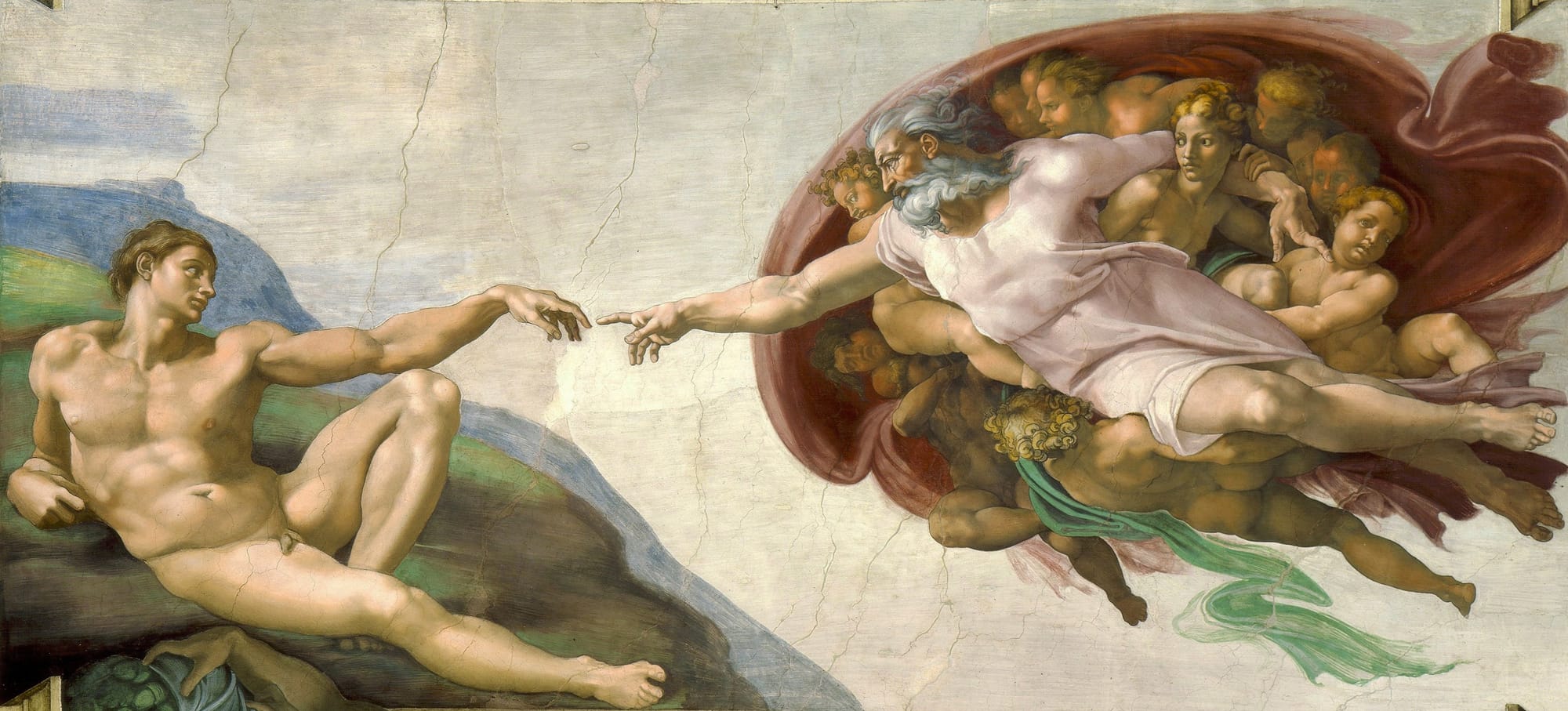
The philosophers' god did not drop from nowhere. He is, genealogically, the Indo-European sky-father with the mythology boiled off. We left *Dyḗus ph₂tḗr reigning in only one zone, the Greek and Italic, as Zeus and as Jupiter, king of the gods, still seated in the bright heaven. What happened next in Greece is that the philosophers went to work on him, and the work was almost entirely subtractive.
It begins as early as Xenophanes, in the sixth century, who looked at the Zeus of Homer, adulterous, thieving, brawling, indistinguishable in character from a powerful and badly behaved man, and was disgusted. If horses had gods, he said, the gods would look like horses; men have simply made the divine in their own image, and a god worth the name could not be like that. There is, he insisted, one god, greatest among gods and men, like mortals in neither body nor thought, who stays always in the same place without moving and who shakes all things by the thought of his mind. You can hear, in that sentence, the entire later apparatus in embryo: the oneness, the immutability, the immateriality, the action-at-a-distance of a mind that moves the world without itself stirring. And you can hear what is being operated on. It is Zeus. Xenophanes is not inventing a new god; he is purifying the sky-father, stripping the anthropomorphic accidents off the inherited high god until what is left is the bare metaphysical function: the supreme, the one, the mover.2
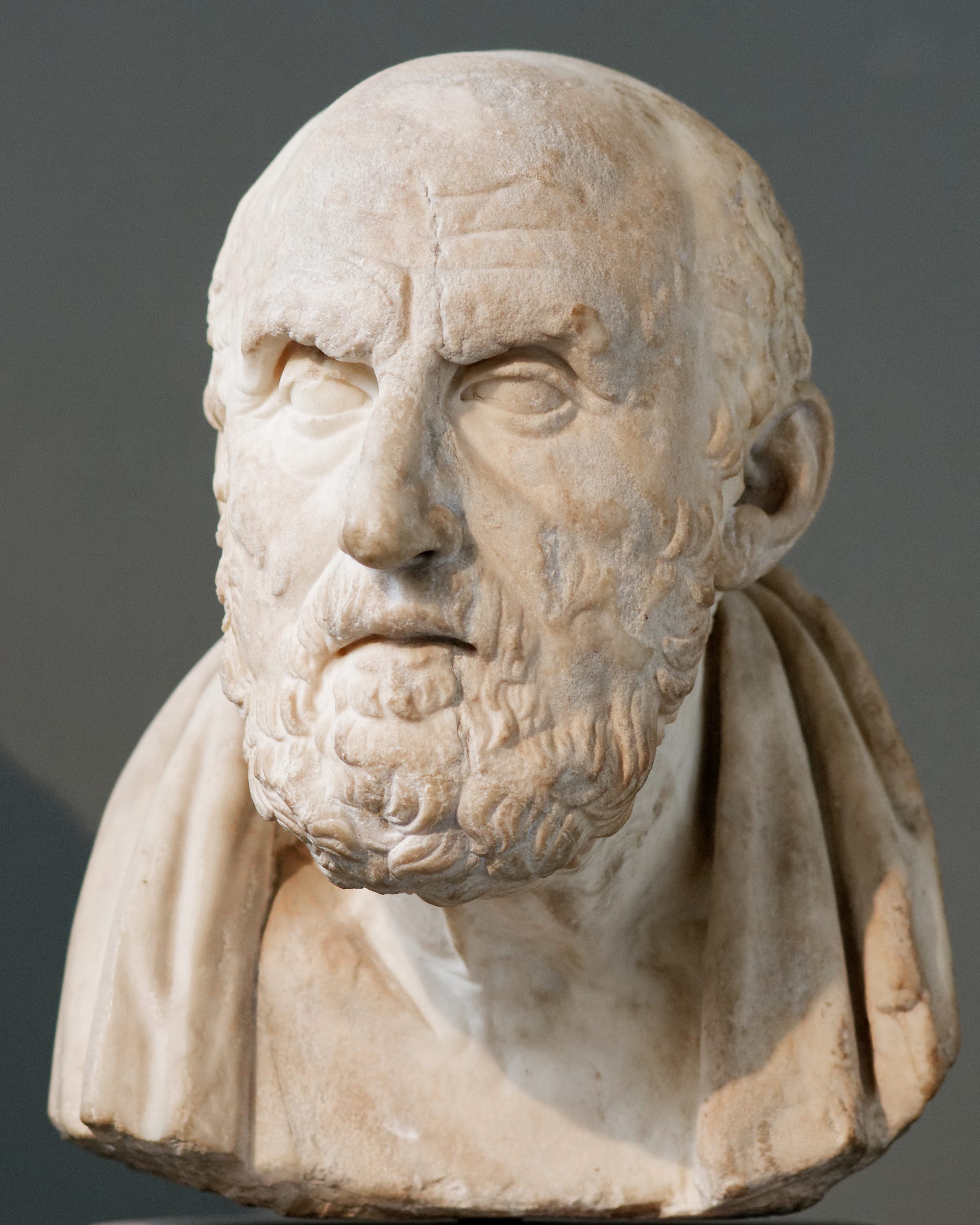
The Stoics finished the operation and did not even change the name. For them the cosmos was rational through and through, governed by an immanent divine logos, a reason that was also a fire, also a breath, also the world-soul, and they were perfectly happy to go on calling it Zeus. Cleanthes wrote a Hymn to Zeus that is also a hymn to providence, to cosmic reason, to the law that governs all things, addressed to a Zeus who has nothing left of Olympus about him and is simply the rational principle of the universe wearing the old king's name.3 By the time you reach the educated religion of the Hellenistic Mediterranean, ho theos, the god, the divine, names not a character in a story but the metaphysical absolute, and the road from Zeus to that absolute is a straight one, paved by philosophers each of whom thought he was clarifying rather than replacing.
So when we speak of the Greek side of the weld, we should be exact about what reaches the crucible. It is not Zeus on his throne hurling thunderbolts. It is the sky-father refined past recognition, *Dyḗus ph₂tḗr distilled into to theion, the bright heaven abstracted into Being. The Indo-European river arrives at the confluence not as a god with a face but as a metaphysics with a vacancy where a face used to be. That vacancy is going to matter, because something is about to be poured into it.
4. The bridge at Alexandria: I AM becomes Being
Everything in this post turns on a single moment, and the moment turns on a single verse. If you want to see two rivers meet, you go to Alexandria, and you read Exodus 3:14.
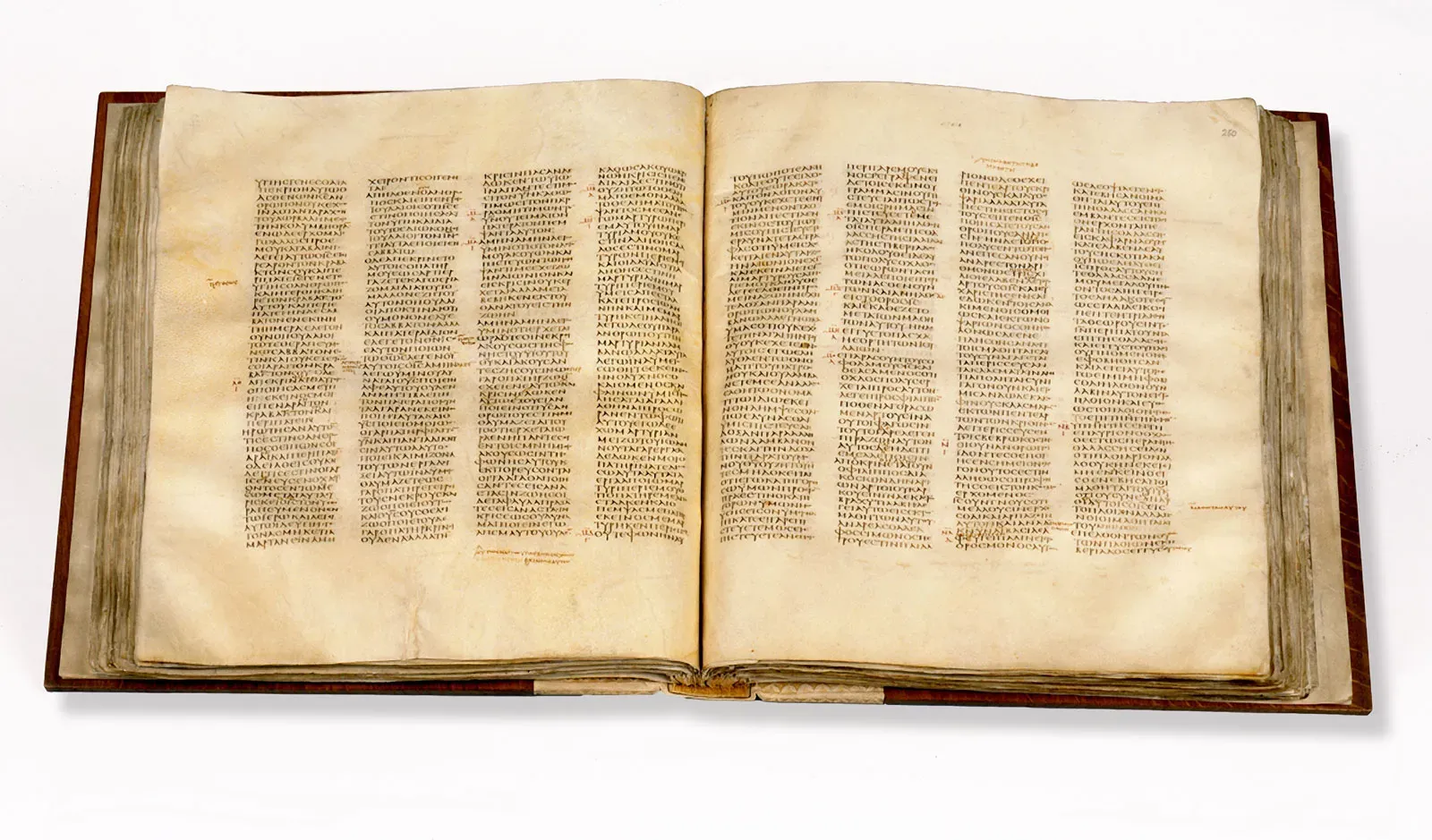
First the setting. By the third and second centuries before the common era, the largest and most learned Jewish community in the world lived in Alexandria, spoke Greek, and increasingly read its scriptures in Greek, in the translation we call the Septuagint. Translation is never neutral, and this one quietly began the weld before anyone argued a word of theology, simply by choosing Greek words. The covenant God of Israel was rendered theos and kyrios, the very terms the Greek philosophical and religious world used for the divine and the lord, so that from the first the God of Moses was dressed in the vocabulary of the God of the schools. The clothes carry assumptions. To call Yahweh ho theos in a city full of people who had read their Plato is already to invite the identification this post is about.4
But the decisive moment is one verse, and it is the best single illustration in the entire series of how a weld is made, so we are going to slow all the way down for it. In Exodus, Moses asks God for his name, and God answers with a phrase in Hebrew: ehyeh asher ehyeh.
Here is the thing that almost no one in the Western theological tradition was told. In Hebrew, that phrase is not a statement of static being. The verb is dynamic, imperfective, oriented toward action and futurity. Ehyeh is "I will be," "I am becoming," "I will prove to be." The most defensible renderings of ehyeh asher ehyeh are along the lines of "I will be what I will be," or "I will be what I am becoming," or "I will be there however I will be there." It is a verb of presence-in-action, of faithfulness across time, of a God who defines himself not as a substance but as a way of being-toward his people in events yet to come. It is, in the most precise sense, a name that is a becoming rather than a being. The God who answers Moses is answering with a future tense.5
Now watch the weld. The Septuagint renders that restless Hebrew verb into Greek as egō eimi ho ōn: "I am the one who is," or "I am Being." Ho ōn, the present participle of the verb to be, the Existing One, Being itself. And with that translation a Hebrew verb of dynamic futurity becomes a Greek noun of static existence. "I will be what I will be" becomes "I am He Who Is." The God of becoming has been rendered, in a single lexical choice, as the God of Being. This of course flatters Greek conceptions of metaphysics, which prized stable, eternal, and unchanging identity over more dynamic theories that would not come back into fashion until the 20th century.
Philo of Alexandria, the great Jewish Platonist, then did consciously and at length what the Septuagint had done in a word. Reading his scriptures through Plato, he identified the God of Moses with the Platonic absolute, the truly existent, to ontōs on, that which alone can be said to be while everything else merely becomes and passes.6 Exodus 3:14 was his proof text and his hinge. God's own name, he could now say, declares him to be Being itself, the one thing that fully is, beyond quality, beyond change, beyond the reach of predication. The metaphysical vacancy the philosophers had left where the sky-father's face used to be, the abstract to theion waiting for an occupant, was now filled by the God of Israel, and the God of Israel was in the same motion refitted to occupy it. Both gods changed shape in the welding. The philosophers' absolute acquired a name and a people and a will. The covenant God acquired immutability, simplicity, timelessness, and a metaphysics. They came out the other side as one.
I want to be exact about what just happened, because it is the cleanest example of this series' whole thesis and because it is the seed of everything the rest of the series will argue. A weld is not a lie. The translators and Philo were not falsifying anything; they were doing the most natural and serious thing available to thoughtful people who held both traditions at once, reading each in the light of the other. But a weld is also not a discovery of pre-existing identity. The Hebrew verb did not mean Being; it was made to mean Being, by readers for whom Being was the highest category they had. And in being made to mean it, a live alternative was paved over. There was, in the Hebrew, a God who is fundamentally verb rather than noun, event rather than substance, a God whose perfection might consist in faithfulness through change rather than in immunity to change. That God, the God of ehyeh, the becoming-God, was the road not taken at Alexandria. The weld chose Being over becoming, the static over the dynamic, the noun over the verb.
Hold that fork in the road. Mark it. Because the entire constructive half of this series, the posts still ahead, is going to return to exactly this place and ask whether the West chose wrong. When we come to process metaphysics, to the idea that reality is fundamentally event and becoming rather than substance and being, and to the theologies built on it that picture a God who genuinely changes, genuinely is affected, genuinely participates in time, we will be standing again at Exodus 3:14, looking down the path the Septuagint did not take. The weld that this post celebrates as an achievement is the same weld those later posts will put on trial. That is not a contradiction. It is the shape of an honest inheritance: you can admire the workmanship and still ask whether the thing should have been built.
5. The Christian completion
The Christians inherited the welded God already half-assembled, and they finished the job with enthusiasm, because the fusion solved a problem that was peculiarly theirs.
Their problem was that they were claiming a particular Galilean Jew as the decisive disclosure of the universal God, and they needed that universal God to be philosophically respectable to the Greek-educated world they were trying to convert. Philo's welded deity was made for them. The earliest Christian intellectuals reached for it at once. Justin Martyr, in the second century, argued that the logos, the divine reason the Stoics had talked about and the Gospel of John had already identified with Christ, had been scattered as seeds, logos spermatikos, throughout human history, so that Socrates and Heraclitus and the philosophers who lived by reason were in a real sense Christians before Christ. That move annexes the entire Greek philosophical tradition to the biblical God in one stroke; it says the God of the philosophers and the God of the Bible were the same all along, and the philosophers were dimly worshipping the Father of Jesus Christ without knowing his name.7
The Alexandrian Christians, Clement and Origen, were Philo's direct heirs, reading the scriptures through Platonism as a matter of course, and from them the welded God passed into the bloodstream of Christian theology. The divine attributes that define the God of classical theism, the God of the creeds and the catechisms, are very largely the philosophers' attributes, imported wholesale and bolted onto the biblical narrative: simplicity, the doctrine that God has no parts and no composition; immutability, that God cannot change; impassibility, that God has no passions and cannot suffer or be moved; eternity, that God stands outside time; aseity, that God depends on nothing. None of these is the native idiom of the Hebrew Bible, whose God changes his mind and is moved to the depths and acts in sequence through time. All of them are the native idiom of Greek metaphysics. The God of Abraham was, attribute by attribute, refitted in the philosophers' workshop.
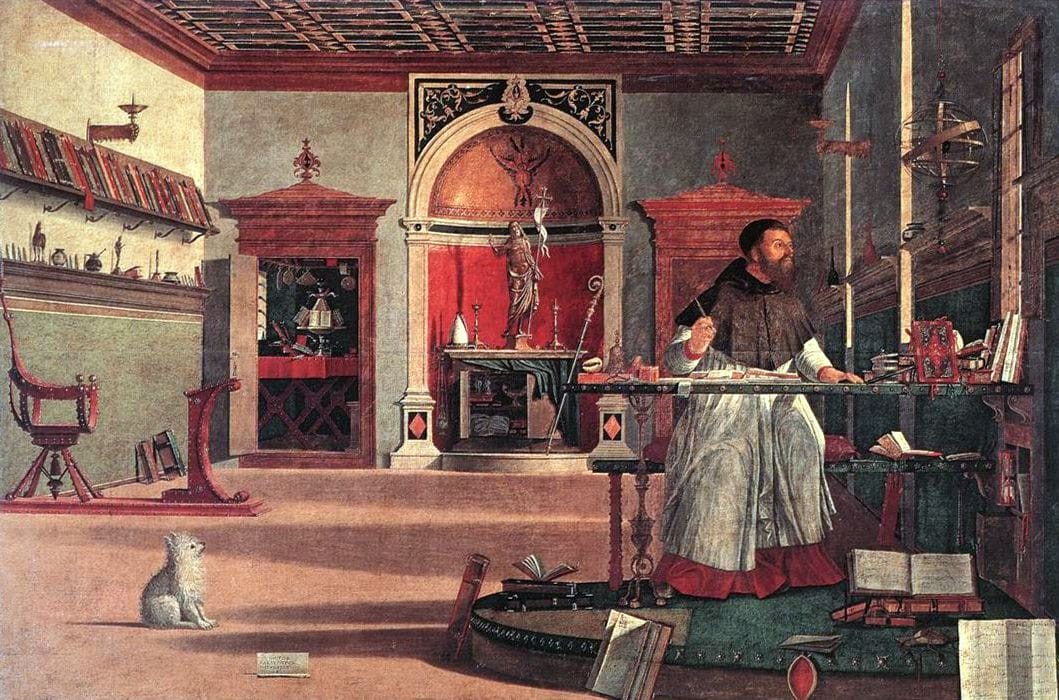
Augustine sealed it for the Latin West, and he did it, fittingly, at Exodus 3:14. Reading the verse through the Neoplatonism of Plotinus, which had given him the language he needed to think of God as immaterial at all, he took ego sum qui sum, I am who am, as the disclosure that God is Being itself, idipsum, the selfsame, the truly and unchangeably existent, beside which all created things barely exist because they are always slipping out of being into change and time. For Augustine the soul's whole journey is up out of the realm of becoming, where things are born and die and are never simply themselves, into the presence of the One Who Is, who alone fully is.8 The Hebrew verb of futurity had become, by way of the Septuagint and Philo and Plotinus, the Latin metaphysics of immutable Being, and it had become the foundation of Western theology. By the time the Nicene Creed says "God, the Father Almighty, maker of heaven and earth," the phrase means, simultaneously and without any sense of strain, the covenant Father of Israel and the Neoplatonic source of all being. The weld is complete. The seam is, for the moment, invisible.
6. The weld is in the dictionary
If the fusion were only a matter of high theology you might think it a specialist affair. But the weld went all the way down into the ordinary vocabulary of the West, and the seventh post lets us see it sitting in plain sight in the most common word of all.
When the Latin-speaking church needed a word to render both the Greek theos and the God of Israel, it reached for the word its own language already had for god, and that word was Deus. We know exactly where Deus comes from, because we spent the last post tracing it: it is *deywós, the Indo-European bright one, the celestial, the sky-belonging, the same root that gives divine and deity and that names the sky-father himself.9 So the Latin church, in the act of naming the fused God, reached past everything Semitic and picked up the Indo-European sky-word, and that word is what the West has called God ever since. Deus became Dieu and Dios and Dio and Deus again across the Romance map, and the English God, though it comes from a different Germanic root, sits in a language whose divine and deity are still the old sky-word wearing Latin dress. The West, having welded the covenant God of Israel to the refined sky-father of the Greeks, then named the product with the sky-father's own ancient name. The fusion is not hidden in the creeds. It is in the dictionary. It is the first word of grace before meals.
And it is back, of course, in the sentence we started with. Our Father, who art in heaven. The Father is two fathers at once, the abba of an Aramaic-speaking teacher and the ph₂tḗr of the steppe sky-god, the same word the Greeks fossilized in Zeus patēr and the Romans in Iūpiter. And he is in heaven, the bright sky that was the sky-father's original body, the dyew- that is the root of the whole inheritance. Every clause of the most repeated prayer in the Western world is a place where the two rivers run together. The people saying it are right that it is one prayer to one God. They are simply unaware that the one God has two springs, and that the prayer names both.
7. The sun that clung to him
The abstract weld is the heart of the matter, but the Indo-European sky-father did not arrive at the confluence as pure metaphysics only. He brought some of his celestial furniture with him, and a surprising amount of it is still bolted to the Christian God, hiding in the calendar and the architecture where no one thinks to look for theology.
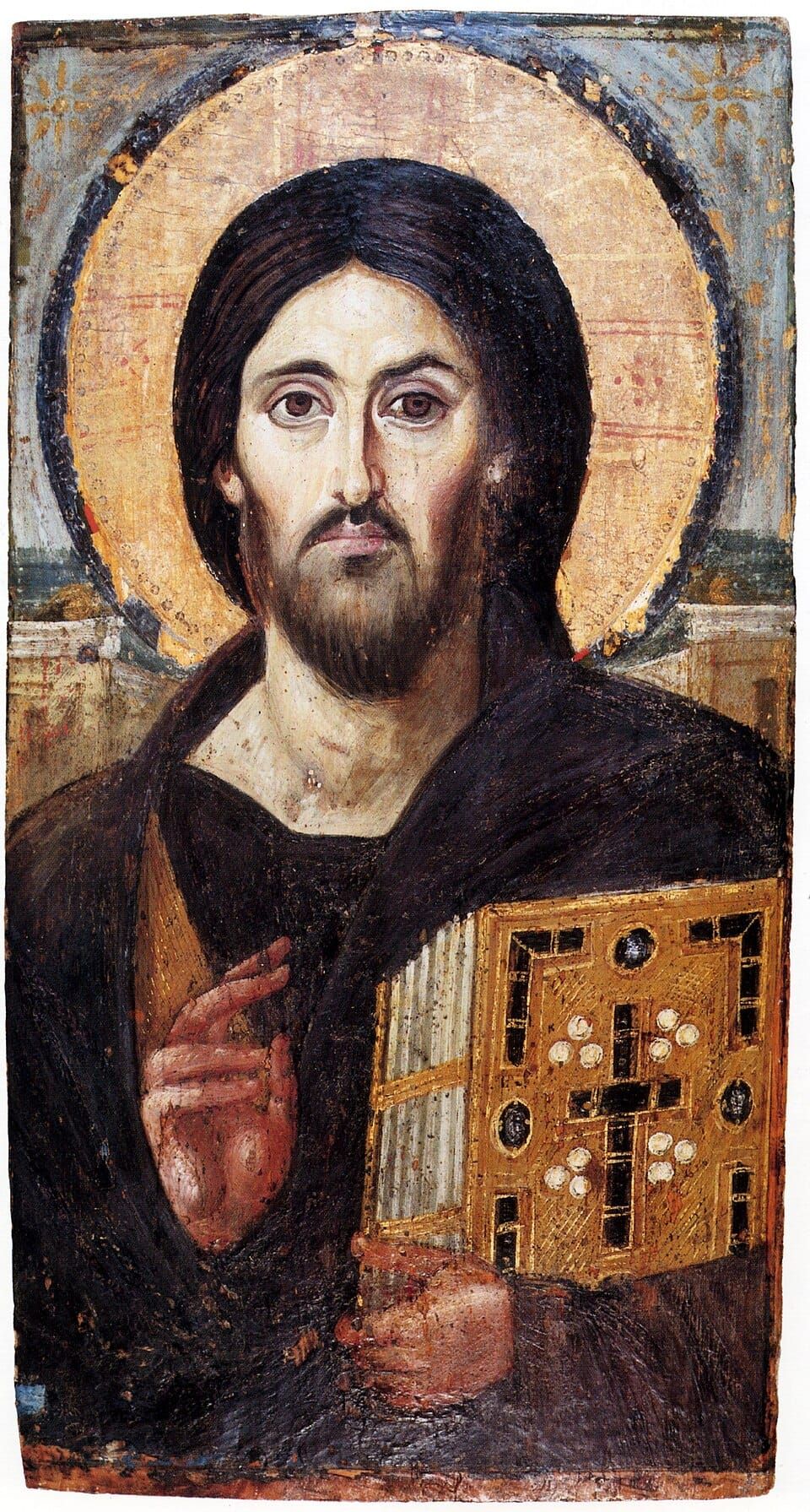
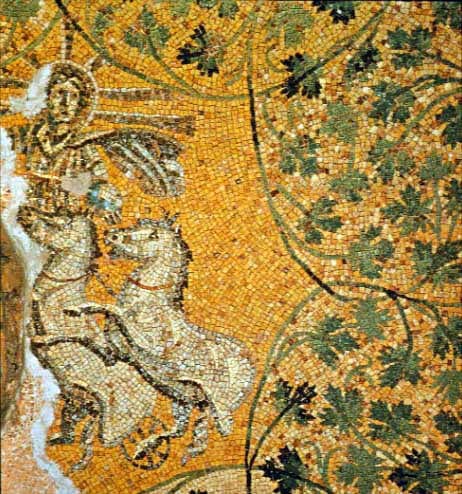
The sky-father's sky was, before anything else, the realm of the sun, and the sun stuck to the welded God like burrs to a coat. The Christian day of worship is dies Solis, the day of the Sun, Sunday, and the church kept the solar name even as it filled the day with its own meaning. The date on which the West celebrates the birth of Christ, the twenty-fifth of December, sits at the winter solstice, in the neighborhood of the Roman feast of Sol Invictus, the Unconquered Sun, whose rebirth at the turning of the year the new religion quietly overwrote with the birth of a different light. Christ himself is hailed in the tradition as Sol Iustitiae, the Sun of Righteousness, and Sol Salutis, the Sun of Salvation. Churches were oriented to the east so that the congregation prayed toward the sunrise; the dead were buried facing the dawn; the convert at baptism renounced the dark of the west and turned to the light of the east. The halo behind the head of Christ and the saints is a solar disc, the radiate nimbus that crowned the sun-gods and the deified emperors, transferred without apology to the new holy ones.10
None of this means Christianity simply is sun-worship, a tired claim that overreaches in exactly the way this series tries not to. The meanings were genuinely transformed; the sun became a metaphor and a setting rather than the object of worship. But the furniture is inherited furniture, and it is the sky-father's. The God who is addressed as Father in the bright heaven, on the day of the Sun, at the rebirth of the light, in a building aimed at the dawn, behind whose Son's head hangs the sun's own disc, is a God still trailing the celestial residue of *Dyḗus ph₂tḗr, five thousand years downstream and still faintly shining. The weld took the philosophers' refinement of the sky-father, but it could not quite scrub off the sky.
8. The seam that never closed
A good weld is invisible, and for most of Western history this one was. But it never fully fused, and the line where the two metals met has been the fault line of Western theology ever since, breaking open again and again whenever someone notices that the God of the argument and the God of the prayer do not quite behave like the same being.
The most famous person to feel the seam was Pascal, who one night in 1654 had an experience he could not name and wrote down, on a scrap of paper he then sewed into his coat and carried for the rest of his life, a few broken phrases. The first of them is the whole of this post in seven words: Dieu d'Abraham, Dieu d'Isaac, Dieu de Jacob, non des philosophes et des savants. The God of Abraham, of Isaac, of Jacob, not of the philosophers and scholars.11 Pascal had spent his life among the philosophers' God, the God of the metaphysical argument and the clockwork cosmos, and in that night of fire he met, or believed he met, the other one, the personal and particular God of the covenant, and the gap between them was so violent that he had to mark it forever. He had put his finger directly on the seam. The two gods that the weld had made one came apart again in his hands, and he chose a side.
In modern theology the seam acquired a name. Adolf von Harnack, the great liberal church historian, argued at the turn of the twentieth century that the development of Christian doctrine was in large part a process of Hellenization, the progressive overlaying of the simple ethical religion of Jesus with the metaphysical apparatus of Greek philosophy, until the gospel was buried under dogma.12 The welded God, in Harnack's telling, was a corruption, and the task of theology was to scrape the Greek metaphysics back off and recover the Hebraic original underneath. The thesis was enormously influential and it is, like the sun-worship claim, an overreach, and honesty requires naming why. James Barr, in the middle of the century, demolished the linguistic version of this whole picture, the seductive idea that there is a "Hebrew mind" that thinks in dynamic verbs and concrete time and a "Greek mind" that thinks in static nouns and abstract being, and that you can read these opposed mentalities off the grammar of the two languages. Barr showed that this dichotomy was itself a modern construction, projected backward, linguistically naive, and unable to bear the weight put on it.13 So the Hellenization thesis cannot be the simple morality tale Harnack made it, a pure Hebraic gospel defiled by alien Greek metaphysics. The two traditions were entangled long before anyone could have kept them pure, and there was no untouched original to recover.
And yet, with all those cautions made, the seam is really there. Something was chosen at Alexandria and something else was set aside. The God of classical theism really is more the philosophers' absolute than the Bible's character, and the tension between the two has driven the deepest arguments in Western religious thought, not because thinkers were confused but because they were feeling, accurately, a join between two things that were genuinely joined and never genuinely melted into one. The history of Western theology can be read as the long argument over this seam, conducted by people who mostly did not know it was a seam.
That argument is where this series is going next. Because the obvious question, once you can see the weld, is whether the right metal was chosen, and that is precisely the question that the metaphysics of the twentieth century reopened. When a philosopher proposes that reality at bottom is not substance but event, not being but becoming, not the static perfection of what cannot change but the living advance of what genuinely does, he is reaching back past the weld toward the road not taken at Exodus 3:14. He is asking whether the God of ehyeh, the becoming-God, the verb that the Septuagint turned into a noun, was the truer one after all. The seam that never closed is the doorway out of the genealogy and into the constructive work, and we are about to walk through it.
9. Coda: two springs, one cup
We have now traced the whole river system to its heads. The seventh post ended by saying that the people who recite the Lord's Prayer believe the water has only ever had one spring. We can now give the honest count. It had two great springs, the Semitic and the Indo-European, three if we are honest about the Mesopotamian tributaries that fed the Semitic stream, and you can still taste each of them in the cup the West drinks from and calls, simply, God. The covenant Father out of Canaan and the exile. The bright sky-father off the steppe, refined by the philosophers into Being itself. The dragon-slaying storm-god of two language families at once. All of it run together at Alexandria and sealed at Nicaea and carried for two thousand years as a single inheritance felt as bedrock, which is, as ever in this series, sediment all the way down.
That is the end of the genealogy. We set out to show that no tradition is what it claims to be, that the origins are plural where the inheritors imagine them single, and that the river is braided to its source. We have shown it, I think, as fully as a handful of blog posts can. But genealogy is only the first half of the work, and on its own it can curdle into a merely deflating exercise, the kind of thing that leaves a reader knowing more and believing less and feeling smaller. That is not my desire. That is not where this series is going. Knowing that an inheritance is composite is not the end of the matter; it is the beginning of the more interesting question, which is what to do with it, how to hold a tradition once you know it is a confluence, whether the forks not taken might still be open, and what a more honest and more pluralistic relationship to the whole human inheritance might actually look like.
We have spent eight posts learning where the water came from. It is time to ask what to drink, and how. The braid does not end at the source. It runs all the way down to us, and we are still in it.