
The Hellenic Matrix, or, the River Arrives in Greece (The Braided River, Part 5)
The river finds its way to the Hellenistic world and both classical and medieval philosophy begin to exert their influences, bringing classic and antique additions to the flow.
1. After Alexander, or, the meeting in Babylon
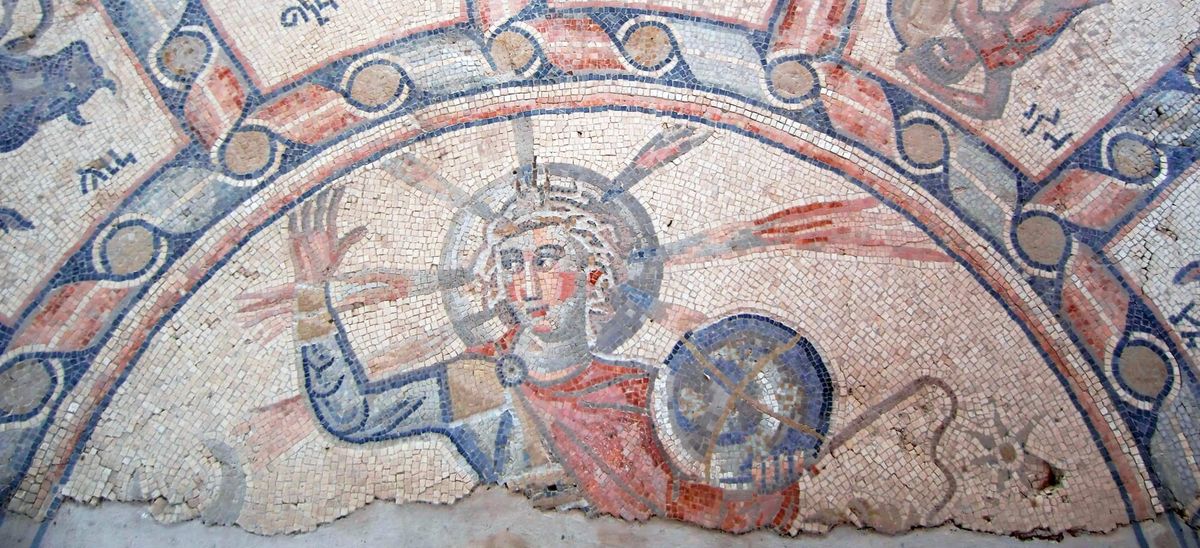
When Alex the G.'s cavalry broke the Persian line at Issus in 333 BCE, the men on the field understood that an empire had changed hands. What none of them could have understood is that a grammar had changed hands with it. Within two generations the whole Eastern Mediterranean, from the Nile delta to the upper Tigris, was conducting its administration, its commerce, and increasingly its prayers in a single language: the koine, the common Greek of the Hellenistic world. A Jew in Alexandria, a Phoenician in Antioch, a Greek settler in Babylon: all of them now shared a medium. And a medium, as this series has had occasion to insist at every turn, is never neutral.
We have watched the tradition take on cargo before. The Watchers came down out of Mesopotamia; the architecture of the last things came in from Persia. But those were, for the most part, furnishings: stories, figures, a calendar of the end. What arrives with Greek is something more intimate and far harder to see, because it arrives not as content but as form. Persia gave Judaism things to think. Greece gave it the categories with which to think, and a people who has borrowed its categories has borrowed something it can no longer point to, because it is now pointing with it.
This is the braid that runs closest to the bone, and the one most fiercely denied. A believer who will cheerfully concede a little Babylonian colour in Genesis, or a Persian tint to the Book of Daniel, will go quite pale at the suggestion that the soul he expects to survive his death, and the Word (erm, "logos") he confesses was made flesh, are both of them Greek before they are anything else. Attend, because that is precisely the suggestion.
2. The Translation That Changed the Theology
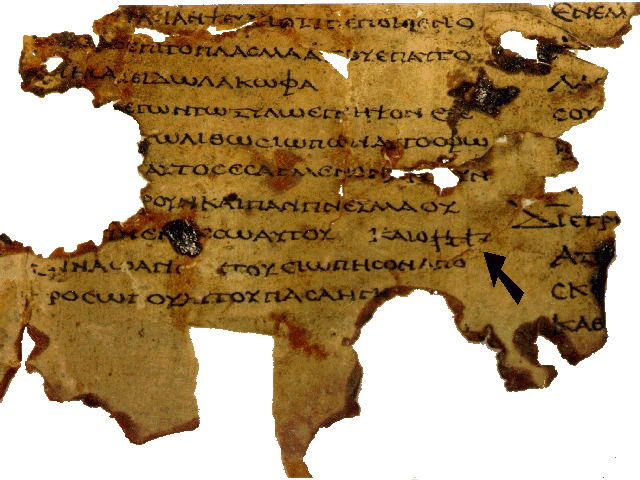
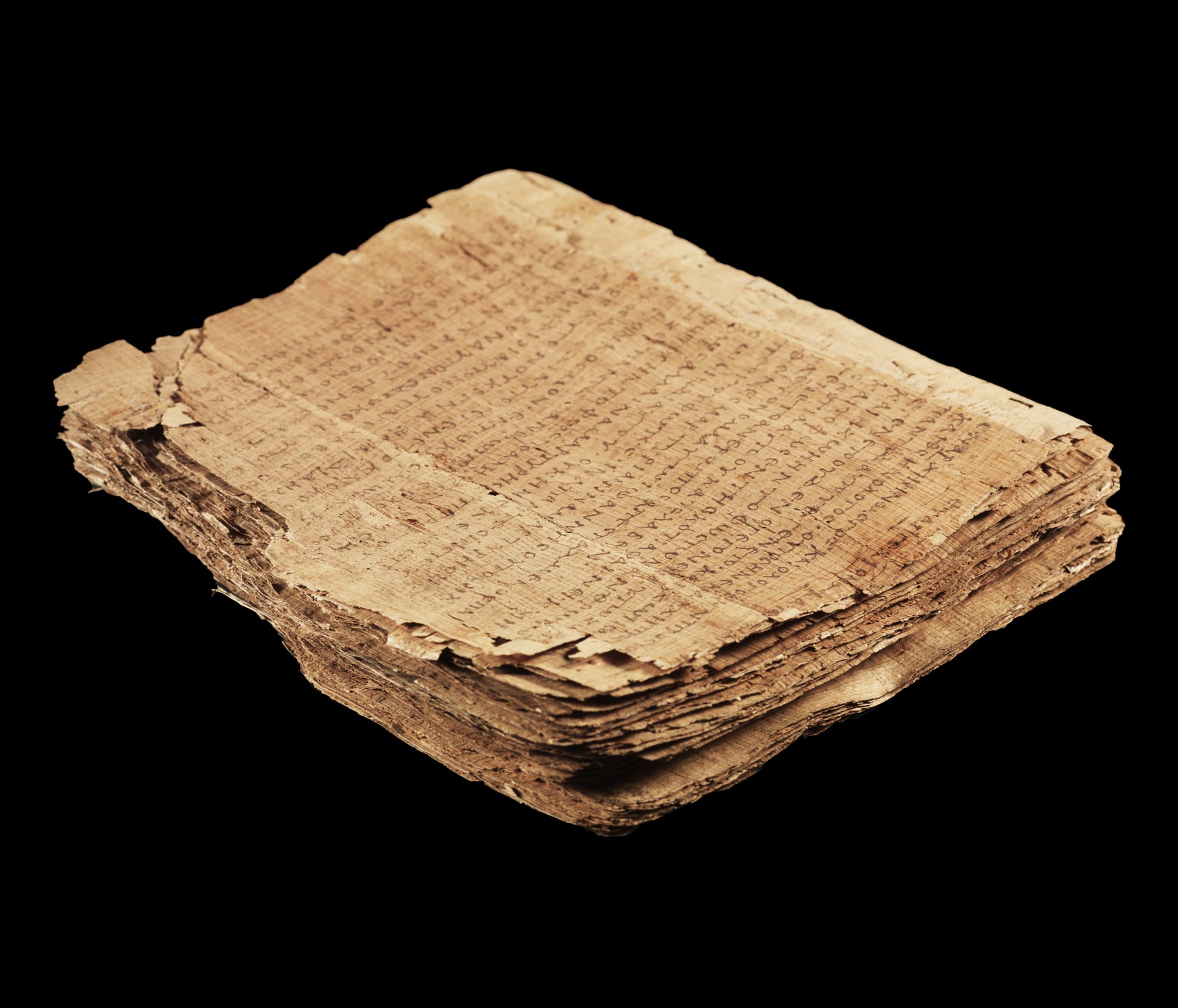
The hinge is an artifact, and we can hold it in our hands. Sometime in the third century BCE, in Alexandria, the Jewish community there set about translating its scriptures into Greek for a population that no longer read Hebrew comfortably (or, in many cases, at all). The result, the Septuagint, is one of the most consequential documents in the history of the West, and almost nobody outside the guild has heard of it.1
The pious legend, preserved in the Letter of Aristeas, has seventy-two scholars produce seventy-two independent translations that turn out to be miraculously identical, the divine seal on a Greek Torah. The legend is doing damage control. It is anxious, two centuries early, about exactly the thing we are about to say: that a translation is a theology, and that this one quietly rewrote the faith it claimed only to carry across.
Consider one word. The Hebrew nephesh means something like the whole living, breathing creature, the throat through which breath passes, the self as an animate body. It is not a part of you; it is you, alive. The Septuagint renders it, sensibly enough, as psyche. But psyche by the third century BCE is not an innocent word. It has been worked over by Orphics and Pythagoreans and, above all, by Plato, until it means the immortal, immaterial, detachable part of a person, the part that pre-exists the body and outlives it, the part for which the body is at best a vehicle and at worst a tomb (soma sema, as the slogan ran). To translate nephesh as psyche is not to find the Greek for a Hebrew word. It is to pour Hebrew anthropology into a Greek vessel and let it take the vessel's shape.2
The same thing happens to the geography of death. Sheol, the shadowed, undifferentiated Hebrew underworld where everyone goes and nothing much happens, gets translated as Hades. We traced in an earlier installment what Hades dragged in behind it: a populated, structured, morally sorted Greek underworld with rivers and judges and neighbourhoods. The translator reached for the nearest Greek word, as any honest translator must. The nearest Greek word came freighted.
This is the mechanism worth slowing down for, because it will recur for the rest of the post. The tradition did not, by and large, sit down and decide to adopt Greek metaphysics. It reached, in good faith, for Greek words, because it was now living in Greek, and the words arrived with their furniture already installed. Tessa Rajak has shown how the very survival of diaspora Judaism depended on this Greek scripture, how it was the condition of remaining Jewish in a Greek world.3 The price of survival was a slow, invisible translation of the self and its destiny into terms a Hebrew prophet would not have recognised. Nobody signed for the delivery. That is how the deepest inheritances always arrive.
3. The Expanding Concept of the Soul
Press on the word psyche and the whole edifice of "what happens when you die" begins to shift under the hand.
The Hebrew Bible, taken on its own terms and read without the spectacles later generations bolted on, has remarkably little to say about an afterlife, and what it says is bleak and democratic. The dead go down to Sheol, the righteous and the wicked alike, and there they are rephaim, shades, faint and forgetful, cut off even from the praise of God ("the dead do not praise the LORD," says the Psalmist, with no apparent expectation of contradiction). There is no immortal soul gliding free of the corpse, because there is no detachable soul at all. The nephesh is the living person; when the breath goes, the person does not relocate, the person stops. Job wants to be hidden in Sheol precisely because it is oblivion, a place to not-be until God's anger passes.
This is not a primitive failure to arrive at a doctrine of immortality. It is a different anthropology, and on its own terms a coherent one. James Barr argued the case bluntly: the hope of immortality is not native to the Hebrew scriptures; it is something that happens to them, later, under pressure.4 The pressure has two sources. One we have already met: the Persian-inflected hope of resurrection, the dead raised bodily at the end, which surfaces late and unmistakably in Daniel 12 ("many of those who sleep in the dust of the earth shall awake"). The other is Greek, and it points in an entirely different direction.
For the immortal soul and the resurrected body are not two ways of saying the same comforting thing. They are rival eschatologies, and they do not fit together. Resurrection assumes you are dead, really and wholly dead, body and nephesh both, until God remakes you; it is a doctrine about divine power exercised on a corpse. Immortality of the soul assumes you never wholly died at all, that the essential you slipped its bodily moorings at the moment of death and carried on; it is a doctrine about the kind of thing you always already were. One needs a future and a God who acts. The other needs only a present and a metaphysics. (That the later tradition would weld them into a single creed, and that most believers would recite the welded version without noticing the seam, is a tribute less to theology than to the human appetite for having things both ways.)
4. Metempsychosis and Immortality
You can watch the Greek answer win, in real time, inside the Jewish corpus itself.
Open the Wisdom of Solomon, composed in Greek in Alexandria probably in the first century BCE, and the Hebrew picture has simply evaporated. "The souls of the righteous are in the hand of God, and no torment will ever touch them. In the eyes of the foolish they seemed to have died... but they are at peace." This is not resurrection; nobody is raised, because nobody, in the sense that matters, ever went down. The body is incidental. The author even reaches, in a famous passage, for the frankly Platonic claim that "a perishable body weighs down the soul," the soma sema of the Orphics in respectable Jewish dress.5
4 Maccabees goes further still and turns Stoic. Its martyrs do not hope to be raised; they reason their way to fearlessness through the supremacy of pious reason over the passions, and they pass at death directly into immortality, in a treatise that is essentially a Stoic diatribe with a Jewish altar at its centre.6 By the time we reach Philo, the resurrection of the body has become very nearly an embarrassment, a crudity to be allegorised into the soul's ascent.
And here is the braid in its most consequential form, the one that reaches all the way to the reader of this sentence. The mainstream Christian tradition did not choose between these two logics. It took both, and it has been quietly paying the interest ever since. The creeds confess the resurrection of the body, the genuinely strange, genuinely Jewish hope: that God will raise the dead. The funeral homily, the consolation card, the thing the grieving believer actually believes, almost always describes something else entirely: that the departed soul is already with God, already at peace, already there, the body in the ground a discarded husk. That is not the resurrection of the body. That is the immortality of the soul, and it is Plato's, by way of Alexandria. N.T. Wright has spent a long and pointed career trying to get the church to notice which of its two hopes it has actually been living by, with limited success, because the Greek hope is the more portable, the more immediately comforting, and the one that asks nothing of God except that he keep what was always going to last anyway.7
The water from the Greek tributary did not muddy the Jewish stream. It became, for most who drink from it, the stream, so thoroughly that to point at it now is to be told one is pointing at nothing, at water itself, at the obvious shape of what a person is.
5. Ave Sophia
It would be a tidy story if the Greek categories had simply invaded a defenceless Hebrew tradition, and tidy stories are almost always the ones to distrust. The truth is stranger and more to our purpose: the Jewish stream was already reaching toward the very thing Greece was about to hand it. The socket was cut before the plug arrived.
Long before Alexander, Hebrew thought had begun to personify one of God's attributes and let her walk around. Hokmah, Wisdom, appears in Proverbs 8 not as a quality God possesses but as a someone, feminine, who was there before the world: "The LORD created me at the beginning of his work, the first of his acts of long ago." She is beside him as he sets the heavens in place, and the text calls her amon, a word so contested it has been read as "master craftsman" and as "little child playing," which tells you how hard the tradition was straining at the edges of its own monotheism.8 By Ben Sira, early in the second century BCE, Wisdom is given a speech of her own (Sirach 24): she comes forth from the mouth of the Most High, ranges over creation looking for a place to rest, and is told to pitch her tent in Israel, where she is identified outright with the Torah. (Hold on to that verb, pitch her tent; it has an appointment later in this post.)
Then, in the Wisdom of Solomon, written in Greek in Alexandria, the personification steps fully into Greek dress. Sophia becomes "a breath of the power of God, a pure emanation of the glory of the Almighty," "a reflection of eternal light, a spotless mirror of the working of God, an image of his goodness." This is no longer the playful craftsman of Proverbs. This is a metaphysical principle described in the precise vocabulary of Middle Platonism, emanation and image and reflection, the apparatus of a transcendent source casting its likeness down through the orders of being.
What matters for the braid is the direction of motion. The Jewish tradition was not a passive vessel that Greek thought filled. It had spent centuries building a figure, an intermediary, a someone-beside-God through whom the unreachable God reached the world. It had cut a socket exactly the shape of what the Greeks were machining. When the two met, the fit was so clean that to this day people argue about which side made the connector.
6. The Hellenic Logos and the Power of Words
For the Greeks had spent five hundred years machining the plug, and they called it the Logos.
The word is ordinary Greek for "word," "speech," "account," "ratio," "reckoning," and it is exactly its ordinariness that let it carry so much. Heraclitus, around 500 BCE, was the first to make it strange. There is, he said, a Logos by which all things come to pass, a hidden rational order behind the visible flux of fire and river, and most people live as though asleep, never grasping the very thing they spend their lives inside. "Listening not to me but to the Logos," he wrote, "it is wise to agree that all things are one." The rational structure of reality, present everywhere, recognised almost nowhere: the idea is launched.9
The Stoics took it and made it divine. For them the Logos was the reason immanent in the cosmos, a fiery intelligent pneuma pervading all matter, ordering it from within; the universe was a single rational animal, and each human mind a chip of the cosmic reason, a logos spermatikos, a seed of the Word. To be wise was to live in accordance with the Logos, which was at once the structure of the world and the structure of right thinking, because they were the same structure.
Middle Platonism, the philosophical air Philo breathed, added the final pressure. Its problem was transcendence. If the divine source, the One, the Good, is truly beyond, beyond being, beyond predication, then how does it touch a world of mud and matter at the far end of reality? The answer was a ladder of intermediaries: the Demiurge who shapes, the World Soul that animates, the Forms reconceived as thoughts in the divine mind. Something had to stand between the unspeakable source and the visible world and do the work the source was too exalted to do directly.
So by the first century BCE, the two streams are running side by side toward the same confluence, and neither knows it. Judaism has a transcendent God and a personified Wisdom who mediates his presence. Greek philosophy has a transcendent One and a Logos who mediates its order. One tradition reaching down from scripture, one reaching up from physics, and the gap between them narrowing to nothing in a single city on the Egyptian coast. All that was needed was a man standing in both rivers at once.
7. The Platonic Synthesis of Philo
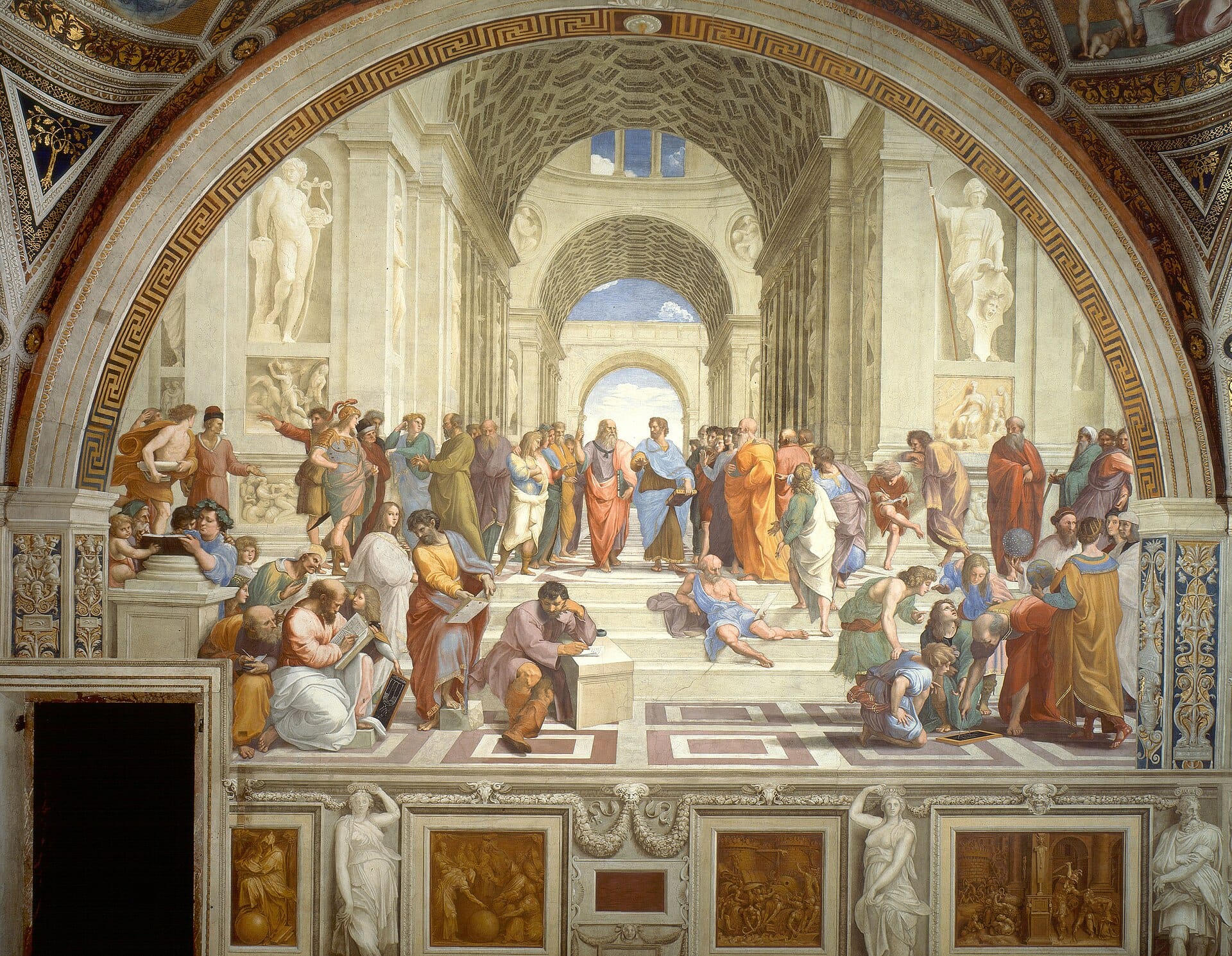
The man was Philo of Alexandria, a wealthy and impeccably educated Jewish philosopher who lived roughly from 20 BCE to 50 CE, devout in his observance and Greek to the marrow of his thinking, and who undertook one of the most audacious intellectual projects of antiquity: to demonstrate, by allegorical reading of the Torah, that Moses had anticipated and surpassed the entire Greek philosophical tradition. Plato, on this account, was a Greek-speaking Moses; whatever was true in the Timaeus was there in Genesis first, for those with eyes to read.
The keystone of the whole edifice is the Logos. Philo's Logos does an extraordinary amount of work, and it is worth setting the jobs side by side, because every one of them will be inherited. It is the rational plan in the mind of God, the intelligible world, the totality of the Forms conceived as God's own thoughts before anything is made. It is the instrument of creation: Philo reads the "and God said" of Genesis 1 as creation effected through the Logos, the spoken reason by which the transcendent God shapes a matter he is too pure to handle directly. It is the immanent bond holding the cosmos in coherence. And it is the mediator between God and humanity, to which Philo gives a startling sequence of titles: the "firstborn son" of God, the "image" of God, the "high priest" of the cosmos, and, in a phrase he uses with evident care, the "second God," deuteros theos, while insisting all the while that he remains a monotheist.10
Now attend, because the next sentence is the hinge of the entire post. This Logos theology, this picture of a supreme transcendent God and a divine mediating Word who is somehow both God and beside God, was not a Christian invention, nor a Greek corruption smuggled into Judaism from outside. It was a respectable current within Second Temple Judaism itself. Daniel Boyarin has made the case at length: the "two powers in heaven" that later rabbinic authorities would brand a heresy were, in Philo's day, an unremarkable feature of the Jewish theological landscape, and the Logos who heads the Fourth Gospel arrives not as an intruder from Athens but as a familiar figure from the Hellenistic synagogue.11 This is the braided-river thesis in its purest and most uncomfortable form. The single most "Christian"-sounding sentence in the New Testament, the one a believer would point to as the very signature of the faith, was a Jewish commonplace built out of Greek parts, and it was lying ready to hand, fully assembled, before Christianity had a word to say.
8. And the Word Became Flesh...
So when the author of the Fourth Gospel sat down to begin his account, late in the first century, and reached past the manger and the genealogy for something prior and larger, he reached for the Logos, and every educated reader in his world knew the territory.
"In the beginning was the Logos, and the Logos was with God, and the Logos was God. He was in the beginning with God. All things came into being through him, and without him not one thing came into being." A reader schooled in Philo recognises every beat: the Word in the beginning, the Word with God, the Word as the agent of creation, presently the Word as light shining in darkness. Nothing here would have surprised an Alexandrian. He has heard all of it before; he could have written most of it himself.
And then comes the sentence that breaks the machine. Kai ho logos sarx egeneto. "And the Word became flesh and dwelt among us." The verb is eskenosen, "pitched his tent," "tabernacled," the same tent that Wisdom pitched in Israel in Sirach, the same Shekinah-glory that filled the wilderness tabernacle, now stretched over a particular Galilean body.12
Everything up to that verb, Philo could have endorsed. That verb, he would have regarded as a category error bordering on blasphemy. For the entire function of the Logos, in Philo as in every Platonist behind him, is to mediate between the divine and the material precisely because the two cannot directly meet. Matter is the realm of shadow and decay; the transcendent does not enter it, that is the whole point of having a mediator at all. The Logos exists to keep God's hands clean. To say that the Logos became flesh is to take the elaborate Greek apparatus for holding the divine and the material apart and use it, in its own vocabulary, to slam them together. It is the borrowed instrument turned against the purpose it was built to serve.
This is the moment to be precise about what the braid does and does not claim, because here the historicising and the debunking part company. Did the evangelist read Philo? The scholars are genuinely divided, and the division is instructive. The case for direct dependence points to the dense verbal and conceptual overlap, the shared light-and-darkness imagery, the creation-through-the-Word, the plausibility of Philo's works circulating in a city like Ephesus. The case against points out that the Wisdom tradition we traced in section five, Proverbs and Sirach and the Wisdom of Solomon, had already supplied a personified divine intermediary present at creation, with no Philo required; that diaspora synagogues across the Greek world were metabolising philosophy at every level; and that John conspicuously lacks Philo's distinctive allegorical machinery.13 But notice that the debate, however it resolves, concedes the deeper point. We do not need a copy of Philo on the evangelist's writing table. We need only a world in which a Greek-speaking Jew could write the word Logos at the head of a gospel and trust that his readers would catch every resonance, and that world, that whole shared atmosphere in which Hebrew scripture and Greek metaphysics had become mutually legible, was itself the achievement of three centuries of patient, unnoticed braiding.
9. The Grammar of God
We have been tracing nouns, the soul and the Word, and nouns are the easy case, because you can at least point at them. The deeper inheritance has no referent you can isolate, because it is the grammar itself, the rules by which God gets thought at all once Greek has done its work.
Consider the God of the Hebrew Bible on his own terms. He is jealous and grieving and changeable; he "regrets" having made humanity and resolves to wash it away; he relents, argues, is talked down by Abraham, loses his temper and recovers it. He is, in the technical sense, passible, capable of being moved, because he is a character with a history. Now consider the God of developed Christian doctrine: impassible, immutable, simple, timeless, without body or parts or passions, beyond change because beyond time, beyond being itself. That second God is not a deeper reading of the first. That second God is the God of Parmenides and Plato and Plotinus, the unmoved and unmovable perfection of Greek metaphysics, fitted out with a biblical name and a sanctuary.
The route by which the philosophers' God displaced the prophets' God runs straight through the material of this post. Middle Platonism's instinct that the source is better than any predicate we could assign it, that we approach it only by stripping away, by saying what it is not, becomes the via negativa, the negative theology, that flowers through Philo and the Cappadocians and reaches its apotheosis in the writer who called himself Dionysius the Areopagite around the year 500, whose God "beyond being," hyperousios, is so frankly Neoplatonic that scholars have long recognised him as essentially Proclus in baptismal robes.14
And here is the floor beneath the floor. The believer who has never heard the word Neoplatonism, who would indignantly reject "philosophy" as a dilution of plain faith, nonetheless knows without being told that God is eternal, outside time, unchanging, perfect, simple, infinite, beyond all understanding. He takes himself to be describing the God of the Bible. He is in fact reciting the settled conclusions of Greek metaphysics in the accent of devotion, and he cannot hear the accent, because it is the only accent he has ever spoken in. We do not notice the grammar of our thought for the same reason a fish does not notice water. We are not looking at it. We are looking through it, at everything else.
10. The Confluence Is Not a Contamination; it is the Synthesis
At this point a certain reader, having followed all of this, draws the obvious and wrong conclusion: that Christianity has been exposed as warmed-over Greek philosophy, that the soul is a fraud and the Logos a borrowing and the eternal God a pagan smuggling, that the whole inheritance has been caught wearing a costume. That is the gotcha, and this series has refused it from the first instalment, so it would be unseemly to surrender to it now.
The braided river is not the story of a pure source contaminated downstream. There was never a pure source. The Hebrew stream we keep invoking was itself already Canaanite and Mesopotamian and Egyptian; the Greek stream was already Indo-European and Anatolian and Egyptian in its turn. Confluence is not adulteration. These concepts need not stand in acrimony or opposition; what we inherit is never meant to be one thing. We can embrace the complexity, erase the notion of stable and permanent identity, and situate ourselves within the flow, within process, such that what we perceive of as an impermissible leakeage of earlier into later as instead a rope of threads twisting through time. It is the way rivers exist, and traditions, and persons. To find Greek water in the Christian river and cry contamination is to imagine a river that could somehow consist of no water from anywhere, which is to say no river at all. And as Heraclitus reminded us, we do not step into the same river twice, but the water that once flowed by is itself returned to us as rain on the peaks, and so enters the flow of time once again.
And the confluence made something that is in neither tributary. "The Word became flesh" is not in Plato, who would have shuddered, and it is not in Isaiah, who never dreamt of it. The impassible God who nonetheless suffers on a cross, the eternal Word who acquires a birthday, the union of two natures in one person, these are not Greek and they are not Hebrew. They are the strange and genuinely new offspring of the braiding, and their strangeness, the way they strain against every category that produced them, is the evidence of their mixed parentage, not the verdict against it. To historicise the soul is not to abolish it. It is to say that when you reach for the word, you are reaching, whether you know it or not, across an Alexandrian harbour and into a Greek academy, and that knowing this changes the manner in which you hold the word, not your right to hold it. The water that comes down the Greek tributary is real water. It is in the river now. You could not send it back if you tried, and you would not want to, because it is half of what you mean when you say the river.
11. The Water Has No Memory
So here is where the Greek matrix leaves us, which is exactly where this series keeps arriving by other roads. The soul you expect to outlast your body, the reason by which you take yourself to be thinking these very words, the Logos the faithful confess, the timeless and changeless God to whom the prayer is addressed: each of these arrives in consciousness not as a doctrine one might revise but as the plain grain of the real, the way things simply and obviously are. That sensation, the feeling that one has struck not a tradition but bedrock, is the surest possible sign that the inheritance has gone all the way down. We never feel the categories we think with. We feel only the world they hand us, and we call it the world.
The series began by distinguishing ancestors from antecessors, those we descend from by blood and those we merely come after and are shaped by. Plato is not our ancestor. No line of descent runs from the Academy to the pew. He is our antecessor, and we came to think with him not by inheritance in the bloodline sense but by a long, lateral, improvised, largely accidental braiding, the way the rivers of the Canterbury Plains gather their water from glaciers they will never see and carry it, unknowing, to a sea that asks no questions about its source. The water has no memory of where it fell. We, who are made in some real part of that water, can at least attempt what the water cannot, and remember.
The river runs on from here. Having watched a plural, improvised, thoroughly braided tradition assemble itself out of Persian eschatology and Greek metaphysics and Mesopotamian myth, we turn next to the machinery by which that tradition learned to call itself one, to draw a single clean channel on the map and name everything it had borrowed and forgotten by another word: heresy. The braiding, it turns out, was the easy part. Forgetting that it ever happened took an empire.
1. The scholarly literature on the Septuagint is enormous; for an accessible orientation see Karen H. Jobes and Moisés Silva, Invitation to the Septuagint, 2nd ed. (Baker Academic, 2015). The legend of the seventy-two translators is preserved in the Letter of Aristeas, a Jewish-Hellenistic apologetic work of perhaps the second century BCE. ↩
2. On the holistic anthropology of nephesh see Hans Walter Wolff, Anthropology of the Old Testament (Fortress, 1974); on the philosophical freight carried by psyche by the Hellenistic period, the relevant background is Plato's Phaedo and the Orphic-Pythagorean soma sema ("the body a tomb") tradition. ↩
3. Tessa Rajak, Translation and Survival: The Greek Bible of the Ancient Jewish Diaspora (Oxford University Press, 2009). ↩
4. James Barr, The Garden of Eden and the Hope of Immortality (Fortress, 1992). The Daniel 12 reference is the clearest unambiguous resurrection text in the Hebrew Bible and is, tellingly, among its latest material. ↩
5. Wisdom of Solomon 3:1-3 and 9:15 ("a perishable body weighs down the soul"); see David Winston, The Wisdom of Solomon, Anchor Bible (Doubleday, 1979), on its thoroughgoing Middle Platonist idiom. ↩
6. On the Stoic architecture of 4 Maccabees, essentially a diatribe on the supremacy of pious reason over the passions, see David A. deSilva, 4 Maccabees: Introduction and Commentary (Brill, 2006). ↩
7. N. T. Wright, The Resurrection of the Son of God (Fortress, 2003), and, for the popular argument that the church has quietly substituted Greek immortality for Jewish resurrection, Surprised by Hope (HarperOne, 2008). ↩
8. Proverbs 8:22-31; Sirach 24; Wisdom of Solomon 7:25-26. On the notorious crux of amon in Proverbs 8:30 ("master craftsman" versus "nursling/little child"), see Gerhard von Rad, Wisdom in Israel (SCM, 1972). ↩
9. Heraclitus, frr. DK B1, B2, B50. On the Stoic Logos and the logoi spermatikoi see A. A. Long, Hellenistic Philosophy, 2nd ed. (University of California Press, 1986); on the Middle Platonist appetite for intermediary principles see John Dillon, The Middle Platonists (Cornell University Press, 1977). ↩
10. The titles are scattered through the Philonic corpus: "firstborn son" and "image" at De Confusione Linguarum 146-147; the "second God" (deuteros theos) at Quaestiones in Genesim 2.62. See David T. Runia, Philo of Alexandria and the Timaeus of Plato (Brill, 1986). ↩
11. Daniel Boyarin, Border Lines: The Partition of Judaeo-Christianity (University of Pennsylvania Press, 2004), esp. the treatment of Logos theology and the later rabbinic construction of the "two powers in heaven" heresy; cf. the earlier groundwork in Alan F. Segal, Two Powers in Heaven (Brill, 1977). ↩
12. John 1:14. On eskenosen ("tabernacled," "pitched his tent") and its deliberate echo of the wilderness tabernacle and the indwelling Shekinah-glory, see Raymond E. Brown, The Gospel According to John I-XII, Anchor Bible (Doubleday, 1966). ↩
13. For the direct-influence case and the shared-milieu case respectively, see Thomas H. Tobin, "The Prologue of John and Hellenistic Jewish Speculation," Catholic Biblical Quarterly 52 (1990), and James D. G. Dunn, Christology in the Making, 2nd ed. (SCM, 1989), which locates the prologue within the broader Wisdom tradition rather than requiring dependence on Philo specifically. ↩
14. The strong "Hellenisation of the gospel" thesis is Adolf von Harnack's, History of Dogma (1894-99); for a forceful corrective arguing that the Fathers were not naive prisoners of Greek apatheia see Paul L. Gavrilyuk, The Suffering of the Impassible God (Oxford University Press, 2004). On the Areopagite's debt to Proclus, the standard recognition runs back to Hugo Koch and Josef Stiglmayr in the 1890s and is now a commonplace of the scholarship. ↩