
Topping from the Bottom: The Right-Wing Concepts of Masculinity and Strength as Slave Morality in Lord Drag
Slave morality in lord drag: how the Free Press and the manosphere sell men the aesthetic of mastery while grooming them for weakness, and what Hegel, Nietzsche, and Lacan have to say about the counterfeit.
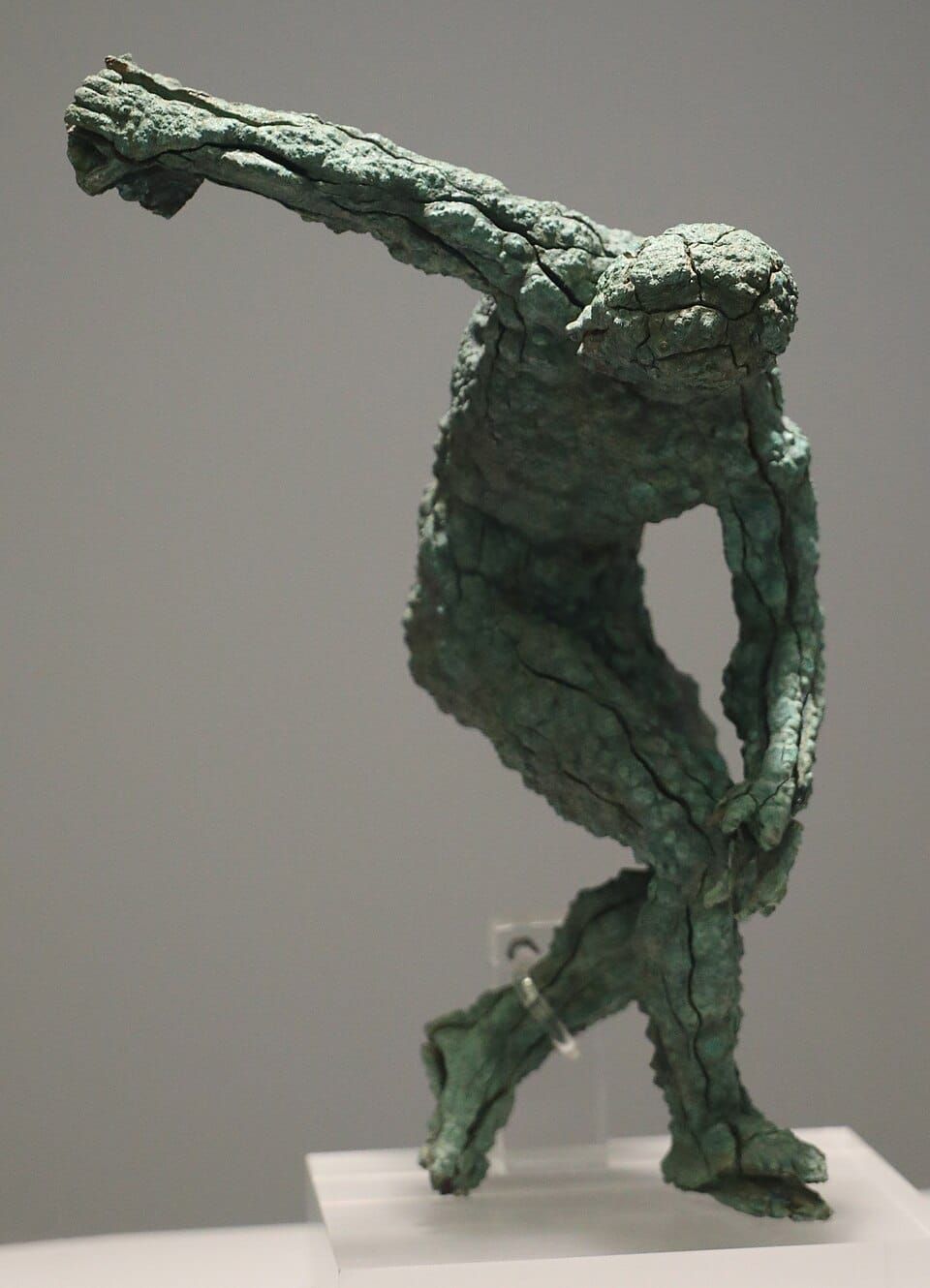
I’ve written elsewhere about masculinity and strength. It is not gender-essentialist to claim that socially, masculinity and strength are linked. To perform gender in the modern world as a masculine-identifying individual is, at some level, to try to find and embody “strength.” I do not think this is wrong, necessarily. Yes, it can be toxic when the only type of strength one can envision is physical dominance, but that is not the sum total of what it means to be “strong” in a masculine sense.
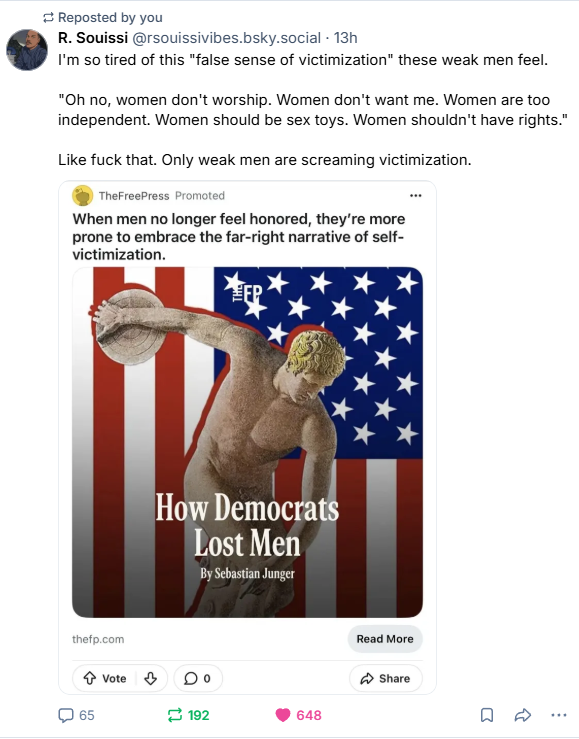
Taking this post as the beginning of our discussion, let us now examine the interrelation between masculinity and strength, in particular, the non-toxic, beneficial concept of strength I want to elucidate.
The right-wing narrative emerging from the Free Press (could link to them but shan't) is that when poor widdle men, who cannot be expected to take responsibility for themselves, are not sufficiently praised for being good boys, they will adopt a right-wing narrative that men are victims of a society that no longer values them qua masculinity.
It ought to go without saying—but nevertheless cannot—that this conception is itself highly indicative of weakness. The strong person need not receive external validation; she is capable of producing her own existential grounding. The strong person need not rely upon praise from others to do the right thing; virtue is its own reward. The strong person, when confronted with adversity, does not retreat into a victim narrative. They instead seek to overcome the challenge, to subvert it, and ultimately to surpass it on their own terms.
What articles like that from the Free Press do instead is provide a license to weakness: a Nietzschean value inversion that aids in the psychological salving of the shame of failing to live up to a self-imposed standard of “masculine strength” (usually defined by a community of toxic masculinity). It allows one to remain in the perception of master morality while embracing the weakness inherent in the lord-bondsman dialectic.
Attend.
The Lord/Bondsman Dialectic Explained
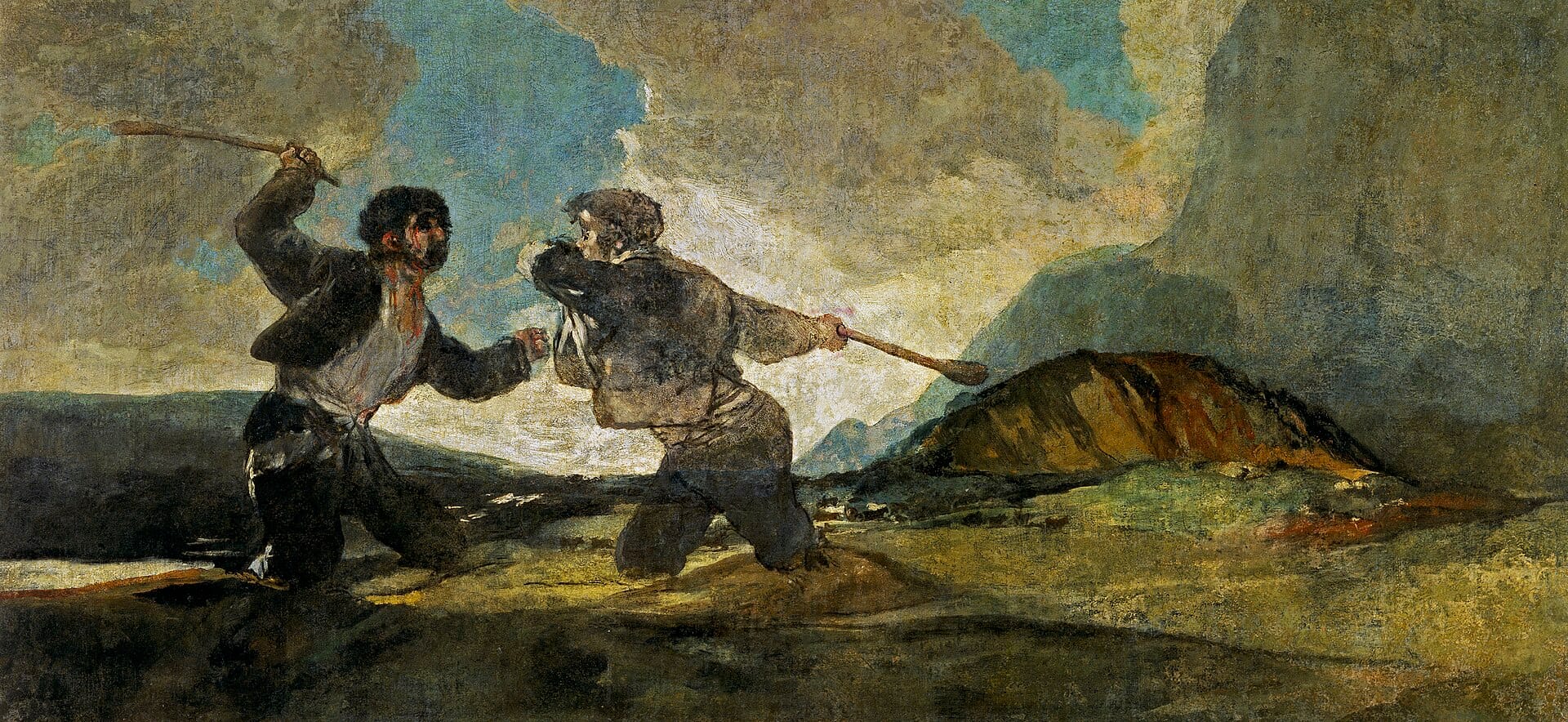
In the fourth chapter of the Phenomenology of Spirit, Hegel narrates a primal scene: two nascent self-consciousnesses encounter one another and stake their lives in a struggle for recognition. One proves willing to die rather than yield (the would-be lord). The other, preferring survival to honor, submits (the bondsman). What looks, at that moment, like victory for the lord turns out to be something subtler and more unstable. The lord has won the right to be recognized; the bondsman has forfeited, for now, the right to recognize himself as self-consciousness and is reduced to mediating between his master and the material world.
Here is where Hegel’s irony begins its slow, devastating unfolding. The lord, having secured recognition, now finds that the recognition he has received is the recognition of a being he himself has just refused to recognize as a person. The lord is recognized by a mere thing, but by a being he has reduced to instrumental labor. Master-recognition is therefore not what master-recognition wanted. It is recognition without validity. The lord is stuck consuming the fruits of the bondsman’s labor, increasingly dependent on the bondsman, increasingly removed from the world the bondsman actually touches and transforms.
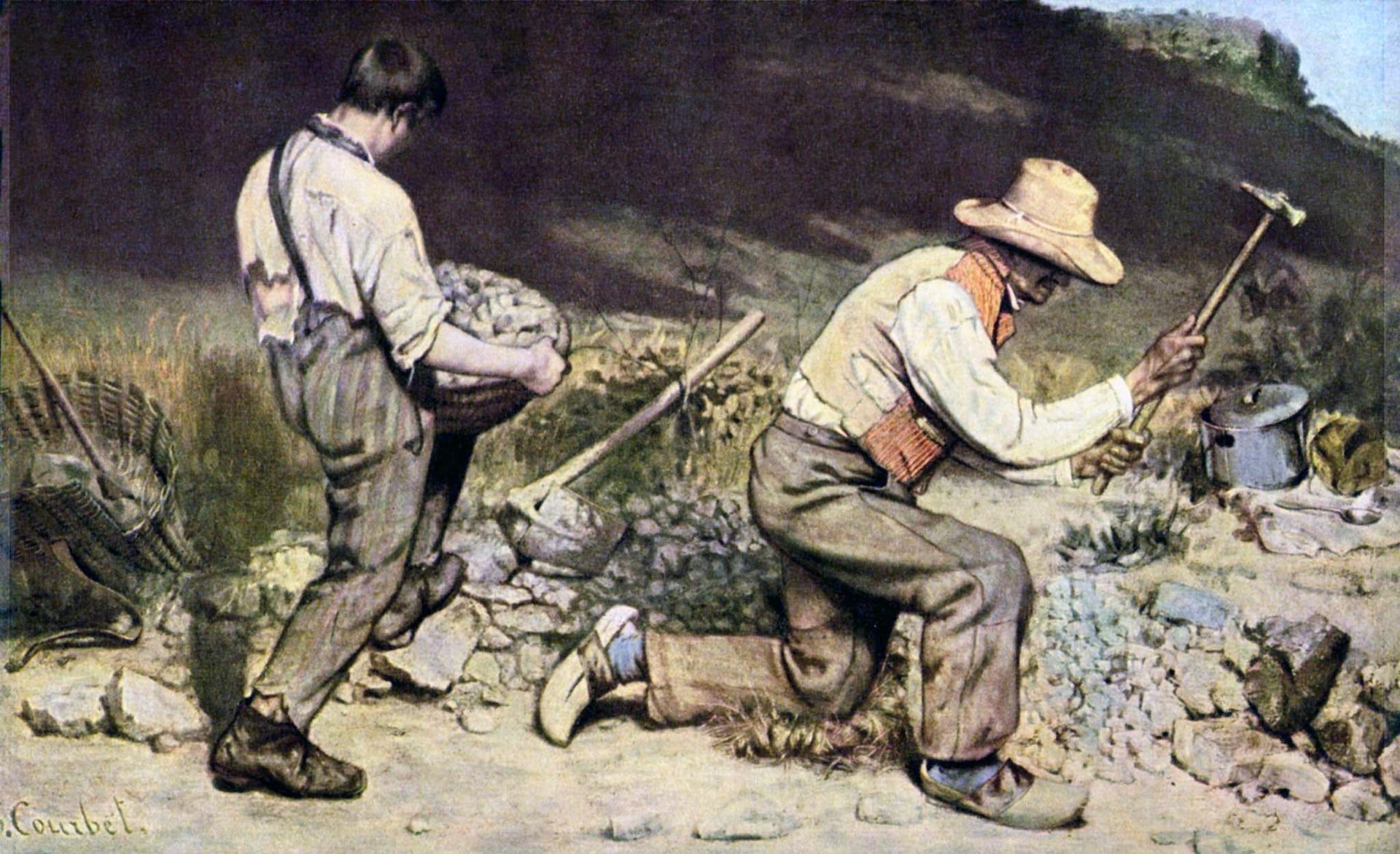
The bondsman, meanwhile, labors. And in working, he encounters two things the lord never will. First, he encounters the material world as something he can shape, his labor leaves its mark on being. The object of his labor becomes a mirror in which his own self-consciousness is reflected back to him. Second, and more crucially, the bondsman has encountered death. Not as an abstraction but as what Hegel calls der absolute Herr—the absolute master—the terror that preceded his submission, the fear that has shaken him to his foundations and trembled through every fiber of his being. This confrontation with finitude is not something the lord has had to face, because the lord is precisely the one who refused to imagine it, refused to sit with it, refused to make it his own.
It is the bondsman who is transformed by the encounter with death. It is the bondsman whose self-consciousness ripens through labor and finitude. It is the bondsman who, in Hegel’s famous formulation, finds himself in his own right. The lord, by contrast, is frozen, a figure of recognition without reciprocity, of consumption without creation, of mastery without self-relation.
I will spare the reader the full Hegelian resolution, which unfolds through stoicism, skepticism, and the unhappy consciousness. The point for our purposes is this: whoever cannot face death cannot become strong. Whoever insists on being recognized without having first risked and labored to earn that recognition is not a master. He is a lord in name only, hollow at the center, dependent on the very beings he has refused to grant reciprocal standing.
Keep this structure in mind. You will see it again, dressed in athleisure.
The Genealogy of Morals and Value Inversions
Nietzsche picks up the lord-bondsman problem and drives it in a direction Hegel did not quite anticipate, though Hegel would have recognized it. The Genealogy of Morals is, among other things, an account of how the weak (those who lose the existential struggle, those constitutionally or circumstantially unable to achieve a vitalistic, self-affirming, life-embracing stance) take their revenge on the strong by means of language and values.

For Nietzsche, the original nobles—his blond beasts, his Homeric aristocrats—do not define themselves in opposition to anyone. They call themselves “good” because they are overflowing with life; the word “good” in master morality is essentially a self-designation of flourishing. “Bad,” for them, is simply the opposite of good: the weak, the sickly, the pitiable, those who cannot flourish. Master morality is thus primarily active and primarily self-referential. It begins with a Yes! to itself.
Slave morality, by contrast, begins with a No! to the other. Those who cannot become noble, who cannot embody the master virtues, perform an extraordinary conceptual coup. They take the master’s qualities (strength, pride, willingness to dominate, appetite for life) and relabel them evil. They take their own qualities (weakness, meekness, patience, self-denial) and relabel them good. Ressentiment, Nietzsche’s untranslatable French loanword, names the psychological fuel of this operation: the impotent rage of those who cannot act on their grievance directly and so act on it symbolically, inwardly, linguistically. They rewrite the dictionary so that their failure becomes a virtue.
This, for Nietzsche, is the origin of Christian morality, and it is also (by extension) the origin of every sentimental moralism that celebrates the underdog as such, that valorizes suffering, that treats incapacity as a species of dignity. It is not that compassion or humility are wrong in themselves. It is that they have been cultivated by those who had no alternative and then marketed as universal virtues, such that the strong eventually come to apologize for their strength.
Now, and this is the pivot on which the rest of this essay hangs, slave morality is not the same thing as the Hegelian bondsman’s self-realization. The bondsman works. The bondsman confronts death. The bondsman becomes strong through the transformation of the world and of himself. The slave-moralist does none of this. He does not labor; he gripes. He does not face death; he flinches from it and then demands that someone console him for the flinching. He does not transform himself; he transforms the dictionary. He remains weak. He simply calls weakness by a new name.
Modern Performative Toxic Masculinity as a Power Inversion
At last we come to the Free Press's hypothetical gentleman and his many iterations and imitations. What, precisely, is going on when a cottage industry of supposed masculinists tells young men that their unhappiness is not a summons to transform themselves but a certificate of victimhood?
What is going on is slave morality in lord drag.
The trick being worked by the Free Press, by Tate and Peterson and every YouTube grifter with a microphone and a resentment, is this: they offer men the aesthetic of master morality (dominance, independence, pride, the rejection of feminine weakness) while providing the substance of slave morality. The promise is: you, noble sufferer, are the rightful heir to all that was once masculine. Society has conspired to deny you your birthright. You are not weak; society has made you weak. You need not work on yourself; you need only be vindicated. You need not face your death; you need only be told you should not have to face anything.
This is, in the precise Nietzschean sense, a value inversion: the manosphere’s customer has failed by whatever standards of masculinity he himself internalized, and rather than revise the standard or rise to it, he is sold a framework in which his failure is society’s fault. His weakness is relabeled strength (“truth-telling,” “red-pilled,” “based”); his ressentiment is relabeled clarity; his inability to face death—metaphorically, as the Hegelian bondsman must in order to become a self—is relabeled common sense. (Why would I want to do hard things? That’s what betas do.)
The psychoanalytically literate reader will recognize the structure. In kink parlance, it is called topping from the bottom: the submissive partner who, under the guise of being dominated, actually orchestrates every detail of the scene. It is the sub who dictates the script, polices the performance, and withholds consent the moment the dominant deviates from the submissive’s preferences. The dominant is actually in a service profession, acting within the boundaries set by the submissive to enact the fantasy. In this regard, being "dominant" in a relationship is not about being served (as the manosphere envisions it); it is about taking responsibility for, and fulfilling the desires of, one's submissive partner. The trappings of being served and having a dominant's needs fulfilled are the wages of performing this labor.
The manosphere’s customer wants the aesthetic and social privileges historically associated with masculine dominance while outsourcing every actually difficult component of masculine existence to someone else: to the state, to women, to “society,” to his influencer of choice. He wants to top (visibly, performatively, publicly) while bottoming in every structural sense that matters. He wants to be honored without having earned honor; to command without having risked; to be recognized without having reciprocated. He wants to be served without taking responsibility for and caring for those who do the serving.
Observe, further, the irony of the gym. The contemporary “masculine” customer performs masculinity through a regimen that, in psychoanalytic register, is thoroughly feminized: obsessive attention to appearance, compulsive self-measurement, the curation of an image for the approval of others (chiefly, if not exclusively, other men), skincare routines, caloric micro-management, supplement stacks with the granular logic of a cosmetics counter. None of this is wrong in itself; taking care of one’s body is good, and I say this as someone who engages in strenuous outdoor pursuits, exercises, and in general cares how he looks. But the ideological function of these regimens in the manosphere is not mastery of the self. It is the production of an image of mastery, for consumption by other men who are also producing images. It is drag. It is, in the strictest sense, a feminine economy of self-display that insists, loudly and continuously, on calling itself masculine.
And all of it is monetized. The apparatus of ressentiment has become a revenue stream: courses, supplements, dating coaches, premium Substacks, newsletters that offer permission rather than correction. Nietzsche foresaw the general shape of this. He did not foresee that it would come with an affiliate link.
Being Strong and Masculine in a Non-Toxic Manner
What, then, would masculine strength look like on its own terms, stripped of the grifters and the performance?
Freud (for all the clowning directed at him, for all the correct observations about his cultural parochialism and his clinical errors) gave us a durable framework here. The mature adult, in Freud’s late picture, is the one capable of Arbeit und Liebe: work and love. Not dominance, not recognition, not consumption, not revenge. Work: the sustained engagement with reality that produces something beyond the self. Love: the capacity to invest libidinal energy in an object outside the ego without being annihilated by that investment. The neurotic cannot do these things because he is still fighting the battles of his own infancy. The character-disordered (which in Freud’s framework includes a great deal of what we now call toxic masculinity) cannot do them because he has refused to accept the limits that make selfhood possible in the first place.
Lacan sharpens this with characteristic obliquity. The entry into subjecthood, for Lacan, requires the child’s acceptance of what he calls, pun very much intended, the Nom-du-Père: the Name-of-the-Father, which is also the Non-of-the-Father. The Father, here, is not literally dad; he is the symbolic function that introduces prohibition, law, lack, and therefore desire. To become a subject, one must accept that one is not the mother’s phallus, not the plenitude, not the everything; one must accept symbolic castration (the cut) in order to enter language and the social world. The subject is, constitutively, lacking. That lack is not a bug. It is the engine of desire, of speech, of love, of creative work.
The manosphere’s clinical signature—and I mean this with the seriousness the clinical register requires—is the refusal of symbolic castration. The structure is perverse in the precise Lacanian sense: a disavowal of the lack, an attempt to plug it with imaginary phallic substitutes (the body, the “alpha” posture, the revenue stream, the retweets, the curated harem). The perverse subject knows the lack is there but acts as if it were not; the whole performance is organized around the maintenance of this disavowal. One can read the entire manosphere as a vast collective enterprise dedicated to never admitting a single thing is missing.
Positive masculine strength is, then, rather unglamorous to describe. It consists of: the capacity to bear lack without demanding that someone plug it for you; the capacity to labor, in the full Hegelian sense, upon the material of one’s life (which includes one’s career, one’s relationships, one’s body, one’s obligations) and to be transformed by that labor; the capacity to face one’s death, one’s finitude, one’s limits, one’s eventual disappearance, and to act anyway; the capacity to desire, which requires accepting that you do not already have what you want; the capacity to love, which requires accepting that the beloved is not you and cannot be coerced into mirroring you. Strength in this sense is not the rejection of or immunization to weakness. It is not merely the overcoming of weakness in some dimension (like lifting weights to cultivate physical strength). It is a recognition that weakness is a part of the dialectic of strength, that all will be weak at times and in given circumstances. Strength then becomes (dialectically) the power to go on even when weak; to shelter the weak when you are strong, and to accept the shelter of others when you cannot be without experiencing the death of the psyche or the loss of identity. It goes back to the entirety of the Hegelian dialectic; you cannot abort it at any stage. You must work through it. That is true strength.
None of this is especially macho. None of it plays well in a thumbnail. But it is what the ancients were pointing at with their cardinal virtues, what the Stoics meant when they talked about a man’s relation to fortune, what the best religious traditions were trying (often clumsily) to transmit. It is also, not coincidentally, what the Hegelian bondsman achieves through his labor and his confrontation with death, and what the Nietzschean noble achieves in his self-affirming flourishing, minus the ressentiment, minus the image, minus the grift.
The men being sold self-victimization by the Free Press are not being offered masculinity. They are being offered a very expensive, very monetized counterfeit: the aesthetic of mastery draped over the psychological structure of a bondsman who has not yet done the work. They are, in the most literal sense, paying for the privilege of remaining weak while being told they are strong.
That is not tragedy. It is commerce. And the cure, for any given man on the receiving end of this pitch, is simply to do the work that no influencer can do for him: to sit with his own finitude, to labor upon his own life, and to stop demanding that the world apologize for failing to honor a version of himself he has not yet earned.
Strength, in the end, is not being honored. It is being the sort of person who could bear not being honored and still do the right thing.