
Nobody Wants the Lane: Dominance Games and Performative Domination in American Public Life
Our national psychosis has become oppositional defiant disorder. Or maybe we misdiagnosed it the first time. On coercion, mimetic rivalry, the struggle for recognition, and why someone will risk their life for a freeway lane they don't even want.

This morning I quote-skeeted a thread by Jean-Michel Connard with a question I meant only half as a joke: how did our national psychosis become oppositional defiant disorder?
Connard's thread was a complaint most of us could have written. Too many Americans, he observed, treat every interaction as a test of dominance: changing lanes on the freeway, reaching for the same item on a crowded shelf, arriving at a door at the same moment as a stranger. People will nearly wreck their cars to punish someone for entering "their" lane. They'll refuse a vaccine just to prove that nobody can make them. He closed with a verdict: "Just endless childish bullshit for no reason."
I want to take both halves of that verdict seriously. "Childish" is more precise than it sounds, since the defining disorder of defiance in the DSM is a childhood diagnosis. And "no reason" is, I think, exactly wrong. There are reasons. They just aren't the reasons the defiant would give you, and they aren't located in any of the things being fought over. Nobody wants the lane.
My thesis, stated baldly: we spent the better part of a decade diagnosing the American public with a psychosis, a mass break with shared reality, and we got the diagnosis wrong. What looked like delusion was mostly defiance. And defiance, unlike delusion, is a relationship. It has a structure, a history, a clinical literature, and, if we're lucky, a treatment.

The Wrong Diagnosis
Psychosis is a disorder of belief. The person in its grip has lost contact with the reality the rest of us share: he hears voices, thinks the television is addressing him, knows his neighbor has been replaced by an impostor. Crucially, the psychotic means it. The delusion is sincere, private, and largely indifferent to an audience. You can't argue someone out of a delusion, but you don't need to be in the room for it to persist.
Oppositional defiant disorder is something else entirely. Its criteria describe a persistent pattern, six months or longer, of irritability, arguing, defiance, and vindictiveness, all aimed at authority figures. Notice what that definition requires: an authority figure. ODD is a disorder of relation, not belief. It has a target. Take away the parent, the teacher, the rule, and the symptom has nothing to push against. The defiant child doesn't think the rule is false. He just won't follow it, because it's a rule.
So which better describes the last ten years? Consider some evidence.
Days after the 2017 inauguration, political scientists Brian Schaffner and Samantha Luks showed 1,388 Americans two unlabeled photos of the National Mall, one from Obama's 2009 inauguration and one from Trump's, and asked half of them a question with exactly one correct answer: which photo has more people? Fifteen percent of Trump voters picked the emptier photo, against two percent of Clinton voters and three percent of nonvoters. These weren't people who failed to perceive a crowd. Schaffner's own read was that they knew the answer and gave the wrong one anyway, to back their side. Political scientists call this expressive responding. A clinician might call it defiance.
Or take the work of Michael Bang Petersen, Mathias Osmundsen, and Kevin Arceneaux on what they call the Need for Chaos. Across eight studies of Americans published in the American Political Science Review, they found that some people spread hostile political rumors because they want to "burn down" the whole political order and hope to rise in status amid the wreckage. The preprint was blunter: these rumors get shared not because sharers think they're true, but because they expect the rumors to turn an audience against elites they dislike. That isn't a description of credulity. It's a description of a weapon.
Then there's the vaccine. Philipp Sprengholz, Cornelia Betsch, and Robert Böhm found that reactance triggered by a COVID vaccine mandate was linked to intentions to skip not just the COVID shot but an unrelated chickenpox vaccine as well. Think about what that means. Nobody had a theory about chickenpox. The objection wasn't to a substance, or even to a claim about a substance. It was to being told. The defiance generalized beyond its object, which is precisely what defiance does and precisely what a delusion doesn't.
This is why the content of the "national psychosis" has always been so oddly interchangeable. Microchips, horse dewormer, stolen elections, chemtrails, weather machines: each theory flared and faded, and the people who held them rarely seemed troubled when one was swapped for the next. If these were delusions, that churn would be bizarre. Delusions are sticky. But if they were never really beliefs, if they were placards held up in front of a refusal, the churn makes perfect sense. The placard changes. The refusal stays. Readers of the Stage Four series will recognize the move: a sign that has stopped pointing at anything except the posture of whoever holds it.
We didn't watch a psychosis turn into ODD. We watched our diagnosis catch up to the patient.

How Defiance Is Learned
Here is where the clinical frame earns its keep, because ODD has one of the most robust developmental models in child psychology, and it isn't flattering to anyone involved.
Gerald Patterson and his colleagues at the Oregon Social Learning Center spent thousands of hours watching families in their homes. What emerged was coercion theory, which describes a loop of mutual negative reinforcement: the child resists, the parent escalates, the child escalates further, and the cycle runs until one of them wins. Each side trains the other. If the parent caves, the child learns that escalation works. If the child relents, the parent learns that yelling works. Either way, everyone gets louder next time.
Patterson found that defiant children tend to come from homes where discipline is both overly harsh and inconsistent. Not just harsh, and not just permissive: both, by turns. He had a wonderful word for one parental contributor, "nattering," the indiscriminate low-grade scolding that carries no consequence and so teaches nothing except that authority is noise. Later work drew out the cruelest twist. When a parent gives in, it doesn't merely increase the child's demands; it also makes greater hostility from either side more likely in the next round. Capitulation doesn't buy peace. It buys a bigger fight down the road.
And the coercive household doesn't stay in the house. Patterson's kids drifted toward peers like themselves, forming a "deviant peer group" in which opposition and defiance were reinforced on all sides.
I don't think I need to belabor the mapping. Picture a political culture in which authority is alternately punitive and spineless: a state that will jail you for a joint and pardon you for a riot where you try to zip-tie the vice president because he made you sad. Picture public health agencies, newsrooms, party leaderships, and school boards that natter for years and then, when someone finally escalates hard enough, fold. Picture a culture in which the lesson of every confrontation is that whoever is willing to make the biggest scene gets their way. Now give that culture a peer group available at all hours, tuned by algorithm to reward the most defiant post in the room. You wouldn't need a single delusion to produce what we have. You'd only need the coercive cycle, run at national scale, for about fifteen years.
Nobody Wants the Lane
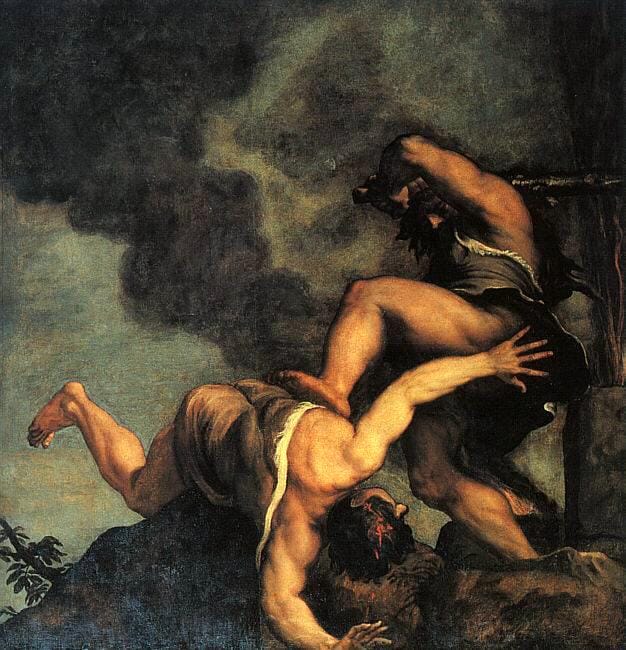
Connard's examples share something worth dwelling on. The lane, the item on the shelf, the doorway: none of them is worth anything on its own; they exist only as symbols of dominance, that A is greater than B. That's what makes the behavior look like it happens for no reason. But René Girard spent a career explaining exactly this. In his account of mimetic desire, we learn what to want by watching what others want, which means that the person reaching for the thing I'm reaching for is both my model and my rival. As the rivalry intensifies, the object recedes. The antagonists come to mirror each other, until Girard's "monstrous doubles" are locked in a contest in which the original prize has vanished. The fight over the lane is not about the lane. The lane was only ever the occasion for the other driver.
Hegel got there first, and more darkly. In the Phenomenology of Spirit, self-consciousness doesn't achieve certainty of itself through contemplation. It needs to be recognized by another self-consciousness, and the first form that demand takes is a fight to the death. Each combatant stakes his life to prove he is more than a living thing, that he values his freedom above his mere existence: "it is only through staking one's life that freedom is won." Alexandre Kojève made this scene the engine of all history. As Fukuyama has summarized him, Kojève's history opens with a primal duel fought not over mates, land, or food but over who gets recognized as dominant.
Read Connard's second post again with that in mind: "People put themselves in mortal danger to assert that dominance." That isn't a figure of speech. It's the master-slave dialectic performed at eighty miles an hour. The man who refuses a vaccine to prove no one can make him is, quite literally, staking his life for recognition.
But Hegel also knew how this ends, which is badly for the winner. The master who defeats the slave gets recognized by someone he doesn't recognize, which is to say, recognition worth nothing. He ends up dependent on the very person he despises. ODD has the same structure: the defiant child needs the authority he defies. Without the rule, there's no self to assert against it. That's why the defiant never seem satisfied by winning. Victory removes the opponent, and the opponent was the point.
Fukuyama, of all people, saw where this was heading. The End of History and the Last Man is remembered as a triumphalist book, but its final chapters are haunted by Kojève's question: what becomes of the human appetite for recognition, what Plato called thymos, once the great struggles are over? Fukuyama's worry was that people would struggle anyway. If they can't fight for a just cause because an earlier generation already won it, then "they will struggle against the just cause." His example was the students of May 1968, whose revolt he read as a rebellion against the absence of struggle in their comfortable lives; the particular demands, he thought, hardly mattered. He has since read the instability of the past decade through exactly this lens.
That is ODD as a philosophy of history: defiance whose content is a matter of indifference, aimed at whatever happens to be authoritative, because authority is the only thing left to push against.

The Shrinking Pie
Philosophy explains the form of the thing. It doesn't explain why it's so much worse here, and now. For that we need something more material.
The most useful recent work I know on this comes from Sahil Chinoy, Nathan Nunn, Sandra Sequeira, and Stefanie Stantcheva, published this year in the American Economic Review. Surveying more than 20,000 Americans, with family histories reaching back four generations, they measure zero-sum thinking: the belief that one person's gain is another's loss. They find it is inherited from lived experience, our own and our ancestors', and one of the strongest predictors is how much upward mobility the family actually saw. When your family's escalator stalls, you learn the world is a fixed pie. A fixed pie turns every encounter into a negotiation over slices. And a freeway lane at rush hour is about as pure a zero-sum good as exists: the space you occupy is, physically, space I cannot.
This isn't one party's pathology. The same study finds that a zero-sum mindset predicts support for redistribution and affirmative action, policies of the left, and for restrictive immigration, a policy of the right. It doesn't choose sides. It chooses the frame.
Layer onto that the much older script that Richard Nisbett and Dov Cohen called the culture of honor. In their famous experiments at the University of Michigan, a confederate bumped male students in a hallway and muttered an insult. Students raised in the South showed far larger spikes in cortisol and testosterone than northerners; their bodies were preparing for a fight over a shoulder-check. Nisbett and Cohen traced the pattern to herding economies with weak states, where a reputation for ready violence was the only deterrent against theft. In such a world, letting one slight pass invites the next. Every doorway becomes a referendum on whether you can be pushed around.
Now put a pistol in the glovebox. By Everytown's count from Gun Violence Archive data, 554 people were shot in road rage incidents in 2022, twice the 2018 total. I write this from West Texas, so I'll note without pleasure that Texas led the nation in road rage shootings in 2024, with roughly 17 percent of the national total.
Stalled mobility teaches that the pie is fixed. Honor culture teaches that yielding is weakness. Cheap firearms raise the stakes of the lesson to death. None of it requires anyone to believe anything false.
The Limits of a Diagnosis
There's a serious limit in this metaphor, and you all need it addressed by me up front rather than just humorously eliding about it with a sly grin.
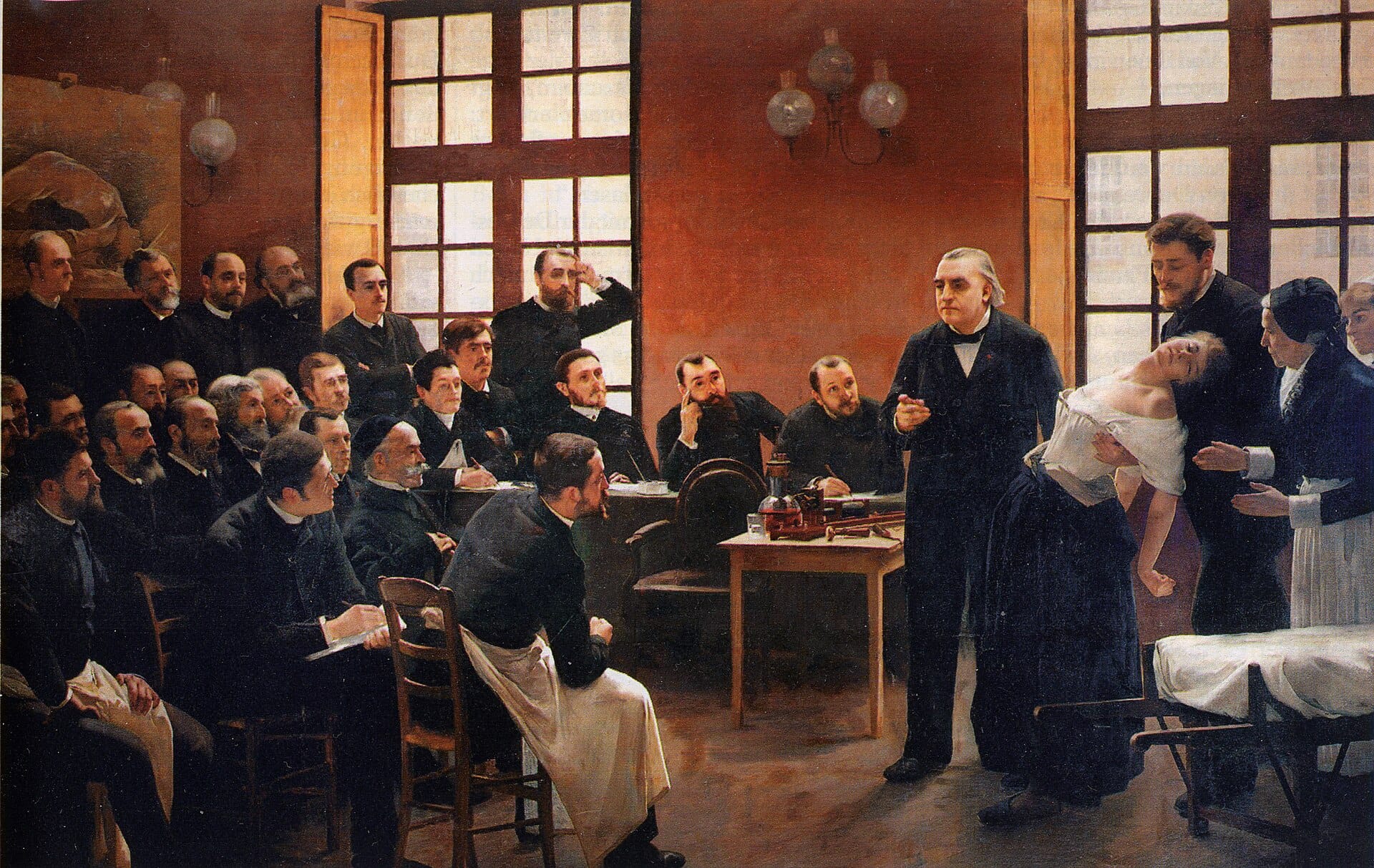
Psychiatric diagnosis has a long and ugly history as a political instrument. In 1851, Samuel Cartwright described "drapetomania," a supposed mental illness that made enslaved people run away. The Soviet Union diagnosed its dissidents with "sluggish schizophrenia." The move is always the same: recast a refusal of authority as a disorder of the one refusing, and you never have to ask whether the authority deserved obedience.
ODD itself doesn't escape that history. Black boys are more likely to be diagnosed with disruptive behavior disorders such as ODD, and less likely to receive an ADHD diagnosis, even when they present the same symptoms as white peers. The psychiatrist Rupi Legha has called ODD the "21st-century version of drapetomania." Defiance is sometimes the healthiest response available to a child, and to a citizen. Some authorities ought to be defied. A diagnosis that can't tell the kid who won't follow an unjust rule from the kid who won't follow any rule isn't a diagnosis. It's a disciplinary tool with a billing code.
So calling half the country oppositional defiant risks exactly what I'd criticize anyone else for doing. It flatters the analyst (in this case, moi), who gets to play the parent. It also overstates the case. When researchers at Penn tested whether vaccine mandates would backfire, they found that even people prone to psychological reactance said they were more likely to get vaccinated when told the shot was required. The defiance is real, but it's louder than it is widespread. (Which, I'll note, is itself consistent with the frame: defiance is a performance, and performances need an audience.)
Here is where Patterson rescues the metaphor. His deepest insight was that the disorder doesn't live in the child. It lives in the interaction, in the coercive loop between child and caregiver that each keeps feeding. In his model, ODD is a property of a system. That's the sense in which I mean it. I'm not diagnosing my neighbors. I'm describing a relationship between Americans and every form of authority they encounter, one in which all parties, the scolds included, have learned that escalation pays.
Treatment
If the disorder is in the system, so is the treatment, and the clinical literature is fairly clear about what works. In one longitudinal study, families assigned to the Family Check-Up, a brief intervention aimed at coercive parenting, saw markedly faster declines in children's oppositional and aggressive behavior, along with less coercion in the household. The interventions that work are boring. Stop nattering. Say less and mean it. Follow through, consistently. Don't reward escalation, and don't escalate back. Notice and reinforce the behavior you actually want, instead of reserving all your attention for the behavior you don't.
Translated out of the nursery, that's a reasonably coherent political program. Institutions that make fewer pronouncements and enforce the ones they make. Rules applied the same way to the rioter and the man with the joint. An attention economy that doesn't pay its highest wages for the most defiant post. And underneath it all, the material repair the zero-sum research points toward: a society in which people can watch their own lives improve without anyone else's getting worse. A growing pie is the only lasting cure for a fight over slices. And given last Tuesday's outcome, I think that is within our reach. It starts with accountability for the corruption that has gone on, but after that, it should be quick to forgive and quicker to look for real, practical solutions that will improve the material conditions of everyone in tangible ways.
Hegel's way out of the struggle for recognition was never victory. It was mutual recognition: the discovery that I can only be fully seen by someone I'm willing to see in return. That sounds grand, but at the scale of Connard's examples it's small and concrete. It's the driver who lets you merge. It's the stranger at the door who waves you through first. Each of those gestures says I see you, and I don't need to beat you to know who I am.
Nobody actually wants the lane (or even this Lane, apparently). They want to be seen taking it. The answer to "why" is that we've built a country in which being seen requires a fight. The answer to "what now" is to build a country where we refuse the fight, one where we can live peaceably with those who differ from us because we recognize a common underlying humanity.