Not a Matter of Black and White: The Modern Genesis of Race and Homer's Odyssey
In which we hopefully put this Odyssey casting nonsense to bed.
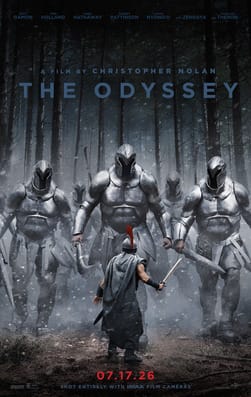
There is a particular kind of argument that flares up online every few years, and it has flared up again—this time with a $250 million IMAX accelerant. Christopher Nolan's The Odyssey opens July 17, and well before a single frame had been seen, the casting of Lupita Nyong'o as Helen (and, in a doubling, Clytemnestra) had detonated the usual ordnance. Elon Musk pronounced Nolan compromised; a final trailer collected downvotes at a ratio some claimed broke records set by Disney's Snow White; a Greek culture site complained, not unreasonably, that a foundational Greek epic had been cast without Greeks, though if they could find a single Mycenaean Greek speaker among their acting populace, I would be tickled pink.
The defenders answered in kind: Homer's world was broader and darker than the marble-white fantasy we inherited, and a dark-skinned Helen is not a betrayal but a correction.
I want to suggest that both sides are making the same category error, and that the mistake is old, specific, and worth naming. Both the outraged and the celebratory are assuming that "race" is a stable thing—a transhistorical fact about human bodies that Homer either got right or got wrong, that we can either honor or repair. It is not. Race, in the sense that structures that entire quarrel, is a modern invention. And the particular version of it doing the arguing—the one that decides a person's category by ancestry rather than appearance—is more specific still. It is essentially an artifact of the American racial regime that reached its legal apotheosis under Jim Crow. To read it back into the eighth century BCE is not interpretation. It is a category error wearing the costume of historical concern.
I made a version of this case at length in my earlier post on the Odyssey, and the Nolan discourse has only sharpened my sense that the point needs restating. So let me trace the concept of race—its genesis, if you will—and then come back to Homer, and to Helen's white arms.

The concept has a birthday, and it is not in antiquity.
Start with what the ancients had instead of race, because they were not colorblind and they were not free of contempt. What they had, overwhelmingly, was climate theory. From the Hippocratic On Airs, Waters, Places in the fifth century BCE onward, the standard Greek explanation for human variation was environmental: the sun burnt some peoples dark, the northern cold blanched others, and—flatteringly—the temperate middle produced the Greeks. The very word Aithiops encodes the theory: "burnt-face." The crucial feature of this account, the one that makes it categorically not modern race, is that it is malleable. Move a people to a new climate and, over generations, their bodies were expected to drift. There is no fixed heritable essence in it. Posidonius, Strabo, Ptolemy, Vitruvius, and Pliny all carried the framework forward; Arabic thought inherited it, and Ibn Khaldun was still working within it a millennium and a half later.
Outsider-prejudice, meanwhile, ran on axes that had nothing to do with pigment. The Greek barbaros was a linguistic slur—those whose speech sounded like "bar-bar"—not a chromatic one. Roman slavery, the decisive case, was emphatically not racialized: Thracians, Gauls, Germans, Syrians, and Greeks filled the slave markets, and en-slavability tracked conquest, debt, and birth, never phenotype. This is why the standard scholarly touchstone here, Frank Snowden's Before Color Prejudice, could argue that Greco-Roman antiquity had no systematic prejudice keyed to dark skin. Benjamin Isaac pushed back hard in The Invention of Racism in Classical Antiquity (2004), arguing that environmental determinism could essentialize groups and amounts to a kind of "proto-racism"; Denise McCoskey, in Race: Antiquity and Its Legacy, sits between them, insisting the ancient categories were real and consequential but simply organized differently than ours. That debate is live and worth respecting. But notice that even Isaac's "proto-" concedes the main point: the fully-formed thing of racism is a later vintage decanted by the time of the transatlantic slave trade.
The pivot runs roughly 1450 to 1700. The Iberian limpieza de sangre statutes of the fifteenth century introduced something genuinely new—the idea that Jewish or Muslim ancestry was an ineradicable taint in the blood, a type of sin that not even baptism could erase (and what a terrific renunciation of Christian orthodoxy that was!). That is the first real move toward biologized, heritable difference. The Atlantic slave trade then did the heavy lifting: as colonial slavery became racialized, skin color became the marker of en-slavability, and the ideology followed the economics to justify it. The Virginia statutes from the 1660s through the 1705 slave code are a legislative paper trail of exactly this hardening. Only then does the "scientific" scaffolding get built—Linnaeus's continental varieties of Homo sapiens in 1735, Blumenbach's five races and his coinage of "Caucasian" in 1795, and only in the nineteenth century does the whole apparatus curdle into full pseudoscience: polygenism, craniometry, Gobineau. Twentieth-century genetics then dismantled the biological claim while leaving the social category very much alive, especially in our laws and customs.
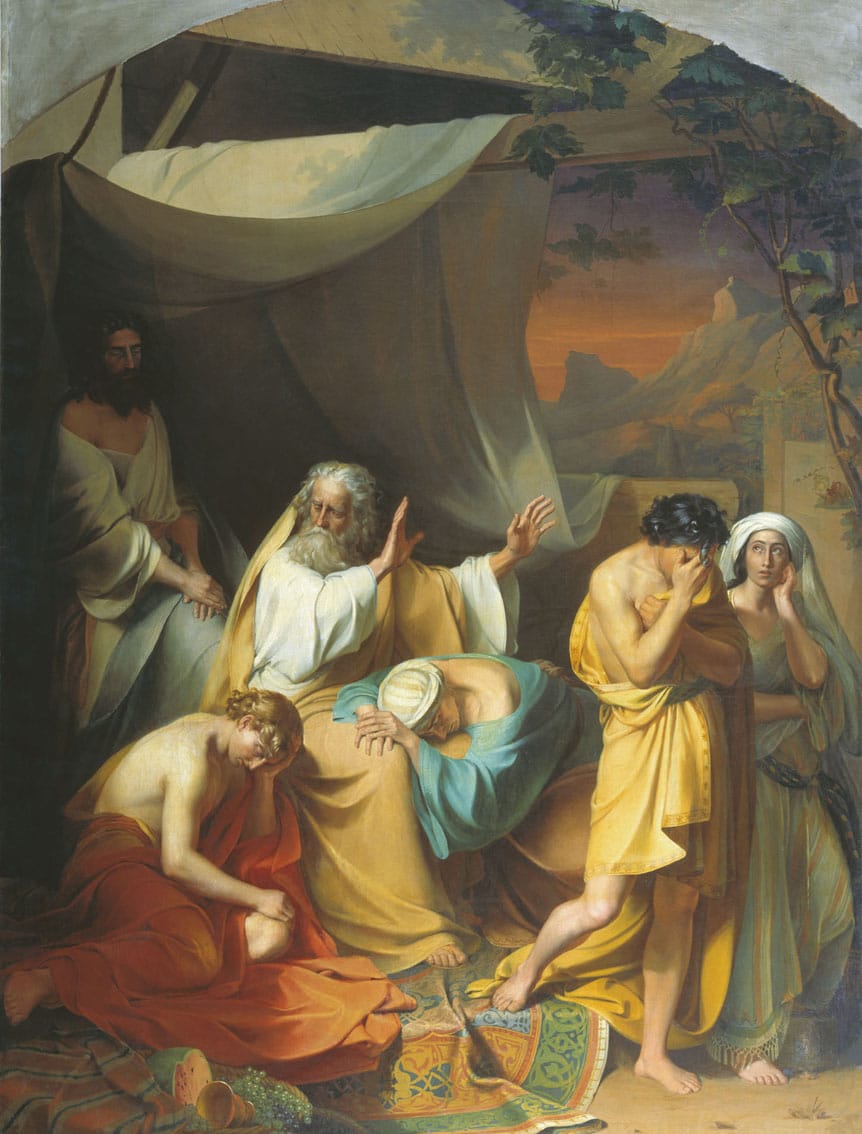
The theological materials that later got conscripted into all this deserve a note, if only to head off a common misreading. The curse in Genesis 9 says nothing about skin color; as David Goldenberg shows in The Curse of Ham, the reading of Ham as ancestor of Black Africans, and of the curse as a warrant for their enslavement, is a later accretion, not a biblical given. The seeds of a "darkening" reading do appear in late antiquity, but the racialized slavery apologetics are early-modern. The point generalizes: the pieces existed; the machine is recent.
If you want the sharpest one-line framing of the underlying error, it belongs to Karen and Barbara Fields, whose Racecraft names the sleight of hand by which the practice of racism conjures "race" into apparent existence as its own pre-existing cause. Race feels like the thing that explains the treatment. It is the treatment that produced the thing.
Back to Homer, and to Helen's arms.
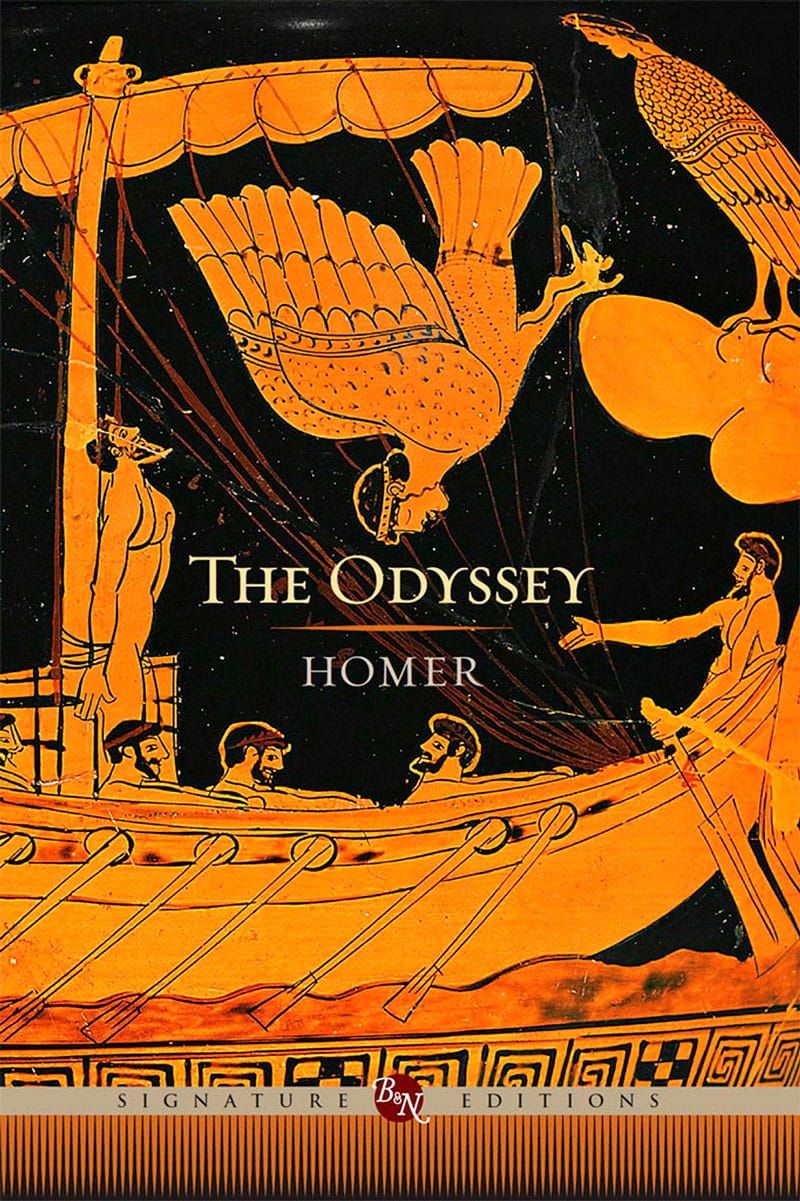
Now return to the poem, and to the actual words on the page, because the Odyssey turns out to be a nearly perfect instrument for exposing the anachronism—which is a delicious irony, given that it is currently being used to smuggle the anachronism in.
Consider the vocabulary the fight is nominally about. Helen's stock epithet, the one hurled around as proof she was "white," is leukōlenos or "white-armed." But this is a formulaic honorific applied across the board to aristocratic women (Hera wears it, Andromache wears it, Nausicaa wears it). White skin here is a marker of class and gender, not race: it signifies a woman of status who lives indoors, out of the laboring sun. It is the same logic that makes the bride of the Song of Songs explain that she is dark because she was made to work the vineyards—complexion as a class index, worlds away from a racial one. Reach for leukōlenos as a genetic passport and you have misunderstood the word at the level of grammar.
Then there is Odysseus himself, who is the trap the "historical accuracy" crowd keeps walking into. When Athena beautifies him, Homer twice makes him melankhroiēs("black-skinned") with dark, curling hair. His favorite companion Eurybates is melanokhroos, black-skinned and woolly-haired, and is honored precisely because his mind and Odysseus's "work the same way." Here blackness is a mark of the handsome, the vigorous, the cunning, a positive poetic coding, bound up with the poem's obsessive interest in whether appearance can ever be a secure guide to identity at all. This is the reading advanced in recent scholarship: Jackie Murray has shown how modern translators reflexively code Eurybates as "Black" (a racial reading Homer did not make) while a 2024 article in TAPA, reading the Odyssey alongside Heliodorus's Aethiopica, argues that the same "racecraft" blinded translators to the way Homer codes Odysseus as dark—as different, younger, more desirable. Emily Wilson, whose translation Nolan cited and who was duly flogged online for it, renders the relevant term as "tanned," which is neither a feminist plot nor a betrayal but a defensible attempt to keep a color-word from tripping a modern racial switch it was never wired to.
The classicist Tim Whitmarsh, in a widely-read Aeon essay, walked the whole Homeric palette and drew the obvious conclusion: the color scheme is alien. Athena can turn Odysseus's beard "dark" with a word that also gives us "cyan"; hair gets compared to hyacinth. These are not stable phenotypes; they are poetic values. Sarah Derbew's Untangling Blackness in Greek Antiquity makes the same move at book length: ancient Greek authors noticed dark skin, described it, sometimes attached meanings to it, but did not build the fixed, hierarchical, heritable racial taxonomy we would need in order for "was Helen Black or white?" to even be a coherent Homeric question. It is a coherent 2026 question. That is the whole problem.
The specifically American ghost in the machine.
Here is where I want to be exact, because the reader's own concept of race—the one doing the arguing in the YouTube comments—is not just "modern" in the loose 1500s sense. It carries a further, distinctly American twist, derived not from culture or science but rather our legal system, my old stomping ground.
The American racial regime is a regime of hypodescent: the "one-drop rule," which assigns a person to the subordinated category on the basis of any traceable ancestry, regardless of appearance. Virginia's Racial Integrity Act of 1924 wrote it into statute. And the case that made the system's logic naked is one every lawyer knows—Plessy v. Ferguson (1896). Homer Plessy was, by the arithmetic of the day, seven-eighths "white"; he was, to the eye, indistinguishable from any white passenger on that Louisiana train. He had to announce his one Black great-grandparent to get himself arrested and manufacture the test case. The entire apparatus turned on ancestry precisely because it could not turn on appearance.
Let that ferment, because it is the crux. The racial concept most of us inherited does not actually locate race in the visible body at all. It locates it in bloodline, in descent, in an invisible essence that the eye cannot verify and that a single ancestor can transmit. It is limpieza de sangre with a Louisiana accent. And it is this—not mere "did people notice skin color," which of course they did everywhere and always—that we are projecting backward when we demand to know Helen's race. We are asking the eighth century BCE to answer a question built by the Plessy Court and the 1924 Virginia legislature.
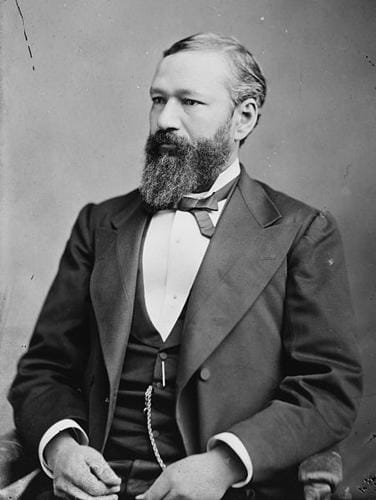
The nominal coincidence is almost too neat to leave alone: the man whose case fixed the one-drop rule in American constitutional law was named Homer. A tale of Two Homers, then, with no apologies to Dickens, who knows what he did. One gives us a poem in which a hero's blackness is a mark of beauty and appearance is a riddle the whole story is built to complicate. The other gives us a legal order in which appearance is legally irrelevant and an unseen "drop" is destiny. When we fight about the first Homer, we are almost always, unknowingly, importing the second.
What this does and doesn't license.
None of this is an argument about how Nolan should have cast his film, and I want to be careful not to let the historical point get conscripted into the culture war it is trying to dissolve. A myth is not a documentary, and reinterpretation across race has a long and honorable theatrical pedigree; Nyong'o's own line of "this is a mythological story" is the correct register for the question of artistic license. As I stated in the earlier post, The Odyssey is fantasy fiction. Nor does the modernity of race make the ancient Mediterranean a diverse utopia; it was full of conquest, enslavement, and asymmetries of power, merely ones sorted by axes other than ours. Is it better that their concept of domination and subjugation wasn't based on skin color? I doubt it made much difference to the conquered slave.
The point I am making here is narrower and, I think, more durable. When the reactionary insists that Homer's Greeks were "white" and the film has falsified history, he is treating a modern racial category as an ancient fact. When the enthusiast insists that Homer's world was "Black" and the film is a restoration, she is—with far better politics and, on the specific matter of Odysseus's skin, more textual warrant—nonetheless reaching for the same anachronistic ruler. The Odyssey did not know our races (and blessedly, our racialist laws). It knew burnt faces and white arms and hyacinth hair, and it knew, better than we do, that you cannot read a man's identity off his surface. That was Homer's true theme. The one thing the current pissfight cannot seem to do is take Homer at "his" word.
We built race. We can, at minimum, decline to charge Homer rent for a house we put up three thousand years after he died.