
Suffering with God, or, Theodicy in Plural (The Braided River, Part 10)
The problem of evil has never once been answered, only managed. Every classical answer pays for itself somewhere you'd rather not look. What if the trouble was the omnipotence all along? Braided River Part 10, on process theodicy and a God who suffers with you.
1. The problem that broke the other God
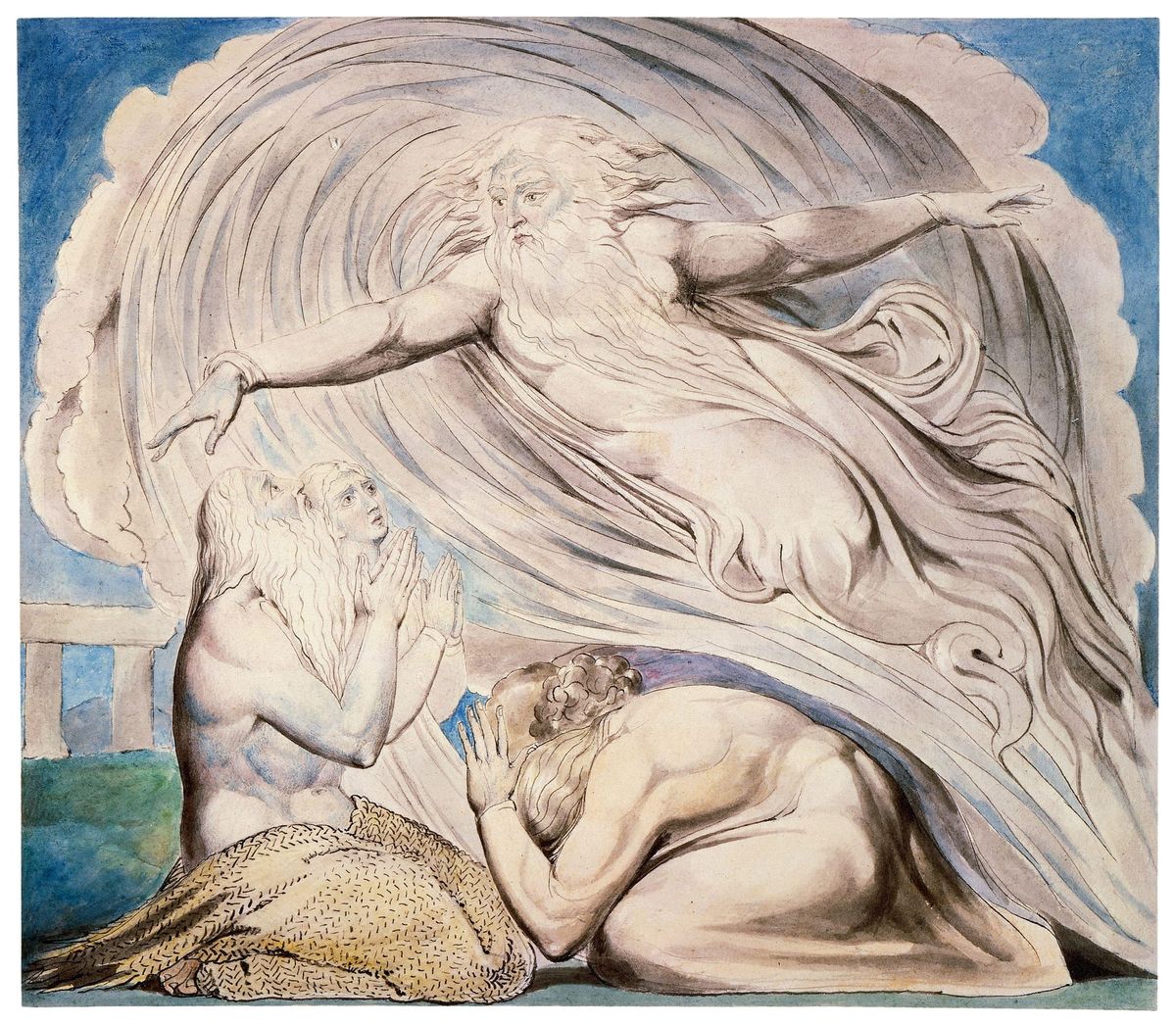
There is a picture of God so widely shared that a believer and an atheist can spend an entire evening arguing about it without either of them once pausing to define it. In this picture God is omnipotent, able to do anything that can be done. God is omniscient, knowing everything that can be known, including the future. And God is omnibenevolent, perfectly and reliably good, wishing every creature well. The three attributes travel together as a set. They are so tightly bound in the inherited imagination that to loosen one feels like heresy, and the person who says "well, perhaps God is not quite able to do absolutely anything" is heard to have said something faintly blasphemous, as though he had caught the Almighty in a weakness.
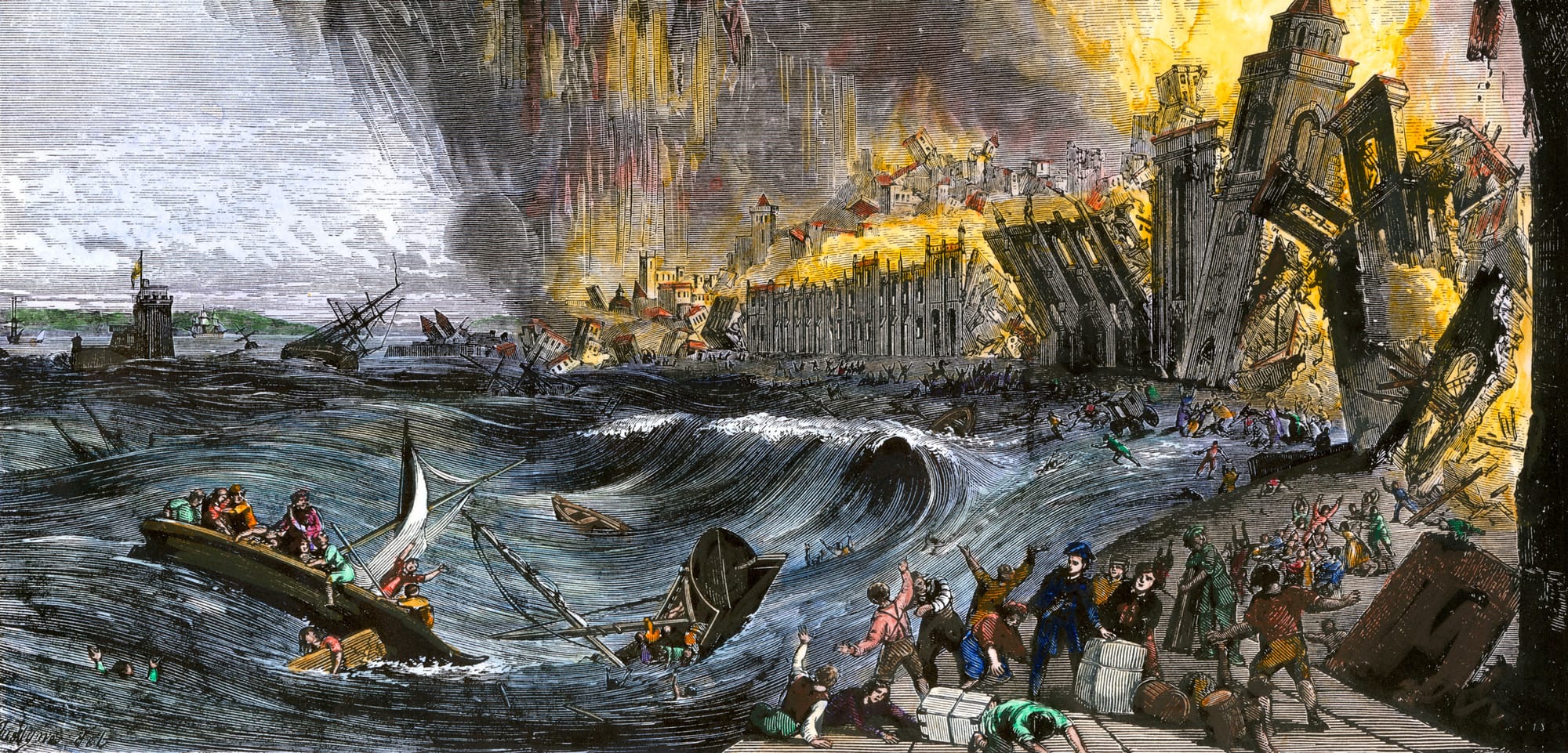
Hold that picture in one hand. In the other, hold what everyone also knows. A child is born and lives four years and dies of a cancer that was busy in her marrow before she could speak. A wave crosses an ocean in the dark and takes a thousand people who were asleep. A century arranges the murder of its inconvenient populations with the tidiness of a railway timetable. None of this is rare, none of it is hidden, and none of it, so far as any honest observer can tell, purchases a good large enough to be worth its price. The suffering is not distributed as a lesson would be distributed. It falls on the innocent and the guilty without discrimination, it destroys more souls than it refines, and a great deal of it happens to creatures who cannot draw a moral from anything.
Set the two hands side by side and you have one of the most intractable arguments in the philosophy of religion, the one the tradition has never stopped trying to answer because it has never once answered it. Lactantius, writing around the year 314 CE, put it in the mouth of Epicurus, though whether Epicurus said it or whether it is a later skeptic's construction is a question the scholars have not settled and probably cannot.1 Is God willing to prevent evil but not able? Then he is not omnipotent. Is he able but not willing? Then he is not good. Is he both able and willing? Then where does the evil come from? Fourteen centuries later Hume handed the same syllogism to Philo in the Dialogues, and it has never needed updating, because the terms of the problem are fixed by the terms of the inherited picture.2 Grant the three attributes as a set, and the world's suffering becomes an accusation the set cannot answer.
The tradition, to its credit, has never pretended otherwise, and it has assembled over two millennia a toolkit of remarkable ingenuity. It is worth laying the tools out on the bench, because each of them works, and each of them, on inspection, pays for its work somewhere the buyer would rather not look.
The oldest is the free will defense. Evil is the price of freedom; a world of creatures who could not choose wrongly would be a world of puppets, and love that cannot be withheld is not love. Augustine built the frame and Alvin Plantinga gave it its rigorous modern form, tight enough to defeat the claim that the mere existence of evil is logically inconsistent with an omnipotent good God.3 The tool does real work. What it cannot cover, without help, is the wave and the cancer, the evils no created will chose. To fold those in you must posit that nature itself is fallen, corrupted by an ancient rebellion of angels or of Adam, which is to say you must buy the free will defense a second time on credit, and for buyers upstream of the Enlightenment the account is by now considerably overdrawn.
The second tool is soul-making. Irenaeus supplied the intuition and John Hick, in 1966, built the cathedral: the world is not a hedonist's paradise botched by a careless deity but a "vale of Soul-making," in Keats's lovely phrase, an environment engineered to grow souls capable of freely loving God, which requires real hardship as a gymnasium requires real weight.4 This tool, too, does work, and it is the humane one, the one that takes suffering seriously as formation rather than explaining it away. But it founders on distribution. Suffering is not apportioned to the soul it might build. It arrives in quantities that shatter rather than temper, it lands on infants who will never grow anything, and it consumed a hundred million years of animal agony before there was a single human soul in the field to be made.
The third tool is metaphysical and very old. Evil, said Augustine after Plotinus, is not a thing. It is privatio boni, the privation of a good, a hole rather than a substance, darkness rather than a rival light.5 The blindness is the absence of sight; the cruelty is the absence of the love that should be there. This is elegant, and as an account of what evil is it may even be correct. As an answer to the accusation it is almost insulting, because the hole still hurts. Tell the mother at the graveside that her daughter's death was a privation and not a positive entity and you have said something true and useless in the same breath.
The newest tool is the subtlest, and it is a retreat dressed as an advance. Skeptical theism grants the atheist his examples and denies him his inference. Yes, the fawn burns to death in the forest fire with no human witness and no discernible good produced; but our failure to discern the good does not establish its absence, because we are not in an epistemic position to survey the goods a divine mind might weave from a given evil.6 The no-see-um, as the literature charmingly calls it. The trouble with this tool is what it costs the one who wields it. If we cannot tell, in the case of the fawn, whether the apparent pointlessness is real, then we have surrendered our grip on moral appearance generally, and the skeptical theist who will not infer from apparent gratuitous evil to actual gratuitous evil has no principled way to infer from apparent gratuitous evil to do something about it. He has bought God's exoneration with the currency of his own moral perception, and it is not clear he can afford the purchase.
Notice what every one of these tools has in common. Each is a maneuver to preserve all three attributes at once, to hold omnipotence and omniscience and goodness together in the fist against the pressure of the world. Each concedes something to keep the grip closed. And each takes for granted, as bedrock, the very thing this series has spent nine installments teaching us to distrust: the assumption that the God we are defending must be the omnipotent one, the one who could unilaterally stop the wave and does not.
Attend. What if that assumption is not bedrock but sediment? What if the coercive omnipotence everyone is straining to defend is not a datum of revelation at all, but a Greek deposit laid down over a Hebrew channel, the same weld we watched being forged in Part 8, now doing its slow damage two thousand years downstream?
2. The God who cannot suffer
To see why the omnipotence is optional, we have to look at the attribute that always travels beside it and is almost never examined: impassibility. The inherited God is not merely all-powerful. He is unmoved. Nothing that happens to the world happens to him. He is affected by nothing, because to be affected is to be changed, and to be changed is to pass from one state to another, and a perfect being has no states to pass into. He is already everything he can be. The technical name is actus purus, pure actuality, act without remainder of potency, and it is the load-bearing wall of the entire classical edifice.7
We have met this God before, under his other names. He is the ho ōn of Part 8, the Septuagint's Greek participle of Being welded onto the Hebrew verb of becoming at Exodus 3:14. He is the God of the philosophers whom Aquinas inherited and systematized with a rigor no one has surpassed, the God who is simple (without parts), immutable (without change), eternal (without time), and therefore, of necessity, impassible (without passion, without being acted upon).8 Aquinas is admirably clear about the consequence, and it is a consequence that ought to stop the reader cold. God loves us, he says. But God is not moved by us. The relation runs one way only. We are really related to God as an effect to its cause; God is related to us by a "relation of reason" alone, a relation that exists in our understanding of the matter and adds nothing real to God, because nothing can be added to actus purus.9 The creature reaches toward God and is changed by the reaching. God receives nothing, because God is a fullness that cannot receive.
Say this plainly, without the anesthetic of the Latin, and it is a startling thing to have believed. The classical God cannot be reached by your grief. Not because he is cruel; cruelty would at least be a relation. He cannot be reached because being-reached is a change, and he does not change. When the tradition says God is love, it must immediately add, if it is being consistent, that this love is not a responsiveness, not a being-affected-by-the-beloved, but a changeless act of will directed at the creature from a fixed point that the creature's condition cannot alter. The consolation on offer is the consolation of a fixed star. It does not move when you weep. That is precisely its selling point, and precisely the problem.
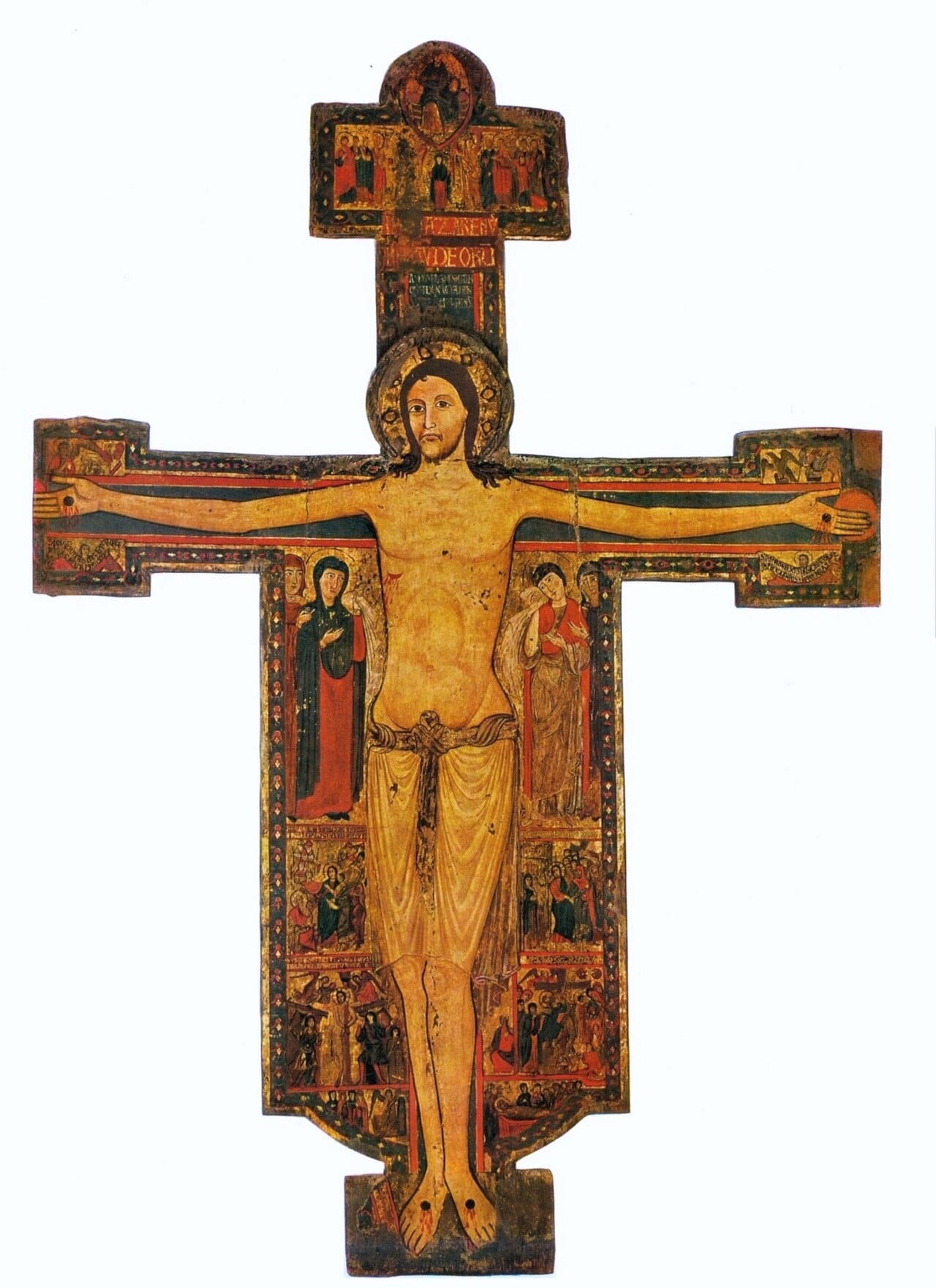
How load-bearing was this wall? Load-bearing enough that the tradition was willing to quarantine the cross itself to protect it. When Christian thought had to say that God had suffered and died, it flinched, and the flinch is instructive. The theopaschite formula, "one of the Trinity suffered in the flesh," was fought over for a century and finally admitted only under the most careful chaperoning: the suffering belonged to the assumed human nature, not to the divine nature, which remained serenely impassible even as the body it had taken up was tortured to death.10 God suffered, and God did not suffer, and the whole apparatus of the two natures was mobilized to keep the divine one from getting wet. When a tradition will go to that length to keep its God dry at the foot of his own cross, you are looking at a doctrine it cannot part with, a wall it would rather rebuild the house around than remove.
And yet the wall was an inheritance, not a given, and the channel it dammed was still running underneath. Turn to the prophets and you find a God who is nothing like the fixed star. Abraham Joshua Heschel spent a career on this, and the center of his account is a single word the Greek could not translate: pathos.11 The God of the Hebrew prophets is a God of pathos, moved by human conduct, grieved by injustice, roused to anger and softened to mercy, a God who is turned by what his creatures do. He is not the unmoved mover. Heschel's whole point, which he sharpened almost to a slogan, is that the prophets encountered a God who was the most moved, the most susceptible, the one whose involvement with the world was so total that the world's condition registered in him as feeling. This is not a philosophical God at all. It is a God who can be wounded, and the Hebrew Bible is entirely comfortable saying so.
Which is the point the braided river has been making all along, in a new key. The passible God was not a modern invention to be smuggled in against the tradition. It was there in the oldest channel, in the Hebrew before the Greek got to it. The impassible God is the deposit. When the Septuagint chose ho ōn, when the apologists reached for apatheia to make their faith respectable to a philosophical culture that regarded passion as weakness, they laid the sediment down over a live current, and the current has been running under the streambed ever since, waiting. Part 9 gave us the metaphysics that could recover it. Now we can say what the recovery is for, what its purpose is.
3. Whitehead's inversion applied
Recall the God we built in the last installment, because everything now depends on him. Whitehead's God is dipolar. He has a primordial nature, the timeless envisagement of all possibilities, the ordered wealth of what might be; and he has a consequent nature, the growing, temporal, endlessly enriched experience of the actual world as it happens.12 The primordial nature is God's side turned toward possibility. The consequent nature is God's side turned toward fact, and it is the door through which the world comes in.
Because here is the mechanism, and it is worth being exact, because the exactness is the whole argument. In Whitehead's metaphysics an actual entity is constituted by its prehensions, its graspings-in of the entities that came before it. Nothing is a windowless monad; everything is what it is by taking up its world. And God, Whitehead insists with a firmness that is easy to miss and impossible to overstate, is not the exception to this scheme but its chief exemplification.13 God does not stand outside the categories, invoked at the last minute to rescue a metaphysics that has otherwise collapsed. God is the supreme instance of the very principles that govern the humblest flicker of experience. Which means that God, too, is constituted by prehension. God, too, takes up his world. To be God is to prehend every actual occasion that ever occurs, with full and adequate feeling, and to keep it.
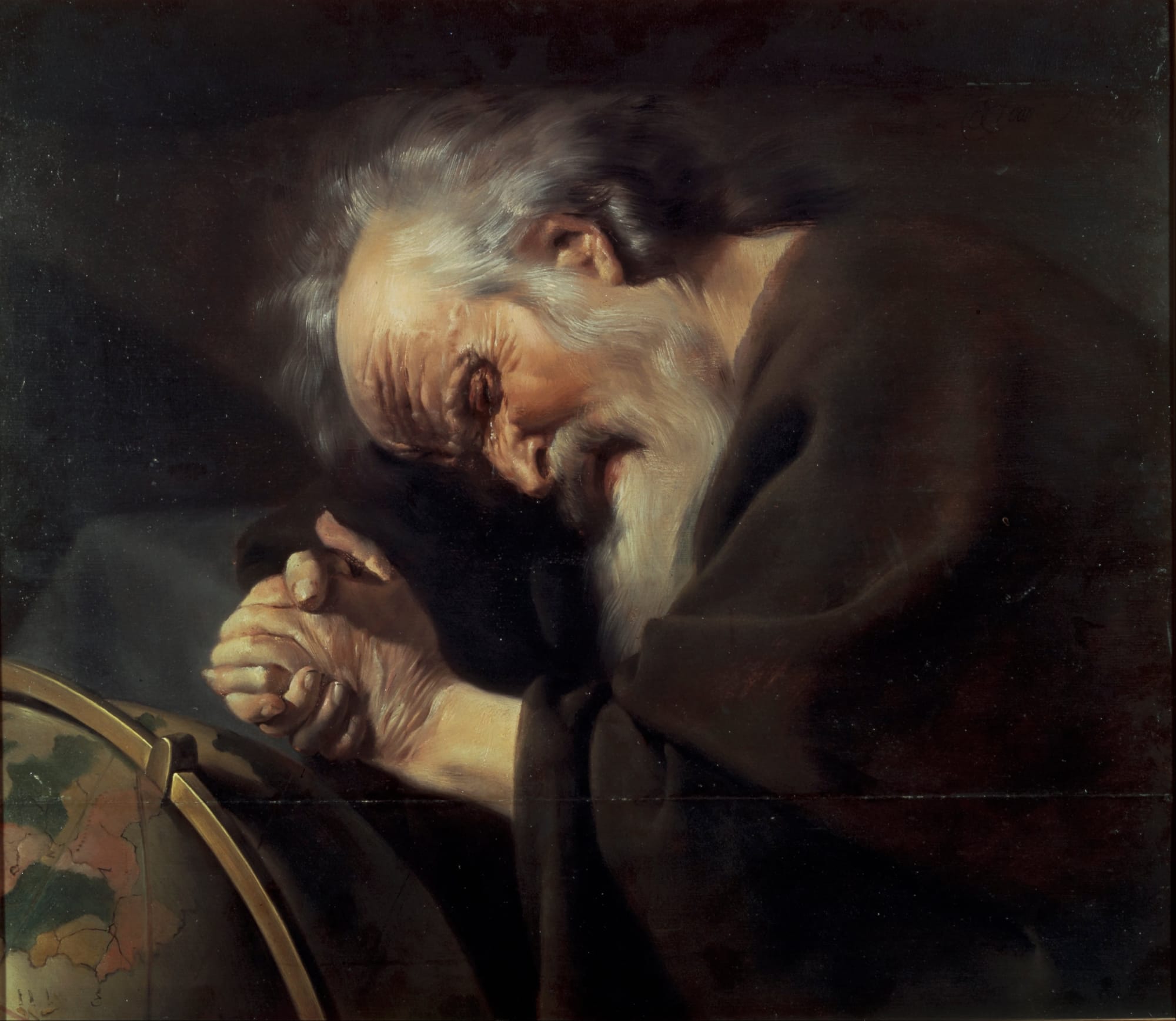
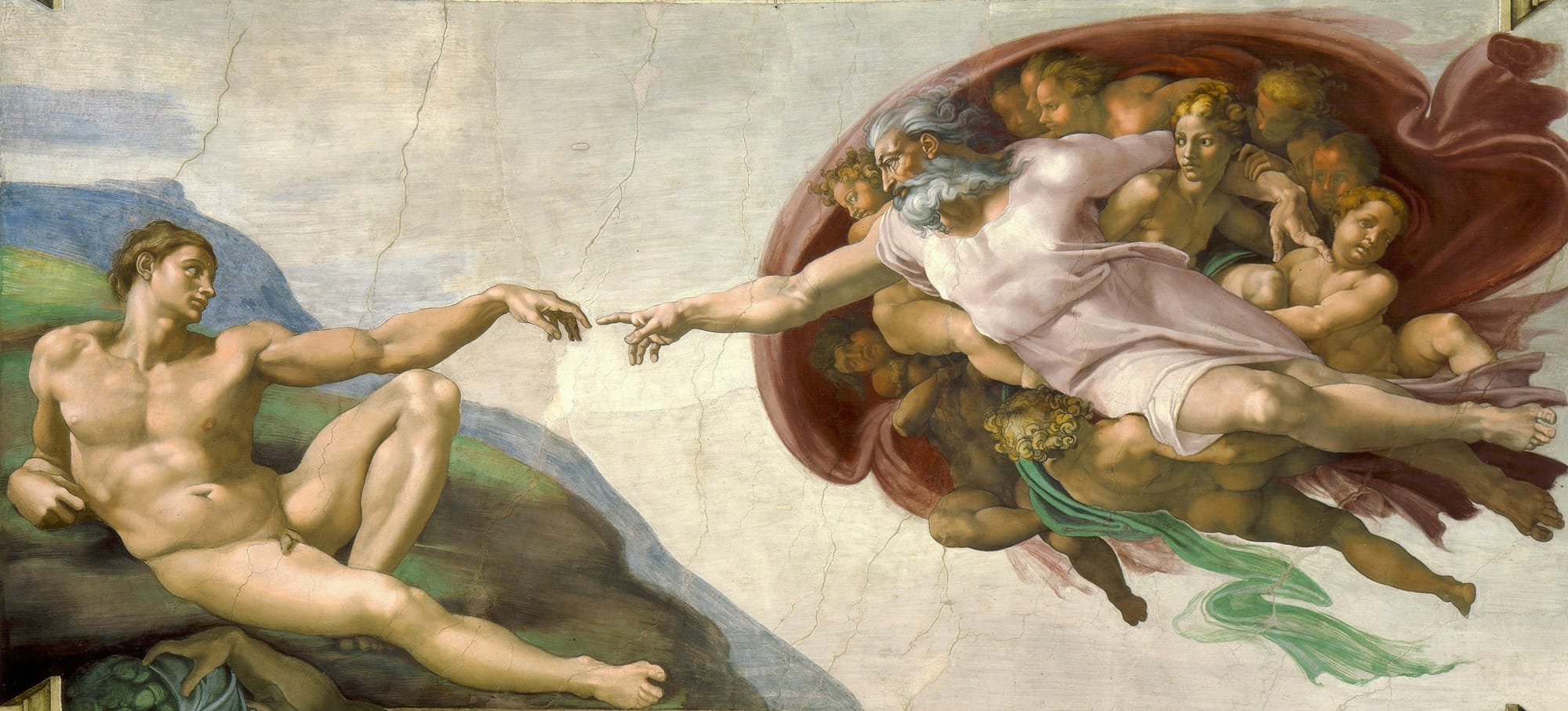
Follow that to its conclusion and you arrive at the sentence Whitehead placed near the very end of Process and Reality, the sentence toward which this entire post has been walking. God is the fellow-sufferer who understands.14 Not the spectator of suffering. Not the permitter of it, weighing it in a ledger against goods we cannot see. The fellow-sufferer. The one who feels the wave and the cancer and the timetable not as data about a world held at arm's length but as occasions taken up into his own experience, prehended with a completeness no creature could manage, and preserved. Whitehead's term for the preservation is objective immortality: every occasion, once it has happened, is woven permanently into the consequent nature of God, saved from perishing, held in the divine memory as an achieved fact that the passage of time can no longer erode.15 The child who lived four years is not erased. She is kept, wholly and forever, in the experience of a God who felt every hour of her with her.
See what has happened to impassibility. The classical tradition made God's perfection consist in his being unaffected; the mark of the supreme being was that nothing could reach him. Process theism performs the exact inversion. God's perfection consists in his being maximally affected, in feeling everything that happens with perfect adequacy, in being the one being from whom no joy and no agony anywhere in the universe is screened off. Impassibility, on this reading, is not the crown of divinity. It is a defect, and Hartshorne named it as one: a limitation on God's capacity to relate, dressed up for two thousand years as the height of his glory.16 A God who cannot suffer is not greater than a God who can. He is smaller, walled off from precisely the fullness of relation that would make him worthy of the name. The tradition mistook a poverty for a perfection because it had inherited a philosophical prejudice, the Greek contempt for pathos, and had forgotten it was a prejudice.
This is not a sentimental softening of the doctrine of God to make him more likeable. It is a metaphysical claim with teeth, and it falls directly out of the system: given that actuality is constituted by feeling, and given that God is the chief exemplification and not the exception, a God who felt nothing would be no God at all, would be in fact the one impossible entity in the whole scheme. The fellow-sufferer is not a consolation bolted onto the metaphysics. He is what the metaphysics requires.
4. Persuasion, not coercion
But feeling the world's suffering, however completely, is not yet answering for it. A God who grieves with the victims but could have prevented their suffering and chose instead to grieve is not obviously an improvement on the impassible one; he has merely added tears to the indictment. If process theology stopped at the fellow-sufferer it would have given us a more sympathetic defendant, not an acquittal. The acquittal comes from somewhere else, and it is the load-bearing move of the entire enterprise, so it is worth setting down slowly.
The classical God acts by fiat. He speaks and it is done; he wills a thing and the thing occurs, unilaterally, without the cooperation or consent of the thing. This is what omnipotence means in the inherited picture: the capacity to determine any outcome single-handedly, to reach into the world at any point and make it be otherwise. And it is this capacity, precisely, that generates the problem of evil, because a God who has it and does not use it to stop the wave stands accused, and no amount of soul-making or skeptical modesty quite gets him off.
Process theology denies that God has this capacity. Not that God declines to use it, out of respect for freedom or for the integrity of natural law; that is the free will defense, and it leaves the coercive power intact and merely self-restrained, which means the accusation still lands every time God's restraint permits an atrocity a decent bystander would have stopped. No: process theology denies that the coercive power exists at all, and denies it not as a limitation God happens to labor under but as a truth about the very nature of power.17
Here is the reasoning, which comes chiefly from David Ray Griffin. Every actual entity, in the process scheme, is causa sui in the final phase of its becoming: it constitutes itself, decides itself, in a moment of self-determination that nothing outside it can perform on its behalf. This is not a special dignity granted to human beings. It is a metaphysical feature of actuality as such, present in attenuated form in every flicker of the physical world and rising to vivid intensity in conscious creatures. And it follows immediately that the unilateral determination of one actual entity by another is not a power that is difficult to exercise, or dangerous, or rarely appropriate. It is a contradiction in terms. To determine an entity's self-determination is to abolish the self-determination you were going to determine. There is no coherent state of affairs in which God, or anyone, unilaterally decides what a genuinely other actual entity will make of itself, for the same reason there is no coherent state of affairs in which a married bachelor orders lunch.
So when we ask why God does not simply stop the wave, the process answer is not "because he values the freedom of the water molecules" and it is not "because we cannot see the good he is weaving." The answer is that there is no such thing as the power we are imagining him to have and withhold. Coercive omnipotence, the capacity to determine outcomes single-handedly across a world of genuine others, is not a power God possesses and mysteriously declines to use. It is not a power. It is a confusion, and Hartshorne devoted a whole book to calling it one, whose title is the argument in miniature: Omnipotence and Other Theological Mistakes.18
What God has instead is the lure. To each occasion as it arises, God offers what Whitehead calls its initial aim, the best possibility available to it given the actual world it has inherited, the ideal toward which it might constitute itself if it took up the offer. God feels the whole situation with perfect adequacy, knows the highest good genuinely open to this occasion in these circumstances, and holds that good out as an invitation, a solicitation, an eros toward beauty and intensity and richness of experience. And then the occasion decides. It can take the aim or fall short of it. God proposes; the creature disposes; and God cannot do the disposing, because the disposing is the one thing that by metaphysical necessity belongs to the creature alone.
This is what it means to say God's power is persuasive rather than coercive, and once you see it the trilemma comes apart in your hands. God is willing to prevent evil; he wills against it always and everywhere, luring every occasion toward the good with the whole weight of his perfect knowledge and perfect love. God is not, however, able to prevent it unilaterally, not because he is weak but because unilateral prevention is incoherent, a square circle he could no more perform than any logician's impossibility. And so the evil that occurs occurs against God's will, unredeemed and unjustified and genuinely evil, felt by God as a wound and opposed by God as an enemy, but not caused by God and not permitted by a God who could have done otherwise, because there was no otherwise for God to do. The wave was not sent, and it was not allowed by a sovereign who could have stayed it. It was suffered, by its victims and by God alike, and God's response to it was what it always is: to lure the very next moment, out of the wreckage, toward whatever good was still possible there.
Reframe omnipotence this way and it stops being an embarrassment to be managed and becomes a description of what God actually does. Omnipotent no longer means "able to do absolutely anything," a phrase that on inspection means very little and generates paradoxes about stones too heavy to lift. It means possessing the greatest power any being could conceivably have, and the greatest power any being could conceivably have, in a world of genuine others, is the maximal persuasive power, the power to feel everything and lure everything toward the best it can become. That is not a diminished God. That is the only kind of powerful God there could coherently be, and the classical alternative, on examination, turns out to have been not a bigger God but a muddle.
5. The price of the solution
Now the honesty, because this series has tried to be honest about the cost of every position it has examined, and it would be a poor time to stop at the one position it is inclined to endorse. Process theodicy is not free. It buys its answer to the problem of evil with real theological currency, and the reader deserves to see the receipt before deciding whether the purchase was wise.
The first and largest cost is the eschaton. The classical God, whatever his troubles with the problem of evil, could make a promise the process God cannot. He could promise that in the end all shall be well, that every tear will be wiped away, that the arc bends to justice not as an aspiration but as a guarantee, because a God who can determine any outcome single-handedly can determine that one. He can assure the final victory of good because final victory is just another thing an omnipotent will can accomplish. The process God can promise no such thing. He can promise to be present to every moment, to feel it wholly, to preserve it forever in the consequent nature, and to keep luring the next moment toward the good with tireless love. What he cannot promise is that the luring will succeed, that the world will in fact arrive at redemption, because the arriving depends in part on how the creatures answer, and the creatures are free in a way that even God cannot override. Whether the good finally wins is, on this account, genuinely open, genuinely at risk, genuinely dependent on a response God solicits but cannot compel. For the mother at the graveside, "your daughter is preserved forever in the experience of a God who suffered her death with you" may be colder comfort than "you will hold her again," and it would be dishonest to pretend the difference is small.
The second cost is bound up with the first, and it is death. The default process teaching is objective immortality, which is preservation in God, not necessarily the continued subjective life of the one preserved. You are kept, wholly and forever, as an achieved fact in the divine memory. Whether you go on experiencing, whether there is a you that wakes on the far side of your death to a life of its own, is a further question the metaphysics does not settle in your favor by default. Some process theologians have argued for subjective immortality within the system; Marjorie Suchocki built a careful case that the God who prehends you might sustain your ongoing subjectivity rather than merely your record.19 But this is a friendly amendment, a possibility argued for, not a promise the framework hands you. Set beside the creedal hope of the resurrection of the body and the life of the world to come, the process God's default word about death is markedly quieter, and the quiet is a cost.
And so the critics have their opening, and they are not fools, and this series does not deal in strawmen. The sharpest of them, the classical and evangelical philosophers who have looked hard at process theism, level a charge that has to be stated at full strength: this God is too small.20 He is not the God of Abraham, Isaac, and Jacob, the God who parts seas and raises the dead and will one day judge the living and the dead and make all things new. He is a metaphysician's construction, a principle of cosmic order cut precisely to the measure of a twentieth-century philosophy of organism, worthy perhaps of intellectual admiration but not of the prayer that casts itself wholly on a power able to save. The Barthian will add that this is exactly what happens when you build your doctrine of God out of a general metaphysics rather than out of revelation: you get an idol the right size for your system, and the living God who is free to be other than your categories slips away. And the plain believer, who has never read Whitehead and never will, asks the question that cuts deepest of all. Can I pray to this God with hope, or only with sympathy? Is a God who suffers with me but cannot finally save me a comfort at the bedside, or only a fellow-prisoner in the same cell?
These are not knockdowns. Each has an answer, and the answers are part of what the back half of this series is for. But they are real costs, honestly incurred, and the wager process theology asks you to make is a specific and demanding one. It is the wager that a smaller God who is genuinely good is worth more than a larger God who must be perpetually exonerated. It is the bet that you would rather have a God you never have to make excuses for, even at the price of a God who cannot guarantee the ending, than a God who can guarantee the ending but whose conduct in the meantime requires an unbroken two-thousand-year effort of theological alibi. That is a wager a reasonable person can refuse. This series is going to make it anyway, with its eyes open, and it wants you to see the stakes on the table before it does.
6. The vindication of the verb
Return now to the place the whole braid has kept returning to, the hinge at Exodus 3:14, because the argument of this post turns out to be the same argument we have been circling since Part 8, seen from a new angle.
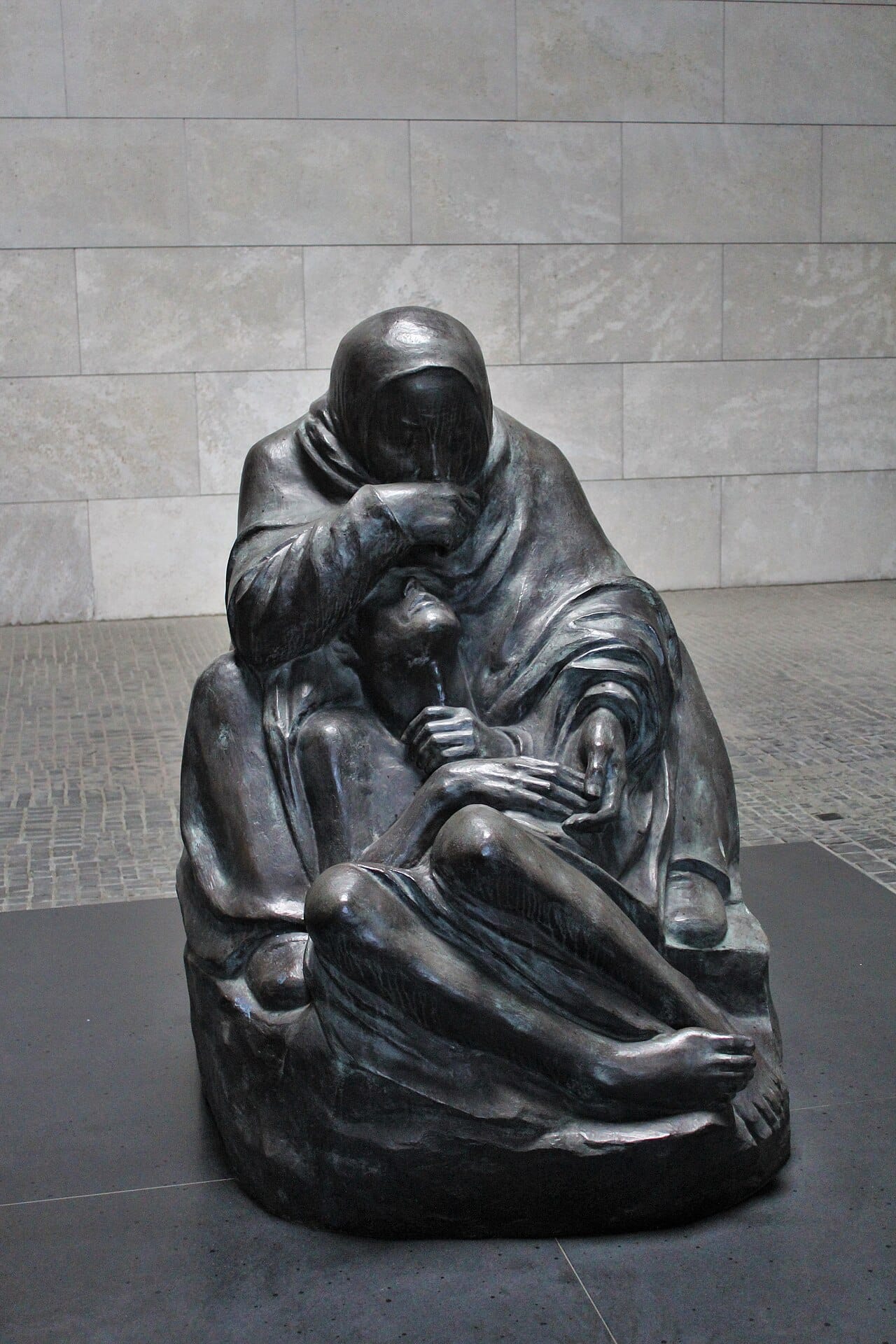
The name God gives from the bush is ehyeh asher ehyeh, and the Hebrew is a verb, imperfective, unfinished, a form of to be that leans toward to become: I will be what I will be, I am becoming what I am becoming, a God in motion toward a future not yet fixed. The Septuagint rendered it ho ōn, the one who is, a Greek participle of static and completed Being, and Part 8 called that translation the road not taken, the moment the becoming-God was paved over by the God of the philosophers. Part 9 built the metaphysics of the other road, the road where becoming is fundamental and being is derivative. And now we can see what the other road was for, what was lost when it was closed, and it is exactly the thing this post has been about.
Impassibility and the problem of evil are the same problem, met twice. The God who cannot change is the God who cannot be reached by your suffering, because being-reached is a change; and the God who cannot be reached by your suffering is the God who must either have willed that suffering or permitted it from a height it could not touch, which is the God the problem of evil convicts. Trace the impassibility to its root and you find ho ōn, Being that has nowhere to go because it is already everything. Trace the theodicy failure to its root and you find the same ho ōn, coercive omnipotence being just the active face of static perfection, the fiat of a will that stands outside time and reaches in. They are one sediment, laid down in one act of translation, and they fail together.
The becoming-God fails at neither, because the becoming-God was never fenced off from time and loss in the first place. A God whose very name is a verb of becoming is a God who can be present in the hospital room. Not as the author of the tumor, which he did not will and could not have unilaterally prevented; not as its impotent spectator, wringing his hands beyond the glass; but as the one who is in the room, feeling every hour of it with the child and the mother, holding out to every next moment whatever good is still possible there, and keeping all of it, forever, when the machines are finally switched off. That God can weep, and the weeping is not a weakness he stoops to but the truth of who he is. The classical tradition had to quarantine even the cross to keep its God from weeping. The becoming-God needs no quarantine, because there was never a wall between him and the world's grief to defend.
So the verb was right. The road not taken was the road where God could be moved, could be reached, could grieve with you rather than merely permit your grief from a distance and require to be excused for it afterward. Heschel's prophets knew this God, the God of pathos, the most moved and not the unmoved; Hartshorne gave him a metaphysics and called him, in the phrase Part 9 took for its title, the most moved mover.21 And the braided river makes the deep point one more time, in its own idiom. The passible, suffering, becoming God is not a foreign body to be smuggled back into a tradition that never wanted him. He is one of the tradition's own oldest channels, the Hebrew current that ran under the Greek streambed the whole time, dammed at Alexandria and forgotten and now, if we choose, recovered. We are not importing a new God. We are dredging a buried one.
7. What the river carries next
Which brings us, at the end of the constructive half's first full installment, to a turn the rest of the series will make good on, and I want to name it now so the reader can see the country we are entering.
We have built a God, in Part 9, and shown in this post what that God is for. But a better doctrine of God was never the destination. The destination of this whole series, announced in Part 1 and held in reserve ever since, is a way of holding the plurality of the human religious inheritance, one story told in a billion voices, without either collapsing the voices into a single bland unison or walling them off from one another as so many sealed and incommensurable worlds. And notice what the God of the last two posts implies about that plurality, because the implication is the bridge to everything that follows.
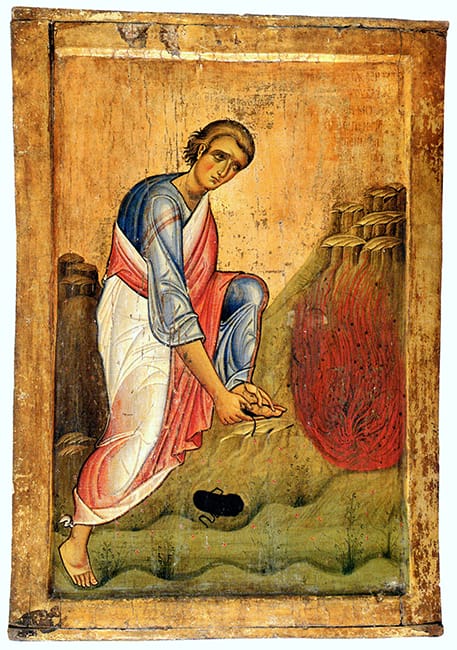
A God who works by lure and not by fiat, who solicits and does not compel, who feels a whole world of genuine others and calls each of them toward the best it can severally become, is not a God who speaks once, in one language, from one mountain, to one people, and falls silent. A God like that is addressing every occasion, everywhere, always, in terms each can receive, and the traditions of the earth are the many answers the world has given back to that ceaseless and various address. If that is the shape of the divine life, then the plurality of religions is not a scandal to be explained away, a field of error with one true furrow running through it. It is what we should expect. It is the sound a persuaded world makes.
But saying so raises a question this post cannot answer, because it is no longer a question about God. It is a question about reading. If the traditions are so many refracted responses to the same lure, spoken in languages and histories and forms of life that do not map onto one another, how do we read them together at all? How do we hear the one story in the billion voices without either forcing them into a false agreement, the perennialist's error of deciding in advance that everyone is really saying the same thing, or abandoning the attempt as impossible, the relativist's error of deciding that the voices are so different they cannot be in conversation? That is a hermeneutic question, the oldest one this series has, the one folded into the braided river from its first sentence, because the braided river was always a claim about interpretation before it was a claim about anything else.
Attend, then, because here the current changes character. For nine installments and a bit we have been doing genealogy and metaphysics, tracing sediment and building a God who could receive it. From here the work is hermeneutics: the fusion of horizons, the conflict of interpretations, the disciplined art of understanding a tradition that is not your own without either conquering it or surrendering to it. Part 11 turns from the God who lures to the reading of the many replies, from the theology of the last two posts to the interpretive method that will let the final movement of the series say what it has been meaning to say all along. We have the God who could speak in a billion voices. Next we learn how to listen.
[1] Lactantius, De Ira Dei 13, which presents the argument as Epicurus's. The attribution is doubtful: on Epicurus's actual theology, which denies divine providence altogether and so would not pose the trilemma as a paradox in need of solution, see David Sedley, Creationism and Its Critics in Antiquity (Berkeley: University of California Press, 2007). Many scholars accordingly read the formulation as a later Academic or skeptical construction rather than a genuine Epicurean fragment. ↩
[2] David Hume, Dialogues Concerning Natural Religion (1779), Part X, where Philo revives the "old questions" of Epicurus. ↩
[3] Alvin Plantinga, God, Freedom, and Evil (New York: Harper & Row, 1974), against J. L. Mackie, "Evil and Omnipotence," Mind 64 (1955): 200–212. Note the distinction Plantinga himself draws: this is a defense (aimed only at logical consistency), not a theodicy (an account of God's actual reasons). ↩
[4] John Hick, Evil and the God of Love (London: Macmillan, 1966), building on Irenaeus. The phrase "vale of Soul-making" is Keats's, from an 1819 journal-letter to George and Georgiana Keats. ↩
[5] Augustine, Enchiridion 11 and Confessions VII, developing the Neoplatonic (Plotinian) account of evil as privation. ↩
[6] The evidential argument is William Rowe, "The Problem of Evil and Some Varieties of Atheism," American Philosophical Quarterly 16 (1979): 335–341 (the fawn). The skeptical-theist reply is Stephen Wykstra, "The Humean Obstacle to Evidential Arguments from Suffering: On Avoiding the Evils of 'Appearance,'" International Journal for Philosophy of Religion 16 (1984): 73–93 (CORNEA). ↩
[7] The formulation is Aristotelian in origin (Metaphysics Λ) and becomes the backbone of scholastic theology proper. On the history of the impassibility doctrine, see J. K. Mozley, The Impassibility of God (Cambridge: Cambridge University Press, 1926), and, for a vigorous modern defense, Thomas Weinandy, Does God Suffer? (Notre Dame: University of Notre Dame Press, 2000). ↩
[8] Thomas Aquinas, Summa Theologiae I, q.3 (divine simplicity), q.9 (immutability), q.10 (eternity). ↩
[9] Aquinas, Summa Theologiae I, q.13, a.7: God is related to creatures only by a relation of reason (relatio rationis), while creatures are really related to God. The asymmetry is deliberate and is the precise point at which classical theism denies divine responsiveness. ↩
[10] The theopaschite formula, unus ex Trinitate passus est carne ("one of the Trinity suffered in the flesh"), associated with the Scythian monks and eventually endorsed at the Second Council of Constantinople (553). Its careful reception, keeping the suffering proper to the assumed human nature, is the measure of how non-negotiable impassibility was. ↩
[11] Abraham Joshua Heschel, The Prophets (New York: Harper & Row, 1962), esp. the chapters on the divine pathos; on Heschel's framing see Fritz Rothschild's introduction to Between God and Man. ↩
[12] Alfred North Whitehead, Process and Reality: An Essay in Cosmology (1929; corrected edition, ed. David Ray Griffin and Donald W. Sherburne, New York: Free Press, 1978), Part V, on the primordial and consequent natures of God. ↩
[13] Whitehead, Process and Reality, Part V: God is not to be treated as an exception to the metaphysical principles invoked to save their collapse, but as their chief exemplification. ↩
[14] Whitehead, Process and Reality, near the close of Part V: God as "the fellow-sufferer who understands." ↩
[15] "Objective immortality" is Whitehead's term of art for the way every perished occasion is retained in the consequent nature; see Process and Reality, Parts II and V. ↩
[16] Charles Hartshorne, The Divine Relativity: A Social Conception of God (New Haven: Yale University Press, 1948), the classic statement of "surrelativism" and of impassibility as a defect rather than a perfection. ↩
[17] David Ray Griffin, God, Power, and Evil: A Process Theodicy (Philadelphia: Westminster, 1976); John B. Cobb Jr. and David Ray Griffin, Process Theology: An Introductory Exposition (Philadelphia: Westminster, 1976), chapter on God and the world. ↩
[18] Charles Hartshorne, Omnipotence and Other Theological Mistakes (Albany: State University of New York Press, 1984). ↩
[19] Marjorie Hewitt Suchocki, The End of Evil: Process Eschatology in Historical Context (Albany: State University of New York Press, 1988), arguing for subjective (not merely objective) immortality within the process frame. ↩
[20] For the "too small" line of critique see Ronald H. Nash, The Concept of God (Grand Rapids: Zondervan, 1983), and the essays collected in Nash, ed., Process Theology (Grand Rapids: Baker, 1987). The Barthian objection to building the doctrine of God out of general metaphysics rather than revelation runs parallel. ↩
[21] Hartshorne's own preferred phrase was "the most and best moved mover"; "most moved mover" as a compact tag was popularized later (see the discussion and correction in Part 9, note on Heschel and Clark Pinnock). Cross-reference: Part 8, on the Exodus 3:14 weld; Part 9, "The Most Moved Mover." ↩