
There Is No View from Nowhere: The Contextless and the Endless Eternity (The Braided River, Part 11)
The wall becomes what it always was: a door, high and heavy and needing to be worked at, but a door. There is no view from nowhere, and that is the beginning of the answer, not the end of it.

This series is an exercise in historicizing rather than debunking. Its wager is that the modern Western religious and philosophical inheritance is not a tree with clean branches descending from a single trunk, but a braided river: a system of channels that merge and separate and rejoin, carrying sediment from sources upstream that the water itself has no memory of having gathered. The first eight installments were diagnosis. Parts 9 and 10 made the constructive turn and built a God of becoming who works not by fiat but by lure, addressing a whole world of genuine others in terms each can receive. That God, I argued, does not speak once from one mountain; the traditions of the earth are the many answers the world has given back. Which raises a question that is no longer about God at all. It is about reading. If the traditions are so many refracted replies, spoken in languages and histories that do not map onto one another, how do we hear the one story in the billion voices without either flattening them into a false unison or sealing them off as so many incommensurable worlds? This installment is the method. It is also, though I have kept the machinery out of sight until now, the thing the whole series has been doing all along.
1. The two bad readings
Set a person down in front of a tradition that is not his own, some body of scripture and practice and argument he did not grow up inside, and watch what he does with it. In my experience he will reach, almost without deliberation, for one of two tools, and both of them are broken.
The first tool is the ruler. He measures the foreign thing against the standard he already carries. He translates its claims into his own vocabulary, checks them against his own convictions, and renders a verdict. Where it agrees with him it is sound; where it diverges it is error, or superstition, or (if he is being generous) a charming approximation of the truths he holds in their proper form. The missionary does this, and so does the Reddit atheist, and the two of them are closer kin than either would like to admit, because they share the conviction that to understand a tradition is to have successfully redescribed it in one's own terms and passed judgment. Call this the imperial reading. Its defining feature is that the reader is never at risk. He arrives whole and leaves whole, having added a scalp to his belt. He has understood nothing, because understanding, as we will see, is a thing that happens to you, and nothing has been permitted to happen to him.
The second tool looks like the opposite of the first, and is offered, usually, in a spirit of correction. Chastened by a century of anthropology and the long guilty memory of the imperial reading's career, the reader decides that he cannot judge the foreign tradition at all, because he cannot really understand it. It is a world sealed against him. Its concepts were formed in a form of life he has not lived, in a language whose grammar cut reality along seams his own language never made, and any account he gives of it will be projection dressed as comprehension. So he declines the whole enterprise. He will not measure, because measurement is violence, and he cannot enter, because the door is a wall. Call this the relativist shrug. It wears the face of humility, and it is often sincerely meant, and it is a quiet catastrophe, because of where it leaves you.
It leaves you where I once found myself, and where I suspect a good many readers of this series have found themselves, which is in a condition I can only call despair. If every tradition is a sealed world, then so is every conviction, and so, finally, is every person. The political opponent across the table is not merely mistaken, which would at least imply a shared standard by which to be mistaken; he is unreachable, the citizen of an incommensurable country, and the argument between you is not an argument at all but the collision of two weather systems. This is the experience of difference as a wall, and it is unlivable, because a person held hostage to the mere fact of others' differing views has nowhere left to stand. I have felt that particular vertigo, and I will say plainly that this whole series was built, in the end, to answer it. Not to make the difference go away. To make it inhabitable.
So we need another path, because the two on offer end in conquest and in despair, and neither is a place a reasonable person can consent to live. And the good news, which I have been withholding for ten installments while we did the genealogy, is that we have our alternative path, and it is old, and it has a literature. I named the tools at the very beginning of this series, in the first post, almost in passing: Gadamer, Ricoeur, and a chastened version of the linguistic-relativity thesis. It is time to take them off the shelf. Attend, because the alternative path is not a compromise between the ruler and the wall, not a moderate quantity of judgment mixed with a moderate quantity of silence. It is a different account, from the ground up, of what the act of understanding is.
2. No view from nowhere
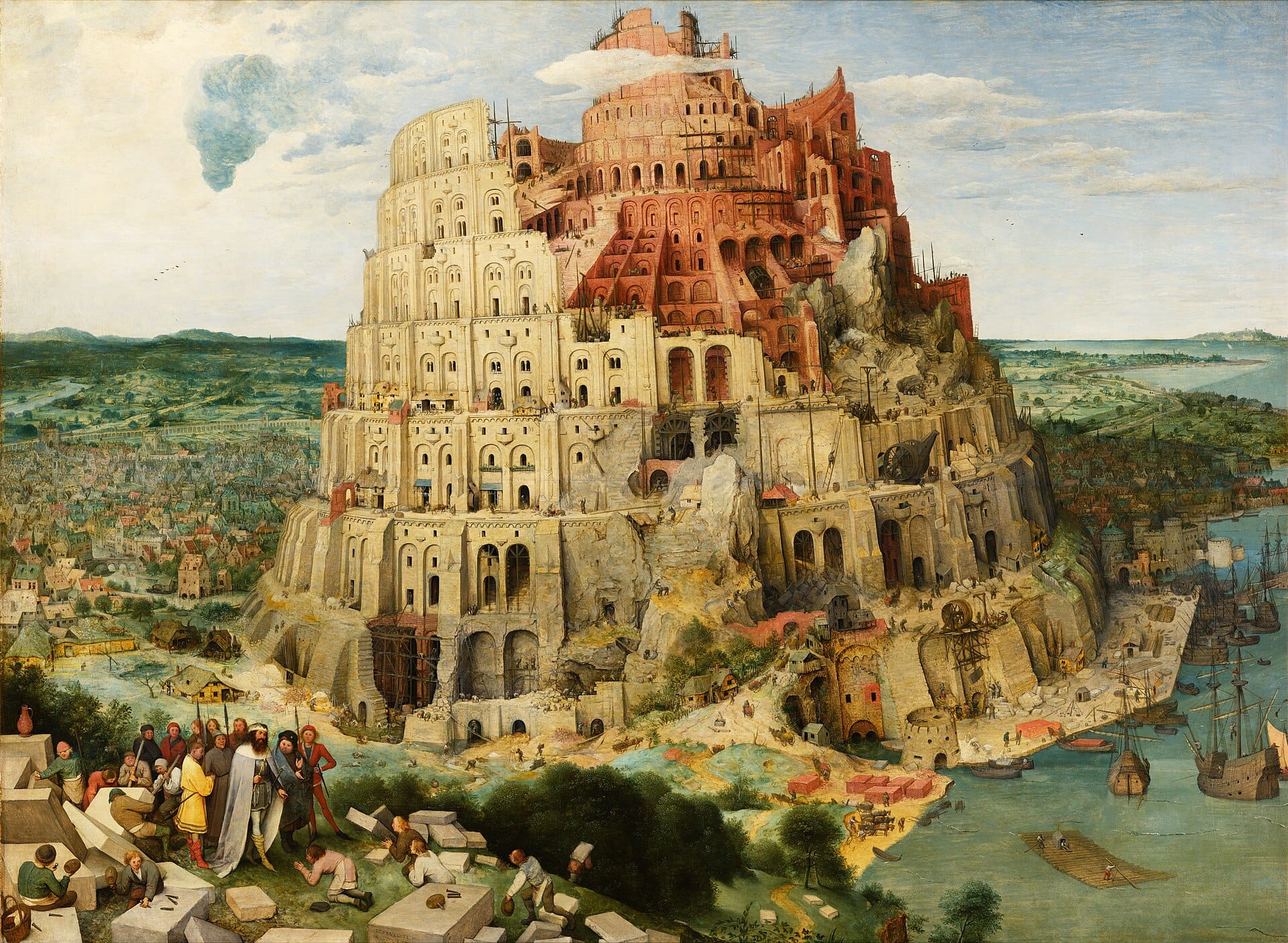
Begin with the thing both bad readings assume and neither examines. The imperial reader believes he possesses a neutral standard, a vantage from which the foreign tradition can be surveyed and scored. The relativist believes that because she lacks such a vantage, understanding is impossible. They disagree about whether the view from nowhere is available. They agree that understanding would require it. And that shared assumption is precisely the error.
There is no view from nowhere.1 There is no presuppositionless reading, no innocent eye, no standpoint scrubbed clean of all inheritance from which a mind could survey another mind's world without bringing a world of its own. This sounds at first like a concession to the relativist, and half of the twentieth century took it that way. It is not. It is the beginning of the answer to him, and the man who saw this most clearly was Hans-Georg Gadamer, whose Truth and Method is the century's great rehabilitation of the very thing the Enlightenment taught us to be ashamed of.2
The thing is prejudice. Not in the debased modern sense of animus, but in the older and more exact sense of pre-judgment, Vorurteil, the judgment that comes before: the whole freight of assumption, expectation, and inherited concept that a reader brings to anything he tries to understand. The Enlightenment declared war on prejudice so conceived. Reason was to purify itself of every unexamined inheritance and begin from nothing, presupposing only itself, reading the world from the scrubbed vantage of pure rationality. Gadamer's reply is one of the deftest moves in modern philosophy, and it is simply this: the prejudice against prejudice is itself a prejudice, and an incoherent one, because it demands that understanding begin from a nowhere that does not exist and could accomplish nothing if it did.3 A mind purified of all pre-judgment would not be a perfectly objective knower. It would be a blank, unable to form a question, because it would have none of the concepts a question is made of. Your prejudgments are not the film of grease on the lens that keeps you from seeing. They are the lens. Remove them and you do not see clearly; you do not see at all.
This is the structure the tradition calls the hermeneutic circle. You understand the parts of a text through your sense of its whole, and revise your sense of the whole as the parts come in; you approach the strange tradition through the equipment your own tradition gave you, and let the strange tradition, in turn, revise that equipment. It looks vicious, this circle, as though it traps you forever inside your own starting point. It is not vicious. It is the only shape understanding has ever had, and the task, as Heidegger put it before Gadamer, is not to get out of the circle but to get into it the right way.4 You are always already inside the wake of what you are trying to understand, borne along by what Gadamer calls effective history, Wirkungsgeschichte, the history of a thing's effects, which has shaped the very mind now turning to study it.5 There is no getting upstream of that. There is only rowing honestly within it.
Language is the deepest layer of this equipment, and here I want to install a term with great care, because it can be made to prove far too much. The concepts your language hands you shape what you find it easy to think, easy to notice, easy to tell apart. This is linguistic relativity, and in its strong form, the form that says language determines thought and locks each linguistic community inside an untranslatable conceptual prison, it is false, and the empirical record has not been kind to it.6 But we do not need the strong form, and I explicitly disown it. We need only the weak form, which is merely true: that language inclines thought, that it makes some distinctions cheap and others expensive, that the horizon a reader brings is furnished in part by the grammar he thinks in. Language shapes the horizon. It does not wall it. Hold that distinction, the shaping without the walling, because the entire argument of the back half of this post turns on it. The relativist heard "language shapes thought" and concluded "therefore sealed worlds." The conclusion does not follow, and showing exactly why it does not follow is the work of section six.
But first, if all reading is from somewhere, we owe an account of how reading another's somewhere is possible at all. That account is Gadamer's, and it is the hinge of everything.
3. The fusion of horizons
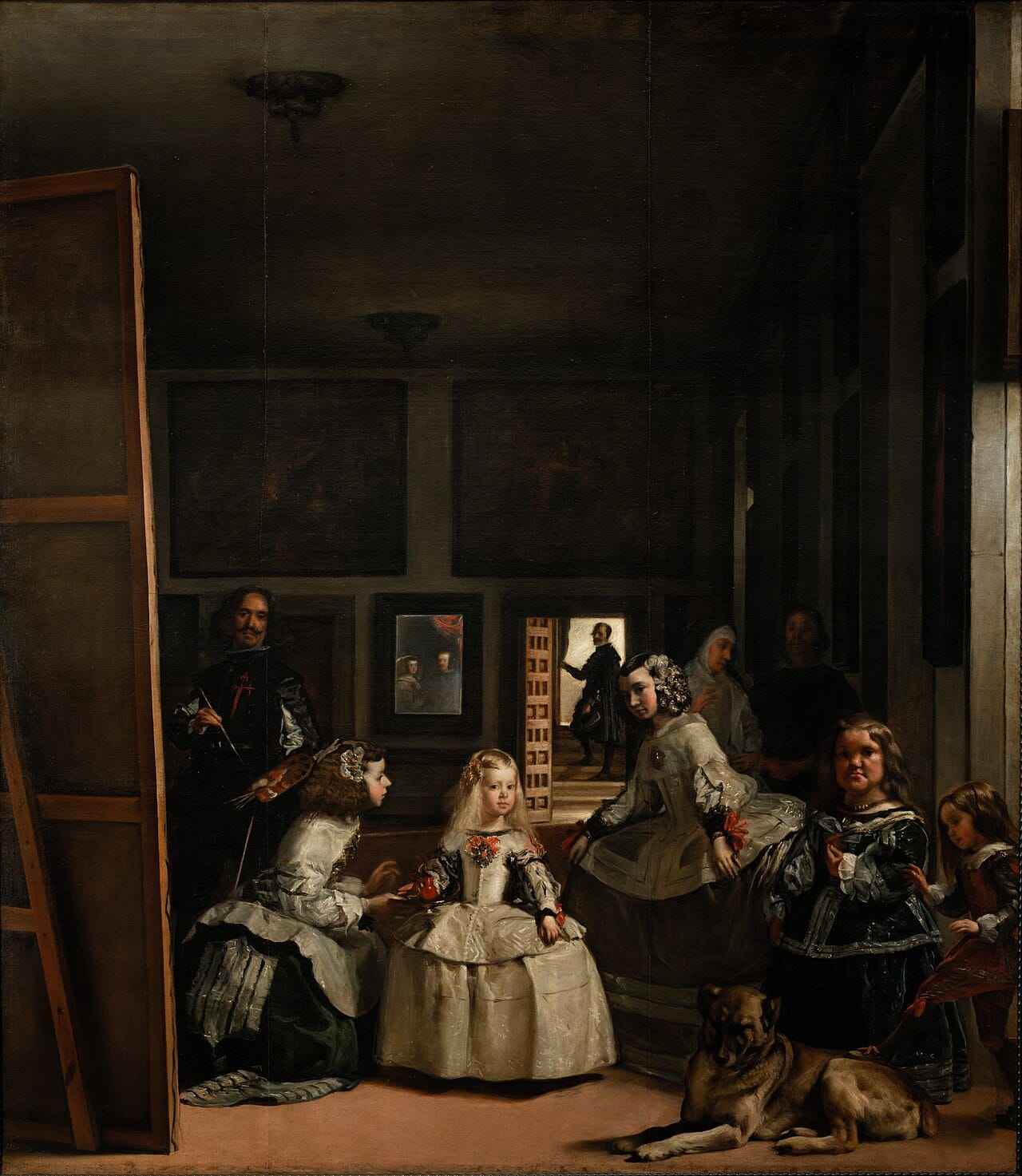
Here is the problem stated at its sharpest. If understanding is always situated, always from within a horizon furnished by one's own tradition and language, then how does a person ever understand a tradition framed in a different horizon? He cannot climb out of his own horizon, for the reasons section two gave; a person with no horizon understands nothing. And if he stays inside his own horizon and simply pulls the foreign material into it, translating it wholesale into his native terms and judging it there, he has performed the imperial reading and understood nothing again, only annexed. Both exits are closed. The horizon seems to be a cage after all.
Gadamer's answer is that the horizon is not a cage, because a horizon is not a wall. It is a horizon: the limit of what can be seen from where you stand, and, crucially, a limit that moves when you do. Horizons are not fixed boundaries but the shifting edge of a view, and the edge shifts as the viewer walks. Understanding another tradition is neither abandoning your horizon nor annexing the other's into it. It is the fusion of the two, Horizontverschmelzung, the fusion of horizons, in which your horizon and the tradition's are drawn into a single wider horizon that did not exist before the encounter and that belongs wholly to neither of you.7 You do not leave home and you do not stay home. Home gets bigger, and stranger, and it is no longer quite the place it was.
The decisive consequence, and the reason this is not a mere technical proposal about texts but an ethic, is that in genuine understanding you are changed. The imperial reader is safe precisely because he refuses the fusion; he lets nothing in that could alter the horizon he arrived with, and so he never understands, he only scores. Real understanding is a wound in the good sense, a breach in the wall of the self through which the other gets in and rearranges the furniture. Gadamer models it on conversation rather than on method, and the distinction is pointed, given his title: there is no technique, no procedure you could apply from a safe distance to extract a tradition's meaning while remaining yourself. There is only the risk of the actual encounter, in which you put your own prejudgments in play, let the tradition question you as you question it, and consent in advance to come out the other side someone you were not.8 To understand what a tradition says, Gadamer insists, you must grasp the question to which it was an answer, and to grasp its question is to let it interrogate you.
We have, in fact, already done this in these pages, though I did not call it by its name. When we traced the impassible God back to the Greek channel and let the recovered Hebraic current revise our inherited picture of the divine, in Parts 9 and 10, we did not annex the material and score it. We let it change what we thought we knew about the God of our own tradition. The reader who finished Part 10 holding a different notion of divine power than the one he began Part 1 with has felt the fusion of horizons from the inside. That is the method working. But it would be too comfortable to leave it there, as though understanding were a warm merger in which all difference melts into agreement, and it is exactly that cozy misreading that the next section exists to prevent.
4. The conflict of interpretations
The phrase "fusion of horizons" has a soft sound. It can be made to suggest that the reward of good interpretation is consensus, a gentle dissolving of difference into a shared and harmonious understanding, everyone's horizon melting into everyone else's until we all see the same enlarged view. If that were what it meant, the relativist would be right to sneer, because it would be the imperial reading in a peace-time uniform: difference tolerated only until it can be absorbed. So I turn now to the thinker who keeps the fusion honest, Paul Ricoeur, and to the title of his great essay collection, which I am borrowing for this section because it is exactly the corrective the argument needs: the conflict of interpretations.9
Ricoeur's first insistence is that meaning is not single. A text of any depth, and a fortiori a whole tradition, carries what he calls a surplus of meaning: it always signifies more than any one reading can exhaust, and this surplus is not a defect to be cleaned up by finding the one correct interpretation but the very sign of the thing's richness. The symbol, he writes, gives rise to thought, le symbole donne à penser; it is inexhaustible, it provokes interpretation without end and is never finally decoded.10 From which it follows that interpretations genuinely conflict, that a tradition worth reading will sustain multiple, competing, mutually incompatible good readings, and that this conflict is not a scandal to be resolved but the ordinary condition and the actual life of understanding. This is emphatically not the relativist's "anything goes." Some readings are richer, more adequate, more answerable to the text than others; the conflict is real precisely because the readings can be better or worse. But there is no single master reading that ends the conversation, and the interpreter who thinks he has found it has merely stopped listening.
Ricoeur's second gift to us is his account of the two great postures an interpreter can take, which he sets in productive tension rather than letting either win. There is the hermeneutics of suspicion, his own famous coinage, the reading practiced by the three thinkers he called the masters of suspicion, les maîtres du soupçon, Marx and Nietzsche and Freud, each of whom taught us to read beneath the surface of a text or a consciousness for the disguised interest, the will to power, the repressed desire that the surface conceals and expresses at once.11 And there is the hermeneutics of faith, or retrieval, or restoration, which reads not to unmask but to recover, to listen for the address the text is making, to let it say something rather than only catching it in the act of hiding something. Ricoeur's wager, and mine, is that mature interpretation requires both, held in tension. Suspicion alone is corrosive; it never permits the tradition to speak, only to be caught out, and it ends in the sterile knowingness that has seen through everything and can no longer see anything. Faith alone is credulous; it hears the address but never asks whose interest the address might serve. And here I can name what this series has been doing with a new precision, because the shape of the whole project turns out to be Ricoeur's two hermeneutics in sequence. The genealogical work of Parts 1 through 8, the tracing of sediment, the exposure of the tradition's self-presentation as bedrock when it was really confluence, was a sustained hermeneutics of suspicion. The constructive work of Parts 9 and 10, the dredging of the buried Hebraic channel and the recovery of a God who could be heard again, was a hermeneutics of retrieval. Suspicion to see the sediment; faith to hear what the water still carries.
The last piece I need from Ricoeur is his rehabilitation of distance. Common sense treats the gap between a text and its reader, the centuries, the dead author, the alien context, as pure loss, an obstacle to be minimized so that we can get back to what the author "really meant." Ricoeur inverts this. It is precisely by being distanced from its origin, written down, cut loose from its author's intention and its first occasion, that a text becomes available to be appropriated by readers its author never imagined.12 Distanciation is not the enemy of appropriation but its condition. And appropriation, Aneignung, is not the reader seizing the text and making it serve him; it is the reader coming to understand himself differently in front of the text, enlarged by an encounter with a possibility of existence the text opens up. You do not master the tradition. You stand before it and are given back a version of yourself you could not have reached alone.
So difference survives the fusion. That is the whole burden of this section, and it is what keeps the third path from collapsing back into the imperial reading. The fusion of horizons is not the melting of the many into one. It is the enlargement that makes difference legible, that lets the traditions genuinely conflict and genuinely address us instead of standing mute behind their walls. Which means we can now say, with some precision, what "one story told in a billion voices" cannot be permitted to mean. It cannot mean one message behind the voices. And the temptation to make it mean exactly that, to reach past the billion voices for the single thing they are all supposedly saying, is so powerful, and so respectable, and so nearly right, that it has produced two of the most seductive intellectual movements of the last century, pointing in opposite directions in time. They are the subject of the next section, and they are the near-enemies of everything this series is trying to say.

5. The temptation to over-unify
There is a Buddhist teaching device I have always found useful, the notion of the near-enemy. The far enemy of a virtue is its obvious opposite: the far enemy of love is hatred, and no one confuses the two. The near-enemy is more dangerous, because it is a counterfeit that resembles the virtue closely enough to be mistaken for it while quietly subverting it: the near-enemy of love is possessive attachment, which looks like love and works against it. The braided-river pluralism has a far enemy, which is the relativist shrug of section one, the sealing of the traditions into incommensurable silos, and no one is going to mistake that despair for what I am arguing. But it has two near-enemies, and they are far more dangerous to the argument precisely because they share so much of its spirit. Both of them love the many. Both of them refuse the imperial reading. Both of them want to honor the billion voices. And both of them, at the last moment, cannot bear the manyness, and reach past the voices for the One. They differ only in which direction they reach: one looks backward and upward to a unity already there beneath the voices, the other looks forward to a unity the voices are converging toward. I will take them in that order.
The backward-and-upward reach is the perennial philosophy, and its popular gateway is Aldous Huxley's 1945 book of that name, which gave the position its enduring English label.13 The claim, in its simplest form, is that at the mystical heart of every great tradition lies one and the same insight, the identity of the innermost self with the divine ground of all being, the tat tvam asi, "thou art that," of the Upanishads, and that the manifest differences among the religions, their doctrines and laws and rituals and gods, are exoteric husks, cultural packaging around a single esoteric kernel that is everywhere the same. Peel the husk and you find, always, the one perennial wisdom. In its rigorous form this is the doctrine of the Traditionalist school, a genuinely formidable body of thought that it would be cowardice to caricature. René Guénon founded it, an implacable anti-modernist for whom the Sophia perennis, the primordial tradition, was the single metaphysical source from which all authentic religions descend and, in the darkening cycles of cosmic time, degrade. Frithjof Schuon gave it its central formula in The Transcendent Unity of Religions, drawing the decisive line between the exoteric level, where the religions truly differ and even contradict one another, and the esoteric summit, where they converge without remainder on one transcendent unity.14 And Seyyed Hossein Nasr, whom no serious person will dismiss, a scholar of Islamic philosophy and science of the first rank and a Gifford Lecturer, has carried the school into our own time with an intellectual seriousness that demands to be met rather than waved away.15 I met it; I am simply not persuaded by it, and the reason is precise.
The braided river has no single buried root. That is its whole point and its whole difference from the perennial philosophy. The perennialist posits exactly such a root, one source, the Sophia perennis, of which the traditions are the many dialects and disguises. The river posits no source of that kind. Its channels are genuinely many; they merge and separate and rejoin; the sediment is really various, gathered from really different uplands; and there is no upstream point where they are all secretly one water. And the sharpest tool for prizing the two apart is the constructivist challenge to the perennialist's crucial empirical premise, the premise that there is a common mystical experience underneath the varying descriptions. Steven Katz put the case in a single devastating essay: there is no unmediated experience to be the common core, because experience does not work that way.16 The mystic's experience is shaped, all the way down, by the tradition and language and expectation and discipline the mystic brings to it. The Buddhist adept, trained for years toward the realization of emptiness and no-self, has an experience of emptiness and no-self; the Christian contemplative, formed by a tradition of loving union with a personal God, has an experience of loving union with a personal God; and these are not one experience variously reported afterward but different experiences differently constituted from the start. There is no view from nowhere even on the mountaintop. And that, you will notice, is the exact title and thesis of section two, returned at a higher turn of the spiral: the perennialist's esoteric core is the view from nowhere relocated to the summit of contemplation, the fantasy of an unmediated seeing, and we have already given the reasons there is no such thing.
The forward reach is subtler, and it is the near-enemy I most needed to name, because it drank from the same spring this series drank from, and a careful reader has had the right to be suspicious of me since Part 9. Pierre Teilhard de Chardin was a Jesuit and a paleontologist, a man who spent his mornings in the dust of Zhoukoudian over the bones of Peking Man and his evenings constructing one of the great cosmic visions of the twentieth century, a vision his own order forbade him to publish and that appeared only after his death.17 Teilhard saw evolution as a single directional ascent, matter complexifying into life and life complexifying into mind, the thinking layer of the planet, the noosphere, thickening and tightening over the whole earth and drawing, he believed, toward a final point of total unification he called the Omega Point and identified with the Cosmic Christ. Everything that rises must converge, tout ce qui monte converge; the many are not already one, as the perennialist has it, but are becoming one, funneling forward and upward into a single consummation. It is a magnificent vision, and it is generous toward the many in a way the perennialists are not, and it is wrong in exactly the way this series cannot afford to be wrong, and it is wrong using our own materials, which is why I have to deal with it directly rather than hoping no one notices the family resemblance.
Because Teilhard took his fuel from Henri Bergson, from the élan vital and the durée and the creative evolution we ran through the continental headwaters back in Part 9, and he bent that fuel toward a terminus Bergson's own thought does not contain. This is the point at which the series gets off the Bergson train, one stop before Omega, and I want to be explicit about it. Bergson's creative evolution diverges.18 The vital impetus, in Bergson's own account, does not climb a ladder toward a single summit; it splits, it ramifies, it drives apart into incompatible lines that cannot afterward be recombined, so that instinct and intelligence, for instance, become divergent developments of one original tendency, each purchasing its powers by the loss of the other's. The movement is centrifugal, a spray, a bush. Teilhard took a philosophy of divergence and imposed on it a destiny of convergence, which is not a development of Bergson but a reversal of him wearing Bergson's coat. And the paleontology, Teilhard's own discipline, sides with Bergson: the history of life is a branching bush, not an arrow, a story of proliferating difference punctuated by mass decimation, with no privileged direction and no built-in summit toward which the whole is climbing.19 There is no Omega in the fossil record. There is only the bush, endlessly forking.
And now the detail that I find genuinely delicious, and that does real work rather than merely amusing. The two near-enemies despise each other. The Traditionalists loathed Teilhard, and had to, because their unity is timeless and lies in the past and degrades as the cosmic cycles wind down, so that Teilhard's evolutionary optimism, his unity climbing toward us out of the future, was for them not a rival account of the One but the very signature of the modern heresy, progress mistaken for providence.20 Guénon's cosmos is falling; Teilhard's is rising; and each regards the other's direction as the essence of error. Which leaves us with a small gift for the argument, almost too neat to trust but I think sound: even the monisms cannot agree on which One they are collapsing the many into. The drive to find the single unity keeps producing rival unities that anathematize one another. And when the search for the One reliably generates a plurality of mutually exclusive Ones, the honest conclusion is that the One is doing less work than the drive toward it, that the unity is being supplied by the seeker rather than discovered in the sought. The plurality of the unities is quiet evidence for the pluralism.
So: one story is not the same story, and it is not the story all the others are turning into. Neither the buried root nor the flowering terminus. The billion voices are neither secretly identical beneath their differences nor destined to fuse into identity at the end of time. They are, and they remain, many. To read them well is to hold that manyness open, refusing to flatten it into a hidden core, refusing to postpone it into a final convergence, and refusing, equally, to abandon it into the incommensurable silence of section one's far enemy. All three refusals are hard, and the third is the one the sophisticated reader will press hardest, because he will say: very well, no hidden unity and no coming unity, only the many, genuinely different, genuinely shaped each by its own language and form of life, and now you are back in the sealed worlds, and back in the despair. That objection is serious, and it deserves the heaviest artillery I have. It gets it in the next section.
6. Why difference is not incommensurability
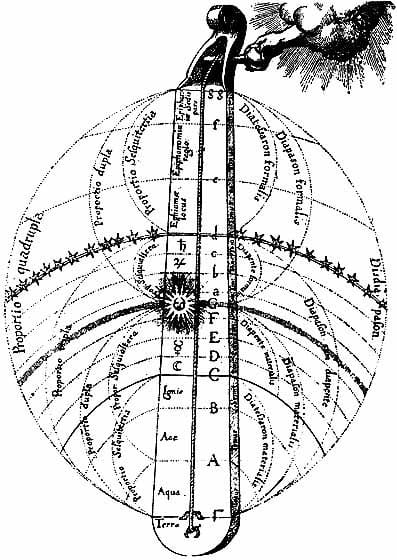
The relativist's whole position stands on a single load-bearing idea, and if that idea falls he falls with it. The idea is that there could be conceptual schemes so different from one another that what can be thought or said in one is in principle untranslatable into the other, sealed frameworks organizing an uninterpreted reality along wholly incompatible lines, each intelligible only from within. This is the picture that makes the traditions into incommensurable worlds and turns the wall between them from a difficulty into an impossibility. I want to show that the picture is not merely false but incoherent, that it does not describe a hard case we are failing to solve but a phrase that fails to describe anything at all. I have two witnesses, one from each of the great estranged halves of twentieth-century philosophy, and their agreement across that divide is itself part of the argument.
The first is Donald Davidson, and the paper is his 1974 address "On the Very Idea of a Conceptual Scheme," one of the genuine hinge-points of analytic philosophy.21 Davidson's target is what he calls the third dogma of empiricism, the dualism of conceptual scheme and empirical content, the very idea that there is an uninterpreted "given" that different schemes then carve up in mutually alien ways. His argument against it is subtle, but its spine can be stated plainly. Our only criterion for counting something as a language or a conceptual scheme in the first place is that it can be interpreted, that we can, in principle, translate it, that we can make sense of its speakers as holding beliefs and meaning things, which requires finding them by and large right by our own lights, a methodological necessity Davidson calls the principle of charity. Now consider the relativist's proposal of a scheme in principle untranslatable into ours. What could ever count as evidence that we had encountered such a thing, rather than mere noise, unstructured behavior, weather? Nothing could. To recognize something as a scheme at all is already to have found enough purchase on it to begin interpreting it, and something we genuinely could not interpret at all would give us no reason to call it a scheme rather than static. So "a conceptual scheme wholly untranslatable into ours" is not a coherent description of an elusive object. It is a phrase that cancels itself, like "a color no seeing could ever detect." Total, principled incommensurability is not a wall too high to climb. It is a wall that, on inspection, was never there to be a wall, because a barrier we could never in principle detect or describe is not a barrier we have any reason to believe in.
Mark what this does and does not establish, because Davidson is often misread as denying that translation is ever hard. He denies nothing of the kind. Partial failures of translation are utterly real and completely ordinary; there are Greek words and Sanskrit words and Hopi words that cost a paragraph to render and lose something even so; whole regions of a tradition can be genuinely difficult, genuinely resistant, genuinely lossy in the crossing. What is incoherent is only the total and principled version, the sealed world, the scheme untranslatable all the way down. Difference is real; incommensurability, in the strong sense the relativist needs, is a myth. And that is exactly the calibration we set in section two, returned now at a higher turn: language shapes the horizon, it does not wall it. The shaping is the real, ordinary, paragraph-costing difficulty of translation. The walling is the incoherent fantasy Davidson has just dissolved.
My second witness comes at the same conclusion from the opposite end of philosophy, and I bring him in on his own account rather than as Davidson's echo, because his route matters. Ludwig Wittgenstein taught that meaning is use, that words have their life inside language-games, and that a language-game is embedded in what he called a form of life, Lebensform, a whole interwoven pattern of practice and reaction and activity within which alone the words make sense.22 To imagine a language, he wrote, is to imagine a form of life. Now this can be, and has been, read as fuel for the sealed-worlds picture: if meaning lives inside forms of life, and forms of life differ, then perhaps each is a closed game whose moves are unintelligible from outside, and religion in particular becomes a self-contained language-game immune to any question posed from beyond it, a reading pushed by Peter Winch and D. Z. Phillips and named, by its critics, Wittgensteinian fideism.23 I think that reading takes one of Wittgenstein's insights and loses a greater one, and the greater one is the answer to the relativist here.
Forms of life are not sealed, and the proof is that they are learnable. No one is born inside a single form of life and walled off from every other for good. Human beings learn new language-games all their lives; they become fluent in second languages and the forms of life those languages carry; they are initiated, laboriously and imperfectly but really, into traditions not their own, as every anthropologist and every convert and every graduate student of a foreign scripture attests, and as every child attests most of all, since a child enters the whole human form of life from outside it and learns to mean things by doing so. The door that the relativist called a wall is a door people walk through, in both directions, all the time. Wittgenstein knew where the real limit lay, and marked it with his famous remark that if a lion could talk we could not understand him, because a lion's form of life is too wholly unlike ours to give us any foothold.24 But that is exactly the point turned against the relativist, not for him: the lion marks the outer boundary precisely because human traditions are nothing like the lion. We share the enormous common inheritance of the human form of life, the "common behavior of mankind," Wittgenstein calls it, that is the system of reference by which we make an unknown language intelligible at all.25 Different human traditions are different rooms in a house whose corridors we can all, with patience, learn to walk. They are not separate universes. The lion is the only genuinely sealed world, and no religion is a lion.
So the two witnesses meet, the analytic and the Wittgensteinian, having started from opposite ends of a discipline that spent the century not speaking to itself, and they say the same thing, which is worth savoring for a moment as its own small instance of the thesis. Davidson: a scheme we could never in principle translate is not a coherent notion. Wittgenstein: a form of life we could never in principle enter is, among humans, not a real one, because forms of life are things humans demonstrably learn. Between them the sealed world is gone, from the side of semantics and from the side of practice at once. Which means the fusion of horizons that section three proposed is not a pious hope hovering over an abyss of incommensurability. It is underwritten. The very conditions under which we can recognize another tradition as a tradition, name it, identify it as the not-yet-understood thing we mean to understand, already guarantee that it is not sealed against us, that the crossing is possible in principle and merely laborious in fact. The two bad readings of section one are now both defeated at full strength. The imperial reading was answered by the fusion of horizons and the conflict of interpretations, which show that real understanding changes the reader rather than annexing the read. The relativist shrug has just been answered by Davidson and Wittgenstein, who show that the sealed world it despaired of was never a coherent thing to despair of. What is left is to name, at last and out loud, the method this series has been practicing on itself for eleven installments.
7. The river as a hermeneutic claim
I have been keeping a secret in plain sight, and it is time to give it up. The braided river was never, at bottom, a thesis about history. It was a thesis about reading, wearing the clothes of history, and everything we have built in this section and the three before it has been the tardy articulation of a method the series adopted in its first paragraph and has used, without confessing it, ever since.
Consider what it is to read a tradition as a confluence, which is the one move this whole series has made, over and over, in every register. To trace a doctrine's sediment back to upstream sources the tradition itself has forgotten, to show the lake of fire gathering from four streams and the impassible God welded at Alexandria from two, is already to practice the hermeneutics of suspicion of section four, reading beneath the tradition's self-presentation for what it conceals from itself. To then dredge the buried Hebraic channel and let its recovered God revise our inherited theism, as Parts 9 and 10 did, is already to practice the hermeneutics of retrieval, and already to undergo the fusion of horizons of section three, coming out the far side of the reading with a changed picture of one's own inheritance. The method was never announced because it was always simply being done. The series has been an eleven-part enactment of its own thesis, a reading that historicizes in order to understand and understands in order to be changed, and the confession of section seven is only that the water has known all along what kind of thing it was doing to the reader who swam in it.
And the reading this method yields is precisely the third path that section one promised and could not yet describe. It is not imperial, because it holds its own prejudgments open to revision and lets the traditions correct the reader, as the recovered Hebraic God corrected our theism; the reader does not arrive whole and leave whole. And it is not relativist, because it takes the traditions to be really readable, really in conversation, really capable of addressing and amending one another across their difference, which section six has just shown to be possible in principle. It is situated, as section two required, and dialogical and transformative, as section three required, and plural in its meanings, as section four required, and it is armored against the over-unifiers of section five and against the sealed worlds of section six. The third path is not a compromise between conquest and surrender. It is a fourth thing entirely, older than either, and it has a name in the water: it is the braided river read as a way of reading.
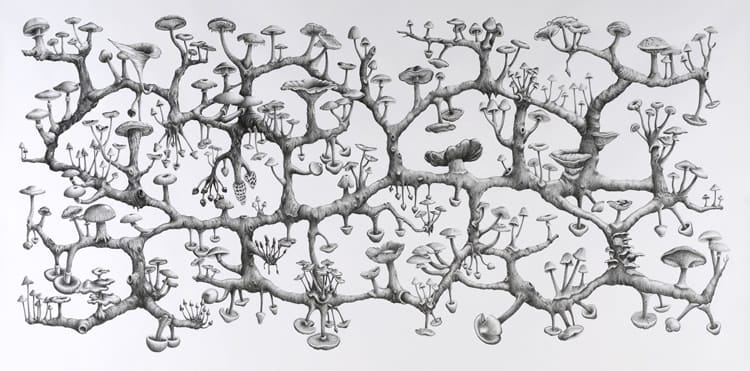
Which lets me redeem, at last, a promise I made in the very first post, when I borrowed a figure from Deleuze and Guattari and set it down without fully cashing it, the contrast between the arborescent and the rhizomatic.26 The arborescent image is the tree: one trunk, one root, branches descending in ordered hierarchy from a single origin, every point traceable back to the taproot and up through the one privileged line. It is the image tradition uses to picture itself, the clean genealogy, the pure descent, deviation understood as a branch off the one true stem. And it is, I can now say, the shape of both near-enemies of section five, which is why the rhizome does double work here. The perennialists' single buried root is the arborescent taproot exactly, the Sophia perennis as the origin from which all branches descend and degrade. And Teilhard's Omega is the arborescent tree read from the other end, all the branches gathered upward into one crown, the trunk rediscovered in the future as the point of final convergence. Root below or crown above, it is the same tree, the same insistence on a single privileged line that the many either descend from or ascend into.
The rhizome refuses the tree in both directions at once. It has no central root and no privileged terminus; it is a horizontal tangle of connection that can be entered at any point and read from any point, with no origin that is the real one and no destination that is the true one, a mat of grass rather than an oak. The braided river is a rhizome in water: channels connecting laterally, splitting and rejoining, no headwater that is the source of all the rest and no sea into which they all finally disappear and lose their names. So the rhizome of section seven is a single figure that dissolves both over-unifications of section five, the buried root and the flowering Omega together, root and crown at one stroke. Against the perennialist it says: there is no taproot beneath the branches. Against Teilhard it says: there is no crown the branches climb into. There is the tangle, the confluence, the many-channeled water, and there is our reading of it, which is itself another channel joining the flow.
And so "one story told in a billion voices," the phrase I have kept in reserve since the first post and will not spend fully until the last, can at least be given its hermeneutic sense here, which is the sense that makes it something other than a pious wish. The one story is not a single message hidden behind the voices, which is the perennialist's error. It is not a single destination ahead of them into which the voices converge, which is Teilhard's. It is not one reader's translation of all the voices into his own tongue, which is the imperial error, nor a comforting fiction laid over a billion sealed and unrelated monologues, which is the relativist's. The one story is the confluence itself, the ongoing and unfinished conversation of the traditions with one another and with their readers, the fusion of horizons perpetually made and remade and never completed. The story is the reading. To hear the one story in the billion voices is to do the patient, situated, transformative, never-finished work of understanding across difference, a work that never resolves into unison and is not meant to. That it never resolves is not the failure of the project. It is the project. The river does not arrive. It braids.
8. Coda: the wall and the door
I began this post with a despair, and I owe it a return, because the despair was mine before it was an argument, and this whole series was built to walk out of it. I asked myself how I could even begin to resolve the problem of narrative incompatibility I highlighted in my schizoanalytic of the body politic, and naturally, I decided to pursue another avenue of inquiry first. I wanted to know in particular about differences in how the Christian and Hebrew Bibles talked about demons and the Nephilim, how those two got mixed up in the first-century CE apocalyptic communities, and the research into that led me to the method and ultimate metaphor of this entire series: the braided river.
When I compared that method against my own religious feelings, the hermeneutics I studied as a college student, and my genuine desire to escape the despair I felt at having to live in a country with people who desired my very extinction as a way of soothing their own insecurities, I had a genuine Gethsemane moment where the despair overtook me, and I pronounced the problem entirely intractable and that it would only resolve by the elimination of the contrary narrative(s).
The despair was the experience of difference as a wall. Not disagreement, which is companionable and assumes a shared world to disagree within, but something colder: the sense that the person across the table, the one whose politics or faith or fundamental picture of things is not mine, is finally unreachable, a sealed country, and that I am held hostage to the brute fact of his differing, with nowhere left to stand that he could be brought to see. I suspect this is one of the characteristic afflictions of our moment, this vertigo before difference treated as absolute, and I do not think it is cured by exhortations to be more tolerant, because it is not at bottom a failure of goodwill. It is a philosophical mistake, and it has a philosophical cure, and the cure is the whole apparatus this post has assembled.
And as I asked for the cup to pass from me, I was gently reminded that I could not honestly believe the problem intractable and extinction preferable to coexistence. I am not a pacifist, but I am a peaceful man. Violence is abhorrent and its necessity at times the single greatest moral failure of humanity. So confronted, the only other option was to undertake this project.
For the despair rests on exactly the two errors we have now dismantled. It treats my own position as if it enjoyed a universal validity, a view from nowhere, that would let me judge the other from a height, which section two denied me and no one else. And it treats the other's position as a sealed world I cannot in principle enter, which section six showed to be incoherent. Strip away both errors and the wall becomes what it always was, a door, high and heavy and needing to be worked at, but a door. If understanding across the deepest religious difference is possible without conquest and without surrender, and I have spent this post arguing that it is, then the same holds for political and social difference, which is shallower than the religious kind and rests on more shared ground, not less. The other is not my incommensurable antipode. He is a fellow inhabitant of the human form of life, reachable in principle and merely difficult in fact, and the difficulty is not despair, it is work, and work is survivable in a way that despair is not.
I called this, at the start of the series, a resolution modeled on Milton's Paradise Regained (discussed at lengths by myself and my intellectual superiors the good Doctors Cooper and Keane), and I meant something specific by it that I can now make good on.27 The paradise Milton's Christ regains is not a territory retaken but an interior condition recovered, a way of standing within a world whose difficulty is not abolished; the wilderness is still the wilderness and the tempter has not stopped existing, but the one who stands in it stands differently. That is the only kind of resolution this series has ever promised. It does not make the difference go away. The billion voices remain billion, and I would not thin them to one if I could, since the argument of section five is that the manyness is the truth and every unity on offer is the seeker's projection. What changes is not the difference but my standing within it: difference inhabited as confluence rather than suffered as wall.
I should guard this against a misreading it will otherwise attract, and the guarding is important enough that I will state it flatly. None of this is the claim that all positions are equally valid, that nothing is at stake between traditions or between politics, that the situated character of every view makes every view as good as every other. That is not pluralism; it is the relativism I have spent the whole post refusing, and it collapses back into the shrug. Situated engagement is the only kind of engagement there is, but situated engagement is still engagement, and within it positions really are better and worse, more and less adequate, more and less answerable to what they claim to be about. What the situated character of understanding removes is only the fantasy of a single final ranking handed down from nowhere. It leaves everything else, including the hard, ordinary, indispensable work of judging, which now has to be done in the confluence, dialogically, at risk, rather than pronounced from the height that section two took away from all of us equally.
That work is where the series goes next. We have, as of this post, a method for reading the traditions, and the obvious thing to do with a method is to use it, on the hardest available case, which is the question of how the traditions actually stand to one another and to whatever it is they are all reaching for. The most influential attempt to answer that question at the level of doctrine rather than method belongs to John Hick, who proposed that the many traditions are the many culturally conditioned human responses to a single ultimate reality, the Real, which none of them perceives as it is in itself and each of them experiences under the forms its own history has furnished.28 It is a bold and much-attacked hypothesis, with its own Kantian machinery and its own considerable troubles, and it sits inside a map of the possible positions, exclusivism and inclusivism and pluralism, that has organized the whole field since Alan Race drew it.29 Part 12 takes up that map, and Hick, and the Real, and asks whether the God of becoming we built in Parts 9 and 10, read with the method we built here, can say something truer than Hick managed about the one story and its billion voices. We have learned, in this installment, how to listen. Next we find out what, listening, we can bear to say.
[1] The phrase is Thomas Nagel's, from The View from Nowhere (New York: Oxford University Press, 1986), where it names the aspiration to a maximally objective standpoint. I use it, as many do, as shorthand for the aspiration's impossibility in interpretation. ↩
[2] Hans-Georg Gadamer, Truth and Method (Wahrheit und Methode, 1960), 2nd rev. ed., trans. Joel Weinsheimer and Donald G. Marshall (London: Continuum, 2004). ↩
[3] Gadamer, Truth and Method, in the section on "the prejudices as conditions of understanding"; the phrase for the Enlightenment's own governing prejudice is Gadamer's. ↩
[4] Martin Heidegger, Being and Time (Sein und Zeit, 1927), §§31–32, on the fore-structure of understanding (Vorhabe, Vorsicht, Vorgriff) and the injunction to enter the hermeneutic circle in the right way rather than to escape it. ↩
[5] Wirkungsgeschichte, usually rendered "effective history" or "history of effect," and the related wirkungsgeschichtliches Bewußtsein, "historically effected consciousness": Gadamer, Truth and Method, Part II. ↩
[6] The strong (determinist) reading is associated with Benjamin Lee Whorf, Language, Thought, and Reality, ed. John B. Carroll (Cambridge, MA: MIT Press, 1956). For the empirical pressure on the strong version see Brent Berlin and Paul Kay, Basic Color Terms (Berkeley: University of California Press, 1969), and, polemically, Steven Pinker, The Language Instinct (New York: William Morrow, 1994). For the sober rehabilitation of the weak version see John A. Lucy, Language Diversity and Thought (Cambridge: Cambridge University Press, 1992), and the experimental work of Lera Boroditsky. This series commits only to the weak version and explicitly rejects the strong. ↩
[7] Horizontverschmelzung: Gadamer, Truth and Method, Part II, on the fusion of horizons and the mobility of the horizon itself. ↩
[8] Gadamer's dialogical model and the "priority of the question" occupy the final part of Truth and Method; the polemic against method-as-technique is announced in the title and sustained throughout. ↩
[9] Paul Ricoeur, The Conflict of Interpretations: Essays in Hermeneutics (Le conflit des interprétations, 1969), ed. Don Ihde (Evanston: Northwestern University Press, 1974). ↩
[10] "The symbol gives rise to thought" (le symbole donne à penser): Paul Ricoeur, The Symbolism of Evil (La symbolique du mal, 1960), trans. Emerson Buchanan (Boston: Beacon Press, 1967), concluding chapter. On the surplus of meaning see also Interpretation Theory: Discourse and the Surplus of Meaning (Fort Worth: Texas Christian University Press, 1976). ↩
[11] The "masters of suspicion" (les maîtres du soupçon), Marx, Nietzsche, and Freud: Paul Ricoeur, Freud and Philosophy: An Essay on Interpretation (De l'interprétation, 1965), trans. Denis Savage (New Haven: Yale University Press, 1970), Book I. ↩
[12] Ricoeur, "The Hermeneutical Function of Distanciation," in Hermeneutics and the Human Sciences, ed. and trans. John B. Thompson (Cambridge: Cambridge University Press, 1981); on appropriation (Aneignung) as understanding oneself in front of the text, see the same volume. ↩
[13] Aldous Huxley, The Perennial Philosophy (New York: Harper & Brothers, 1945). ↩
[14] René Guénon, whose many works develop the Sophia perennis and the critique of the modern world; Frithjof Schuon, The Transcendent Unity of Religions (De l'unité transcendante des religions, 1948), trans. Peter Townsend (London: Faber, 1953), for the exoteric/esoteric distinction. ↩
[15] Seyyed Hossein Nasr, Knowledge and the Sacred (the 1981 Gifford Lectures) (New York: Crossroad, 1981). Nasr is included here as the school's most formidable living representative and is engaged, not dismissed. ↩
[16] Steven T. Katz, "Language, Epistemology, and Mysticism," in Mysticism and Philosophical Analysis, ed. Steven T. Katz (New York: Oxford University Press, 1978). For the perennialist rejoinder and the live state of the debate, see Robert K. C. Forman, ed., The Problem of Pure Consciousness (New York: Oxford University Press, 1990). ↩
[17] Pierre Teilhard de Chardin, The Human Phenomenon (Le Phénomène humain, composed 1938–40, published 1955), trans. Sarah Appleton-Weber (Brighton: Sussex Academic Press, 1999). The work was withheld from publication during his lifetime under order of the Society of Jesus and the Holy Office; it appeared only after his death in 1955. ↩
[18] Henri Bergson, Creative Evolution (L'Évolution créatrice, 1907), trans. Arthur Mitchell (New York: Henry Holt, 1911), esp. the account of the élan vital dividing into divergent evolutionary lines. For the Deleuzian reading of Bergsonian divergence and differentiation see Gilles Deleuze, Bergsonism (Le Bergsonisme, 1966), trans. Hugh Tomlinson and Barbara Habberjam (New York: Zone Books, 1988). ↩
[19] The branching-bush picture of life's history, against any ladder or cone of progress, is argued in Stephen Jay Gould, Wonderful Life: The Burgess Shale and the Nature of History (New York: W. W. Norton, 1989). ↩
[20] The Traditionalist rejection of Teilhard on anti-evolutionary and anti-modern grounds is stated most fully in Wolfgang Smith, Teilhardism and the New Religion (Rockford, IL: TAN Books, 1988). ↩
[21] Donald Davidson, "On the Very Idea of a Conceptual Scheme," Proceedings and Addresses of the American Philosophical Association 47 (1973–74): 5–20; reprinted in Inquiries into Truth and Interpretation (Oxford: Clarendon Press, 1984). On the principle of charity see also "Radical Interpretation" in the same volume. ↩
[22] Ludwig Wittgenstein, Philosophical Investigations (Philosophische Untersuchungen, 1953), trans. G. E. M. Anscombe: on meaning as use, language-games, and forms of life (Lebensformen); "to imagine a language is to imagine a form of life" at §19. ↩
[23] The fideist reading is developed in Peter Winch, "Understanding a Primitive Society," American Philosophical Quarterly 1 (1964): 307–324, and in the work of D. Z. Phillips; the label "Wittgensteinian fideism" is Kai Nielsen's, from his 1967 essay of that title, offered as a criticism. ↩
[24] Wittgenstein, Philosophical Investigations, Part II, §xi: "If a lion could talk, we could not understand him." ↩
[25] "The common behaviour of mankind is the system of reference by means of which we interpret an unknown language": Wittgenstein, Philosophical Investigations, §206. ↩
[26] Gilles Deleuze and Félix Guattari, A Thousand Plateaus (Mille Plateaux, 1980), trans. Brian Massumi (Minneapolis: University of Minnesota Press, 1987), "Introduction: Rhizome," on the arborescent and the rhizomatic. The figure was introduced in Part 1 of this series. ↩
[27] John Milton, Paradise Regained (1671), invoked from the outset of this series as the model of an interior rather than territorial resolution. ↩
[28] John Hick, An Interpretation of Religion: Human Responses to the Transcendent (the 1986–87 Gifford Lectures) (New Haven: Yale University Press, 1989), for the pluralistic hypothesis and the Kantian distinction between the Real an sich and the Real as humanly experienced. ↩
[29] The threefold typology of exclusivism, inclusivism, and pluralism was drawn by Alan Race, Christianity and Religious Pluralism (London: SCM Press, 1983). Part 12 takes up the map in earnest. ↩