
The Most Moved Mover (The Braided River, Part 9)
We finally begin to understand what the Braided River can teach us, with an extended meditation on philosophy.
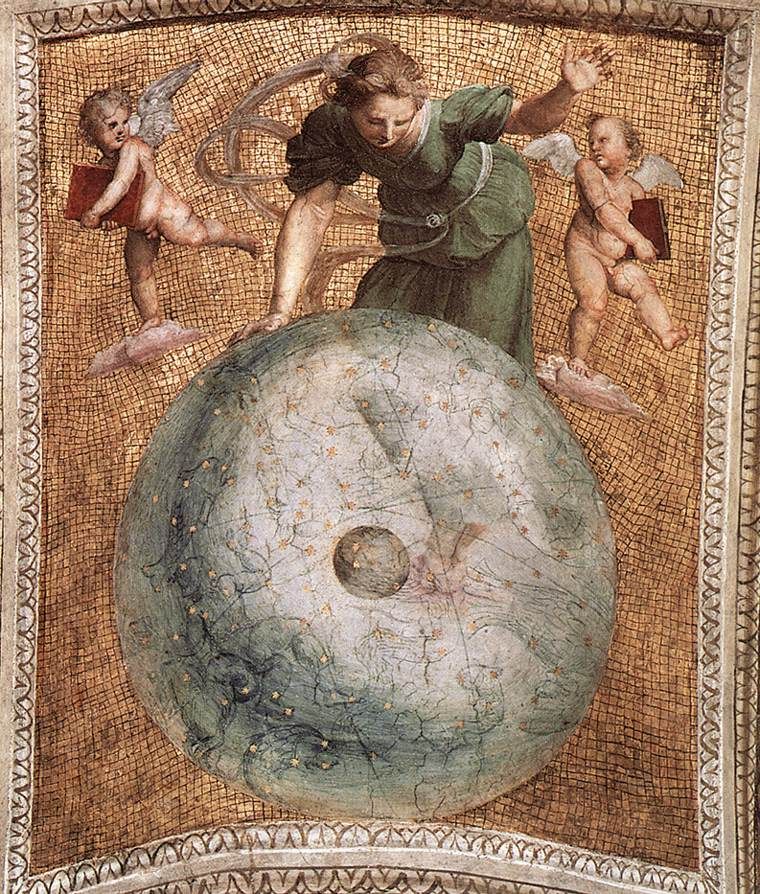
This particular part starts the "and this is what it is all about" part of the series. Now, we shift from our historical analysis to our philosophical, and ultimately, normative analysis of what it means to stand in the braided river.
1. The turn we are impelled to make
For eight installments this series has been a work of demolition, though I have tried to keep the dust off the furniture. We have stood at the headwaters and watched the channels merge. We have traced the lake of fire back to four separate streams that the King James translators poured into a single English word. We have followed the satan from a member of the heavenly court, a kind of celestial prosecutor doing a Job, into the cosmic adversary he became only after two centuries under Persian skies. We have watched the immortal soul arrive from Athens, the Logos arrive from the Stoa and pass through Philo's study in Alexandria, the sky-father ride in on the Yamnaya wagons, and the covenant god of a particular Semitic people get welded, at one decisive seam, to the changeless absolute of Greek metaphysics. The argument throughout has been the same argument: that the categories which feel to the inheritor like bedrock are in fact sediment, carried from upstream sources the water itself has no memory of.
And here is where my dear and constant readers, having followed all of this in good faith, are entitled to put down the cup and ask the question the whole genealogy has been provoking. So what? Suppose every word of it is true. Suppose hell is a confusion, the soul a Greek import, the changeless god a translator's flinch. The contingency of a belief is not an argument against it; that is a textbook fallacy, the genetic one, and I have been committing it in slow motion across eight posts. If the only thing this series has to offer is the news that everything was assembled rather than revealed, then it has offered the most exhausting possible route to a sophomore's relativism: it's all made up, believe what you like, nothing is true and everything is permitted. I would not have spent a year of Sundays to arrive there, and you would be right to resent me for the trip.
This is the post where the series turns. Everything before now has been diagnosis, an elucidation of a method of tracing the inflows and outflows of various ideas that we have inherited. Everything after will be construction, or taking what we can deduce by this method and determining, normatively, what we should do about it. And the first thing I want to build is the thing the last post deliberately left lying on the table, because it is the load-bearing beam for the whole back half.
Attend. The turn does not abandon the genealogy. It uses it. The point was never that the inheritance is false because it is composite. The point is that once you can see the channels, you can ask which water you actually want to drink, and you can notice that one of the channels was dammed.
2. The road not taken, named again
In the last post we stood at Exodus 3:14, at the burning bush, where Moses asks the name and gets an answer that has been mistranslated, with the best of intentions, for two thousand years. The Hebrew is ehyeh asher ehyeh. It is built from the verb hayah, to be, but in a form, the imperfective, that Hebrew uses for action that is unfinished, ongoing, still underway. I will be what I will be. I am becoming what I am becoming. I will be there, as there I will be.1 The grammar is the grammar of a verb, of an event, of a presence that happens and keeps happening. It is a god who is most himself in the future tense.
The Septuagint translators, working in Alexandria in Greek, in a thought-world where the highest compliment you could pay to anything was to call it changeless, rendered this restless verb as ho ōn. The one who is. The Being. A participle, frozen, timeless, a noun in all but grammar. And with that single choice, made by competent and pious men who were trying to be faithful, the becoming-god of the bush was handed over to the keeping of a metaphysics that had no idea what to do with becoming except to regard it as a defect.
That metaphysics had a clear picture of what a god, properly understood, must be. It must be actus purus, pure actuality, with no unrealized potential, because potential is a lack and a perfect being lacks nothing. It must be immutable, because change is either improvement (and a perfect being cannot improve) or decline (and a perfect being cannot decline), so a perfect being cannot change at all. It must be impassible, incapable of being affected, because to be affected by another is to be acted upon, to be passive, and passivity is a kind of weakness, and a perfect being has no weakness. It must be simple, without parts, without composition, because composition implies a composer and a perfect being is uncaused. It must be timeless, outside the flow, viewing all moments at once from a standing now, because to be in time is to be subject to time, and the perfect is subject to nothing.
This is a magnificent edifice. I do not say it sneeringly; it is one of the genuine intellectual achievements of our species, and the people who built it were not fools. But notice what it cannot accommodate. It cannot accommodate a god who walks in a garden in the cool of the day, who smells the smoke of sacrifice and is pleased, who grieves that he made humankind, who changes his mind when Abraham argues with him, who is moved. All of that, the entire dramatic life of the god of the Hebrew Bible, becomes, on this picture, anthropomorphism: a child's way of talking, a concession to weak minds, a set of figures that the sophisticated reader is supposed to translate upward into the language of changeless perfection. The verb has to be explained away in favor of the noun.
The constructive question of this entire half of the series is whether the translators were right to flinch. What if the verb was the truer word? What if the becoming-god was not a primitive sketch of the changeless absolute, but a different and better answer that the changeless absolute buried? To ask that question seriously, we need to meet the people who learned to ask it, and we need to start by getting clear on exactly what disease they were treating.
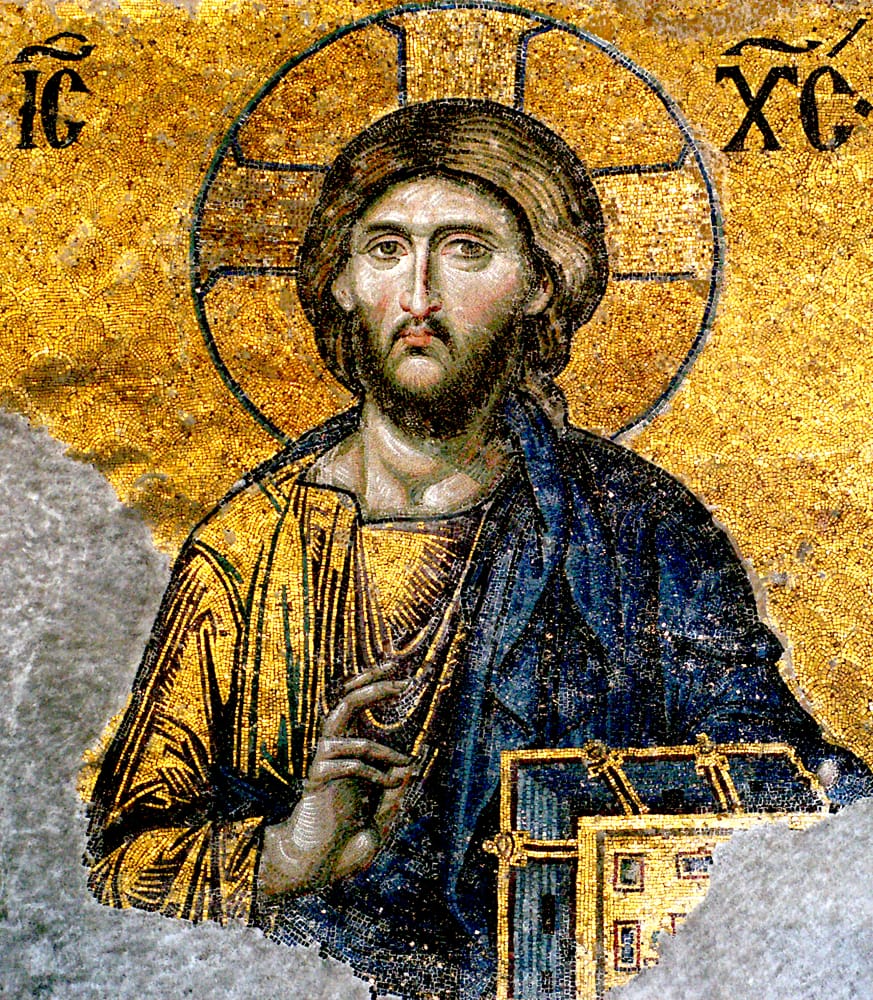
3. The god of the philosophers, diagnosed
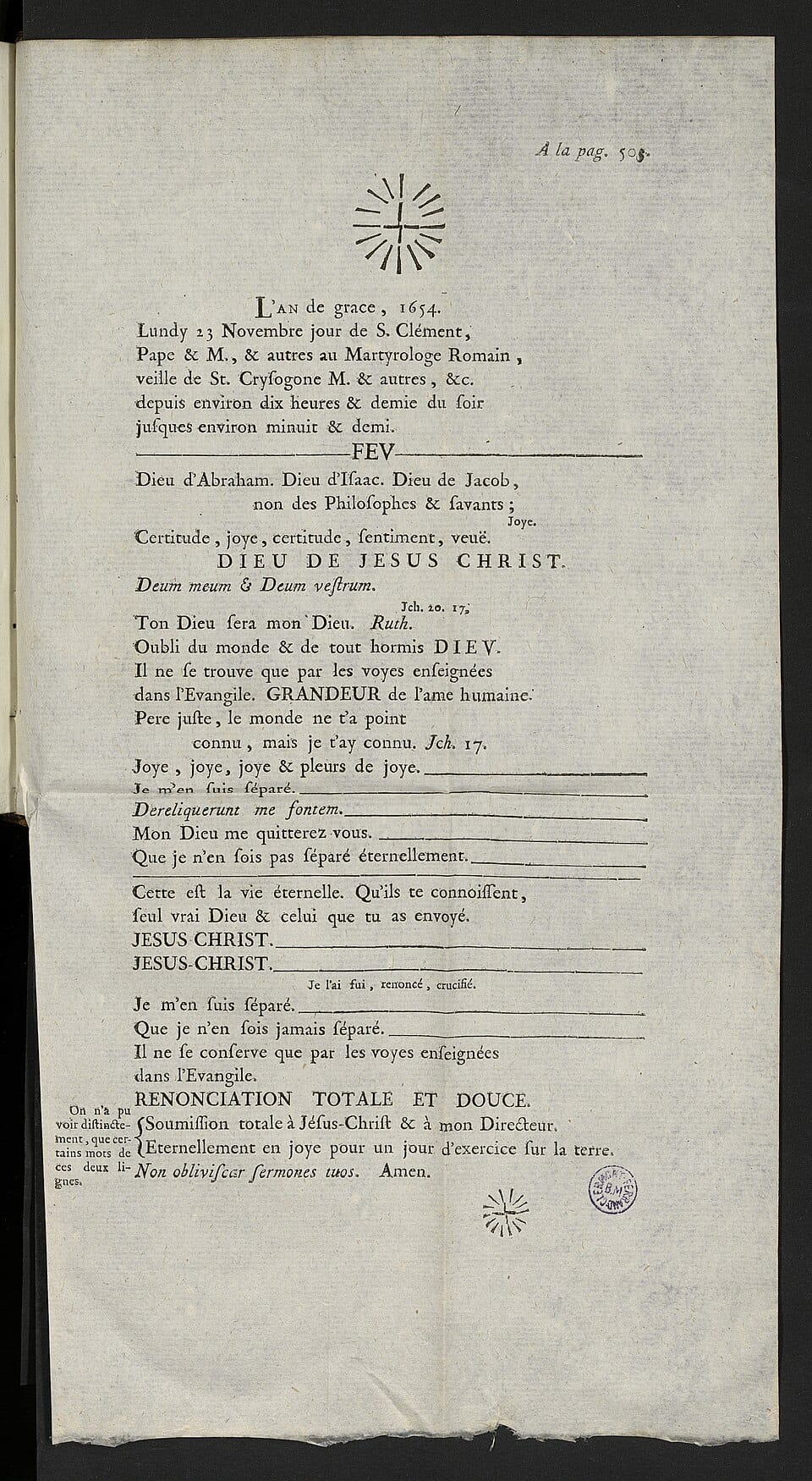
In 1654, on the night of the twenty-third of November, Blaise Pascal had an experience he could not name and did not try to explain. He wrote it down on a scrap of paper, sewed the paper into the lining of his coat, and carried it there, transferring it from coat to coat, until a servant found it after his death. The note is mostly fire. Feu. And then the line that matters for us: Dieu d'Abraham, Dieu d'Isaac, Dieu de Jacob, non des philosophes et des savants.2 The God of Abraham, of Isaac, of Jacob. Not of the philosophers and the scholars.
Pascal was a mathematician of the first rank and no enemy of reason, and he was not making an anti-intellectual gesture. He was naming, from the inside, a distinction that he had felt with his whole body: that the god you reach at the end of a proof is not the god who meets you in the fire. The god of the philosophers is a conclusion. The god of Abraham is an encounter. And Pascal had just discovered, on the wrong side of midnight, that these were not the same god, whatever the textbooks said.
Three centuries later a German philosopher gave the distinction a name and a diagnosis. Martin Heidegger argued that the entire tradition of Western metaphysics has a hidden structure, which he called onto-theology. Metaphysics asks about being, about what it is for anything to be at all (that is the onto part), but it cannot answer the question without reaching for a highest being, a supreme entity that grounds and explains all the others, the keystone that holds the arch (that is the theo part). The two questions get welded. God enters Western philosophy not as the object of worship but as the answer to a structural problem: something has to be the ground, the first cause, the causa sui, the being that causes itself and so stops the regress. God becomes the load-bearing concept in an ontology.3
And Heidegger saw, as Pascal saw, what this costs. In a famous passage he writes that to this god, the causa sui of the philosophers, a person can neither pray nor sacrifice. Before the causa sui one can neither fall to one's knees in awe nor make music and dance.4 The god of onto-theology is the god you can diagram. He is not the god you can address. He arrives in the system precisely drained of everything that would make him worth addressing, because his job in the system is to be a terminus, a place the explanations can stop, and a terminus does not love you back.
This is the philosophical name for the thing the last post traced genealogically. The weld at Exodus 3:14 was the moment a god of encounter got conscripted into service as a god of explanation, and the explanation needed him changeless, so changeless he became.
The cathedral of this changeless god is the Summa Theologiae, and its architect is Thomas Aquinas. I want to be careful here, because Aquinas is too easy to make into a villain and he was not one. He was a synthesizer of staggering power and patience, and the synthesis he performed (Aristotle, freshly arrived in the Latin West through Arabic intermediaries, married to the Neoplatonic Christianity he had from Augustine and Pseudo-Dionysius) is one of the high-water marks of human thought. Divine simplicity, immutability, impassibility, timelessness, pure act: Aquinas did not invent these. He inherited them, organized them, gave them their most rigorous and beautiful statement, and handed them downstream as the settled doctrine of God for the entire Latin church and, through it, for the secular philosophy that would later define itself against the church while keeping its god-shaped hole exactly the shape the church had cut.
But here is the thing the braided river lets us see that the standard story hides. Aquinas was drinking from one channel. The river that reached him had already been straightened. Somewhere upstream, at Alexandria and in the centuries of Greek-speaking theology that followed, the Hebraic channel, the channel of the becoming-god, the verb, the god who is moved, had been dammed and diverted, declared anthropomorphism, drained off as the residue of a primitive imagination. What reached Aquinas as "the doctrine of God" was almost pure Greek water. He built his cathedral on it in perfect good faith, never suspecting that the foundation was not bedrock but one diverted current of a river that used to run two ways. The genius of the Summa is real. So is the silt.
4. The continental philosophy headwaters
The recovery, when it came, came as a recovery of time.
The Greek picture had made eternity the standard and time the falling-off. Time, for Plato, is the moving image of eternity, a consolation prize for a cosmos that could not manage to be changeless. Real reality is the timeless realm of forms; the temporal world of becoming is the shadow it casts. And classical theism took this on wholesale: God is timeless, and our temporality is precisely what separates us from him. To be in time is to be at a distance from the real.
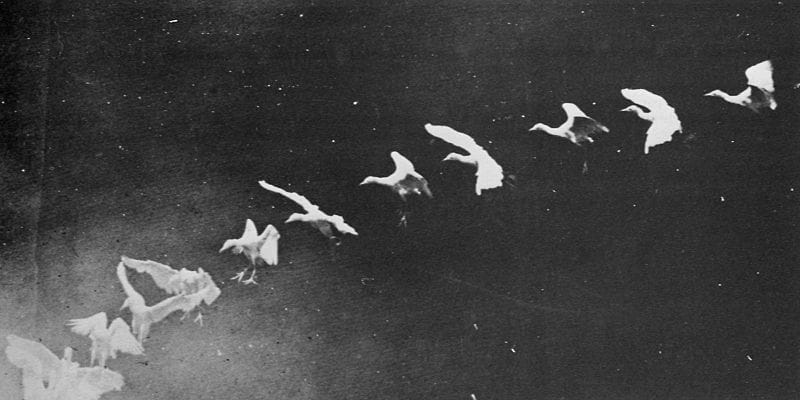
Henri Bergson spent his career arguing that this had reality exactly upside down. The thing he called durée, duration, was his name for time as it is actually lived, from the inside: not the time of the clock, which is space in disguise, a line of identical instants you can count and reverse, but time as a qualitative, indivisible, irreversible flow in which the past presses into the present and genuine novelty wells up. The intellect, Bergson said, is a tool evolved for handling matter, and it works by freezing the flow into snapshots, by spatializing time so it can be measured and manipulated. This is enormously useful and almost completely false to the thing itself. Reality is not a series of states. It is a movement. To grasp it you have to think in duration rather than translating duration into the static terms the intellect prefers.5
In Creative Evolution he pushed this into biology and cosmology. Evolution, for Bergson, is not the unrolling of a program already written, nor the random shuffling of a mechanism, but a genuinely creative surge, the élan vital, in which the new is really new, unpredictable in principle because it does not yet exist to be predicted.6 The universe is not a finished thing running down. It is an unfinished thing welling up. Becoming is not the shadow of being. Becoming is what there is, and being, the stable thing, the snapshot, is what the intellect makes when it stops the film to look at a single frame.
I have spent a fair amount of this blog's life in the country downstream of Bergson, and longtime readers will recognize where this is going. When Gilles Deleuze went looking for an ancestor against the whole image of thought that privileges identity, sameness, and the static, he went to Bergson, and the book he wrote about him is one of the keys to everything that follows in Deleuze and then in Deleuze and Guattari. The durée becomes the basis for a metaphysics of difference and repetition, where what is real is not the identical thing that persists but the difference that produces. Bergson's two kinds of multiplicity, the countable and the continuous, become the seed of the virtual, that dimension of the real which is fully real without being actual, a reservoir of becoming. The river, the flow, the current that is more real than the banks: this is the Bergsonian inheritance, and it runs straight through the rhizome and the body without organs and all the rest of the apparatus we have spent other Sundays unpacking. For our purposes here the point is narrower and older. Before any of that, Bergson had reopened the dammed channel. He had said, in the language of European philosophy at the turn of the twentieth century, the thing the Hebrew verb had said at the burning bush: that the real is what becomes.
He did not say it about God. A near-contemporary of his, working in English and thinking about physics, did.
5. Whitehead's wager
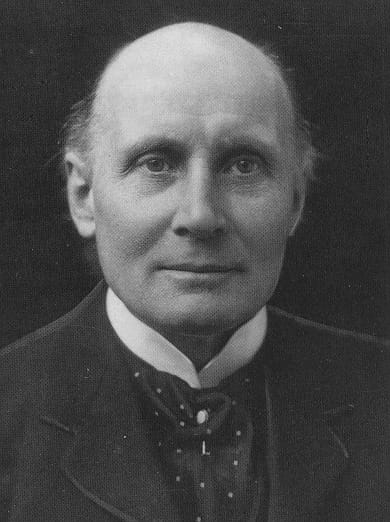
Alfred North Whitehead came to metaphysics late and sideways. He was a mathematician, co-author with Bertrand Russell of the Principia Mathematica, one of the most austere works of formal logic ever produced. Then relativity and quantum theory broke the Newtonian world he had grown up in, the world of hard little bits of matter sitting in absolute space and enduring through absolute time, and Whitehead concluded that the philosophy underneath that physics had been wrong at the root. The root error had a name he borrowed and made famous: the fallacy of misplaced concreteness, the mistake of taking our useful abstractions, the enduring substance, the bit of matter, the thing with properties, for the concrete reality. We do it constantly. We treat the snapshot as more real than the film. It is Bergson's complaint, arriving from the direction of mathematical physics.
In Process and Reality, the vast and famously difficult book he published in 1929, Whitehead tried to build the metaphysics that the new physics and the old error together demanded. The basic furniture of reality, on his account, is not substances but events. He called them actual occasions, or actual entities: momentary, perishing drops of experience, each one a happening rather than a thing. Reality is not made of stuff that has experiences and undergoes changes. It is made of experiences, of becomings, each of which arises, takes account of the entire universe that precedes it (Whitehead's word for this taking-account is prehension), achieves its own momentary unity, and perishes, handing itself on as data for the occasions that follow. What looks like an enduring object, a stone, a person, is a society of these occasions, a route of inheritance, a river of events stable enough to mistake for a thing.7
The reversal is total and it is the whole point. The tradition asked how change is possible for things that fundamentally are, and treated becoming as a problem to be explained against the background of being. Whitehead asks how stability is possible for a reality that fundamentally becomes, and treats being, the enduring thing, as the achievement to be explained against the background of process. The flux of things, he writes, is the ultimate fact; permanence is the rare and costly accomplishment, not the default.8 Becoming is not the shadow. Becoming is the substance, if we can still use that word for something that refuses to sit still.
And then Whitehead does the thing that makes him matter for this series. He asks what God must be, if this is what reality is, and he refuses to let God be the exception. This is his deepest and most deliberate break with the whole onto-theological tradition. For Aquinas, God is precisely the exception: the one being who does not become, who is pure act while everything else is shot through with potential, who stands outside the process as its unmoved cause. For Whitehead, God who is the exception to the metaphysical principles is no God at all, only a rescue device smuggled in to stop the system from collapsing.9 God must be the chief exemplification of the principles, not their suspension. So God, too, becomes.
Whitehead's God is dipolar, which is to say two-natured. There is what he calls the primordial nature: God's eternal envisagement of all the pure possibilities, the realm of what might be, held not as a blueprint to be imposed but as a lure, a gentle pressure toward richer, more intense, more beautiful forms of becoming. God in this aspect does not coerce the world; God attracts it, offering to each occasion the best that is available to it and persuading rather than forcing. And then there is the consequent nature: God as affected by the world, receiving back into the divine life everything that actually happens, growing with the creation, enriched by its joys and wounded by its losses. This God is not impassible. This God is the most passible thing there is, the one who feels everything, the cosmic memory in which nothing achieved is ever finally lost. In one of the most quoted phrases in modern theology, the closing pages of Process and Reality call God the fellow-sufferer who understands.10
Set that phrase next to the actus purus. The classical God cannot suffer, by definition, because suffering is being affected and being affected is a weakness. Whitehead's God suffers with the whole creation, and this is not a weakness but the highest thing about him. We have, suddenly, a god who could plausibly walk in a garden in the cool of the day. The verb is back.
6. Hartshorne's reversal
Whitehead built the metaphysics. It fell to Charles Hartshorne, who knew Whitehead and spent six decades thinking in his wake, to turn it into a doctrine of God sharp enough to set directly against the classical one, term for term. If Whitehead is the cosmologist of process, Hartshorne is its theologian, and he is the one who gives our argument its title. Plus, Hartshorne taught at my alma mater, and my own professor in process philosophy, Chuck Krecz, studied directly under Hartshorne. My own miniature braided river.
Hartshorne's central move is to attack the classical definition of perfection at its hinge. The whole edifice of actus purus, immutability, impassibility, rests on an equation so deep that the tradition rarely bothered to defend it: the equation of perfection with completeness, and completeness with changelessness. To be perfect is to lack nothing; to lack nothing is to have no unrealized potential; to have no unrealized potential is to be incapable of change, because any change would be either a gain (impossible, you lacked nothing) or a loss (impossible, you were perfect). Therefore the perfect is the immutable. Therefore God cannot change. The argument is valid. Hartshorne's question is whether the first premise is true: whether perfection really is completeness, or whether we have confused two very different things.
Consider, he says, what it would mean for a being to be perfect in relationship. A perfect knower would know everything knowable. But the set of things to be known is not fixed; new things keep happening, new occasions keep becoming actual, and as they do, there is more to know. A being who knew everything knowable a moment ago and the same set now would not be a perfect knower now; he would be out of date. Perfect knowledge of a changing world must itself change, must grow, must take in the new as it arrives. A perfect lover would be perfectly responsive to the beloved, and to be responsive is to be affected, to be moved by what the other does and suffers. A lover who could not be touched by the beloved's grief would not be a better lover for his invulnerability; he would be no lover at all. The classical God's impassibility, sold as a perfection, turns out on inspection to be a catastrophic defect dressed in the robes of a virtue. A God who cannot be moved cannot love, and the entire scriptural witness is that this God loves.11
So Hartshorne proposes that we have been measuring perfection with the wrong instrument. The highest conceivable being is not the one immune to change but the one whose responsiveness is unsurpassable: who is affected by everything, who misses nothing, who receives the whole world into himself perfectly and is perfectly transformed by it. Hartshorne's God is dipolar in the precise sense that he is both unchanging and changing, but in different respects. In abstract character, God is unchanging: God is always perfectly loving, always perfectly responsive, always God. But in concrete actuality, God changes constantly, because a perfectly responsive being in a changing world must change to keep responding. God is the one being who surpasses all others and even surpasses himself, the self-surpassing surpasser of all, growing forever because the world keeps giving him more to take in.
And so to the phrase. Aristotle's God, the god the whole tradition inherited as its model of divine perfection, is the unmoved mover: the still point that moves all things by being desired, while himself remaining utterly untouched, thinking only his own thought, because to attend to anything lesser would be to be moved by it and movement is imperfection. Hartshorne stands this on its head and gives us, deliberately, with full knowledge of what he is overturning, the most moved mover.12
The phrase is not even originally Hartshorne's. It belongs to Abraham Joshua Heschel, who reversed Aristotle out of the Hebrew prophets and their God of pathos, the God moved by what his creatures do and suffer, before Hartshorne ever reasoned his way to the same place from modal logic. Which is its own small vindication of everything the next section is about to argue: the name for the becoming-god came back up the Hebraic channel.
Not the one who moves the world while remaining unmoved, but the one who moves the world precisely by being the most moved thing in it, the supremely responsive heart of reality into which everything flows and out of which everything is lured toward its next becoming. The unmoved mover was the perfection of the changeless God. The most moved mover is the perfection of the becoming-god. The phrase is a hinge, and the whole series swings on it.
7. The verb vindicated
Now we can close the loop, and the braided river closes it for us, because the metaphor turns out to describe the very history it was invented to interpret.
Here is the shape of the thing entire. At the source, two channels: the Hebraic god of the verb, the ehyeh, the one who becomes and is moved and changes his mind, and the Greek god of the noun, the to on, Being itself, changeless and complete. At Alexandria they braided, in the Septuagint, in Philo, in the long Greek-speaking centuries of Christian theology, and for a while the river ran with both currents mingled. And then the Greek current won. The Hebraic channel was declared anthropomorphism and dammed. The water that flowed downstream to Augustine and from Augustine to Aquinas was Greek water, clarified, magnificent, and one-sided, and the cathedral of classical theism was built on the bank of a river that had been quietly straightened upstream so that no one standing beside it could tell it had ever run two ways. The doctrine of God, the thing the whole tradition took for the deepest bedrock, was itself a braided river with one channel dammed. That is the claim this series has been building toward since Part 1, and it is the reason the genealogy was never mere demolition. The genealogy is what lets you find the dam.
Process theology is the unbuilding of the dam. When Whitehead refuses to make God the exception, when Hartshorne redefines perfection as responsiveness, what they are doing, whether or not they put it this way, is reopening the Hebraic channel. The god of becoming they arrive at by way of mathematical physics and modal logic is, astonishingly, the god the burning bush described in the future tense and the Septuagint translated away. The West spent two and a half thousand years walking around the dam and has only lately, and by the most circuitous imaginable route, through Bergson's durée and Whitehead's actual occasions and Hartshorne's surrelativism, arrived back at the verb it flinched from at the start. This is not a coincidence dressed up as a destiny. It is what happens when a dammed channel finds, downstream, the lower ground it was always going to seek. Water has a memory after all; it is we who forgot.
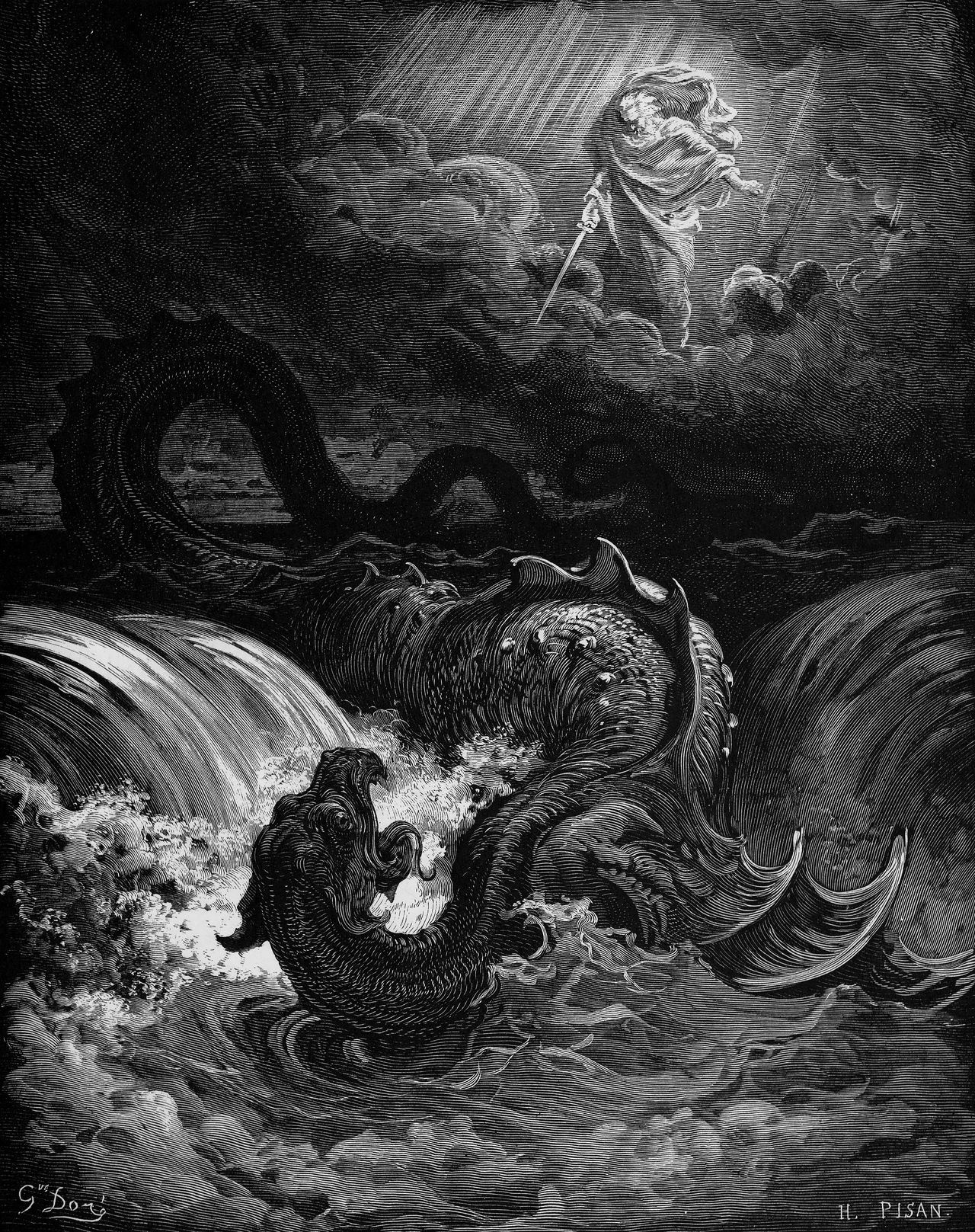
No one has felt the specifically biblical force of this more sharply than Catherine Keller, whose Face of the Deep is the book where process theology turns back to the opening words of Genesis and finds the dammed channel running right there in the text, in plain sight, where it had been all along. The orthodox doctrine of creation is creatio ex nihilo, creation out of nothing: God, complete and alone, speaks, and the world springs from sheer nonbeing at his unilateral command. It is the perfect creation-story for the changeless God, all power on one side and pure passivity on the other. But it is not, Keller insists, what Genesis says. Genesis opens with the tehom, the deep, the dark face of the waters over which the divine wind broods, the tohu wa-bohu, the welter and waste that is already there before the first word is spoken.13 Creation in the Hebrew text is not the annihilation of chaos by fiat but a working-with, an ordering of the deep, a creatio ex profundis, creation out of the depths. And the tehom, as we saw all the way back in the post on the sky-fathers and the chaoskampf, is the demythologized memory of Tiamat and Leviathan and the whole ancient near eastern sea of chaos that the storm-god battles. Keller takes the monster the tradition slew and finds in her not the enemy of creation but its matrix, the generative deep with which and from which the becoming-god makes a becoming-world. The god of creatio ex profundis is not the unmoved mover commanding from outside. He is the most moved mover, brooding on the face of the waters, luring order out of the deep rather than imposing it, persuading rather than coercing, exactly the god Whitehead reasoned his way to from the other direction. The theologian recovers from the text what the metaphysician recovered from the cosmos, and they meet at the same reopened channel.14
The verb is vindicated, then, not by a pious refusal of philosophy but by better philosophy: by a metaphysics finally adequate to a god who could be encountered in a fire, who could grieve and relent and be moved, who could be the fellow-sufferer who understands. The god of Abraham and the god of the philosophers can be the same god after all. But only once the philosophers have stopped insisting that to be divine is to be incapable of becoming. Pascal did not have to choose. He only thought he did, because the philosophy he had was the dammed one.
8. Why this is not relativism
We can return now to the reader who put down the cup in section one and asked, fairly, whether all of this collapses into it's-all-made-up. The answer the constructive half can finally give is no, and the reason is the metaphysics we have just spent four sections building.
The relativist's mistake and the classical theist's mistake are, surprisingly, the same mistake, made in opposite directions. Both assume that the only alternative to changeless bedrock is groundless drift. The classical theist, terrified of the drift, plants the foundation in a timeless absolute and calls everything that moves a falling-away. The relativist, having watched the timeless absolute dissolve under historical scrutiny (which is more or less what eight posts of this series have been doing), concludes that if there is no changeless bedrock then there is no ground at all, and we are left floating, free to believe anything because nothing constrains us. They share the premise. Only bedrock counts as ground. Take away the bedrock and you have nothing.
The braided river denies the premise, and process metaphysics tells you why you are entitled to deny it. A river is not bedrock. A river is the very image of contingency: it could have cut its channel a thousand other ways, and a flood next spring may move it again. And yet a river is in no sense arbitrary. You cannot make it flow uphill. You cannot wish a new tributary into the watershed. The river goes where gravity and sediment and the shape of the land send it, and these are real constraints, as real as anything in the world, even though none of them is eternal and all of them could have been otherwise. Contingent is not the same word as arbitrary, and the long confusion of the two is precisely the spell that the changeless-being metaphysics cast. Once you believe that only the eternal is real, then everything temporal looks equally weightless, and the difference between a deep channel cut over millennia and a puddle that will dry by noon stops mattering. But that difference is the whole of life. A living tradition is a deep channel. It is contingent to the bone, carrying sediment from sources it has forgotten, liable to shift. And it is not therefore something you may rearrange at whim, because you are standing in it, the water is moving, and the work is to carry it well, not to pretend you invented it and not to pretend it could not have been otherwise.
This is why the metaphysics had to come first and the pluralism second. If reality itself is fundamentally being, fundamentally static and complete, then a tradition that becomes, that has a history, that was assembled, stands convicted of being unreal, a mere human construction over against the eternal truth it fails to match. But if reality itself is fundamentally becoming, if even God becomes, then a tradition that becomes is not a falling-away from the real. It is a participation in the way the real actually is. Its contingency stops being its disgrace and starts being its life. The demand for a tradition that did not become, that came down whole and changeless from outside of time, turns out to have been the demand for a dead thing, and we should be relieved, not scandalized, to learn that we never had one.
Which means the choice was never between the one true unchanging revelation and the flat relativist plain where all claims are equal because all are equally arbitrary. There is a third thing, and it is the thing this series has been describing all along without quite being able to name it until now. Many channels. One river. The channels are not all equal: some run deep and some run shallow, some carry clean water and some carry poison, and the work of discernment, of saying this current is life-giving and that one is toxic, is real work that the pluralist must do and does not get to skip. But they are channels of one braided flow, currents of a single moving water, and the water is going somewhere. That is not relativism. Relativism says the channels do not even belong to the same river. The new pluralism says they do.
9. Coda: the most moved
I want to close by being honest about the stakes, because this series has tried from the beginning to admit that the argument is not only an argument.
The genealogy, taken by itself, is a hard gift. To learn that the things you inherited as bedrock are sediment is to lose something, and I will not pretend the loss is painless or that everyone who reaches it will thank me. There is a real comfort in the changeless absolute, in the conviction that underneath the moving world there is a still point that does not move, an eternal floor you can finally stand on and stop. Process metaphysics takes the floor away. It says there is no still point, that it is becoming all the way down, that even God is on the move, the most moved thing there is, brooding on the face of waters that have no bottom. For a certain temperament, mine included on certain nights, this is not obviously good news. It can feel like vertigo. It can feel like being told there is no ground when what you wanted, what you have always wanted, was ground.
But the vertigo is the old metaphysics still talking, still insisting that only the changeless counts as solid, that if the floor moves it is not a floor. It is not a floor. It is a river, and you were never going to stand still on it, and the relief, when it comes, is the relief of stopping trying. You do not need the water to freeze in order to be carried by it. You need only to learn the current, to feel where it runs deep, to give yourself to the channels that carry life and steer clear of the ones that carry poison, and to carry your stretch of it well for the little while you are a part of the flow. The most moved mover is not a colder god than the unmoved one. He is an immeasurably warmer one: the one who is in the river with you, who feels every loss the water takes and keeps it, in whom nothing achieved is ever finally lost. That is a god you can pray to. Heidegger said you could not pray to the causa sui, and he was right. But the causa sui was never the only god on offer. He was only the one the dam left standing.
From here the river widens. We have spent nine posts mostly within a single watershed, the Western one, the braid of Greek and Hebrew and Persian and Indo-European waters that runs down into the thing we call, too simply, the Western religious and philosophical inheritance. But the move we have just made, from changeless being to living becoming, from the one true revelation to the many channels of one river, is a move that does not stay put inside one watershed. It is a key that turns in other locks. In the posts to come we will follow the water out past the edges of the West, to ask what it would mean to hear the traditions we were taught to treat as rivals, or as errors, or as mission fields, as further voices in the one telling. That is the destination this whole series has been moving toward, and now I can finally say it plainly, the line I have been saving since the first post: it is one story, told in a billion voices, and the work of the rest of the river is to learn to hear them all at once.
Attend. The turn is made. From here we build.