
The Odyssey: A Review
In which our hero reviews Nolan's "The Odyssey"
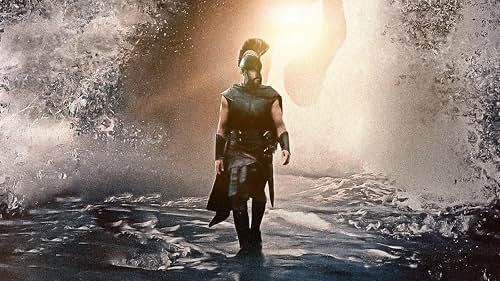
As has been previously noted on this blog, Christopher Nolan's The Odyssey has generated no small amount of controversy, thanks in part to the World's Richest Racist complaining about its casting choices on his private social media platform where everyone has to be his friend.
So naturally, I had to book tickets to see it on opening weekend to see if it was worth the digital ink spilled gnashing teeth and chastising unwashed assholes about it.
The answer, it may surprise you, is that it is a very good movie, certain to be listed among the best movies ever made in the future, and entirely anodyne in terms of the complains leveled against it. The movie advances no political agenda. It employs both new and classic filmmaking techniques. You can read in its DNA the sword-and-sandals epics of the Hollywood golden age while also marveling at what Nolan and his crew have done with modern technology and effects.
I cannot imagine someone having a bad time at the movie; even if you find it not to your taste, as entertainment it succeeds. It is nearly three hours in length, but never feels like it drags. It presents the story of Homer's epic rather plainly (though with some changes, as we shall note) but without false pomp or bombastic delivery. It is not difficult to parse the action in the way something like TENET was difficult to follow. It is Nolan's most "movie" movie, and probably his best work to date.
Attend, I guess. There will be spoilers below, though I will try to keep them to a minimum. But really, it's a 3000-year-old poem. You've had time.
Against a Dark Background
This whole nonsense started because people were upset about a multi-hued cast portraying Late Bronze Age people. Scholarly and scientific evidence has proven the lie that the Bronze Age was populated exclusively by white-skinned people, even in Eurasian areas like Mycenae, Anatolia, etc. Nolan's film addresses this without notable comment, with all characters on screen paying no more attention to a character's skin tone than it invites the audience to do. More is made about loyalty to leaders and the responsibility of nobility to the people living under them than modern notions of ethnicity and nationalism, which is actually period-appropriate.
As I hypothesized and other, better authors like Myke Cole summarized, Nolan's Myceneans and other Bronze Age peoples are not befitted in the kits of their actual material cultures, but rather in the faux-classical style common to earlier film and visual adaptations of Homer, mixed with a generous dollop of pure fantasy filmmaking. I now believe this choice to be deliberate; where before I might have taken a filmmaker of Nolan's obvious intelligence and craft to be lazy in merely adopting the same tropes, I now believe this choice was done purely to advance a continuity of visual language with prior sword-and-sandals epic films. Nolan uses these tropes to tell parts of the story that are inherited from these earlier films without having to explicitly re-tell them on the screen. You see a man in a helmet with a centurion's crest and you know he is a leader because you have been primed to think that, even if we are thousands of years before Roman centurions will stride across the same beaches.
The Perils of Adaptation
Nolan, as a filmmaker, is rarely content with telling a story straight, and The Odyssey is not an exception. Borrowing some from his experience with Oppenheimer, the story itself is presented as out-of-chronology vignettes as everyone tries to piece together the mystery of the absent Odysseus from Ithaca. Part of it is narrated as memories from Penelope or Eumaeus, part from Odysseus as he and Calypso try to figure out the fragments of memory, part recorded stories told by bards, and part as a recollection of tales from Odysseus's boon companions of the Trojan War, such as Menelaus.
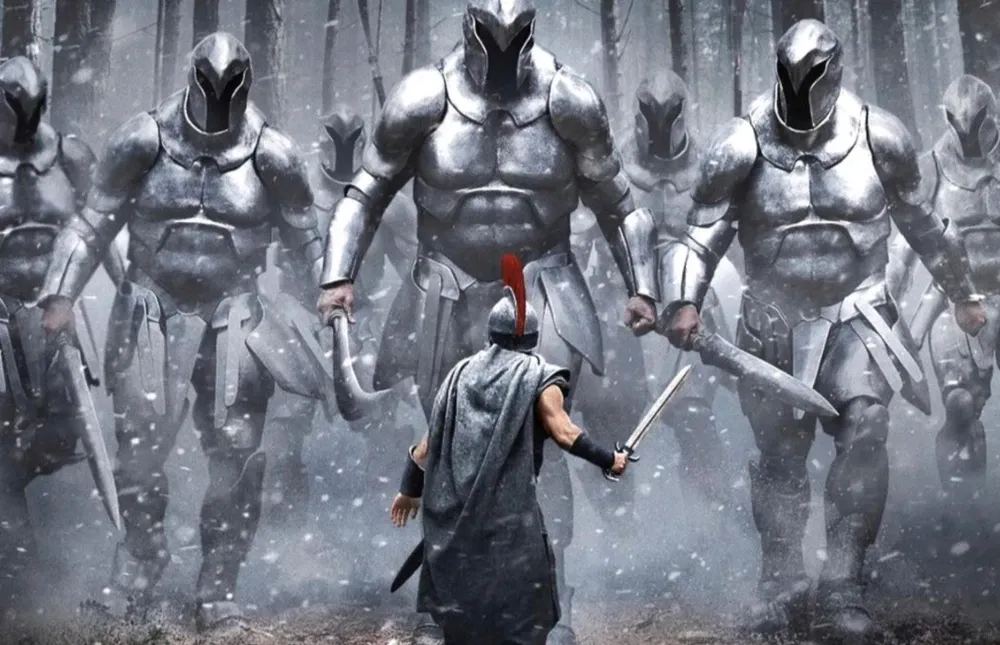
In this way, the narrative is out of its usual order of presentation, but it never feels like it is disjointed. The only scene I felt was out-of-place of superfluous was the encounter with the Laeastrygonians. Thematically, in the movie, the encounter with these plate-armor clad giants hits in more or less the same register as the encounter with Polyphemus the Cyclopes, and serves no greater purpose than to show Poseidon's displeasure with Odysseus and his crew. Apart from destroying even more of his dwindling crew, this scene could have been entirely omitted without affecting the narrative at all, a rare misstep in a film otherwise at the top of its craft.
Similarly, the encounter with Polyphemus is modified to remove perhaps the most striking and memorable part of the encounter, which is Odysseus displaying his cunning by calling himself "nobody" and tricking Polyphemus. In the film, the resolution has elements of the poem (such as the blinding) but it reduces Polyphemus to a more generic movie monster. Also, after playing up Odysseus as a thoughtful and honorable combatant throughout the film, Odysseus fires a parting shot at the enraged and blinded cyclops, which brings down Poseidon's wrath. The poem's structure of having Odysseus reverse his earlier claim to be no one and give the wronged Polyphemus his name, leading to Poseidon's curse, is just better plotting, and Nolan's decision to change it is strange.
Other changes are less-significant. Nolan collapses the Lotus-Eaters and Calypso together, making the lotus the means by which Calypso entrances Odysseus for years. The agency of the gods is largely absent (though explained by Pallas Athena on-screen), so Hermes does not give Odysseus the means to resist Circe's magic, rather locating it within himself.
Some episodes of the poem are left out, such as anything involving the Phaeacians or Odysseus staying with Circe for a year. In a movie this long already, these were perhaps smart cuts, though I personally would have left off the Laestrygonians and replaced that scene with the rescue of Nausicaä.
The only other complaint I have about the structure of the film is the lead-in to the Nekyia scene, with Circe giving Odysseus the setup of how to reach the shores of Hades and summon the dead. She warns that "blind Tiresias" will give Odysseus the guidance he seeks, but if one is not a fan of the classics, the name will register as nothing, and Tiresias's on-screen appearance confusing. It would have been better to give the lines of Tiresias to a character the film had already established, perhaps even Sinon (as Sinon is already prominent in the scene).
All the World is a Stage
Some have commented on how Nolan goes back to his usual stable of actors, and this is no different. But more than that, he has packed this film with parts played by top-billing actors with extraordinary craft, and not necessarily given them large parts to play.
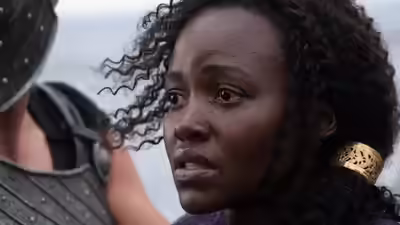
Lupita Nyong'o, for example, is an Academy Award-winning actress cast as Helen of Troy. This upset many chuds, and there was great rejoicing. But as any student of Homer will know, Helen is mostly in the background in The Odyssey. So true here, as Nyong'o gets less than ten minutes total screen time pulling double roles as the twins Helen and Clytemnestra. In both roles, she definitely moves the plot forward, but her total impact on the narrative is short compared to others.
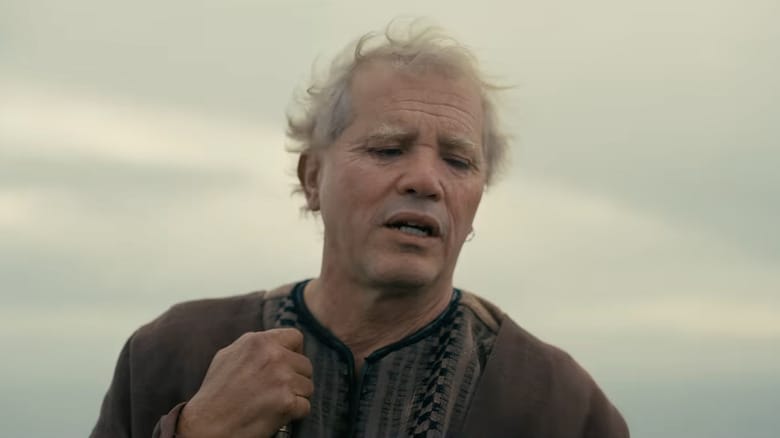
If John Leguizamo does not receive a Best Supporting Actor nomination, let alone a win, for his portrayal of Odysseus's loyal servant Eumaeus, the entire edifice of humanity should riot. Leguizamo has had a nicely varied career and I have always enjoyed his range as an actor, but here he gives the performance of a lifetime, embodying gravitas, humility, pain, rage, and depth in a way that stole very nearly every scene.
Principal stars Matt Damon, Anne Hathaway, and Robert Pattinson are predictably great in their roles. Each of them are decorated veterans of the screen and it should be no surprise they bring their A-game when directed by a top director and given great lines and material. Picking among them for a favorite would be difficult. If I had a complaint, it would be that poor Pattinson might face something of a backlash for his portrayal of the cowardly villain Antinous, because he so perfectly embodies that weaselly little shit. Hathaway gets some suitably great lines as a character the feminist reading of the poem seeks to redeem as she pushes back against the chauvinism of Ithacan society, and of course Damon does a very creditable job portraying the many facets of Odysseus, from his craft and guile to his arrogance.
Tom Holland is an actor I have never given enough credit. As Peter Parker/Spider-Man, I find him diverting, a fun take on the character, but I have never enjoyed a performance of him in other movies. That changed with this one. While obviously not at the same level of craft as Pattinson or Nyong'o, his portrayal of Telemachus gives the audience someone to root for in a narrative where people characters show two faces. Telemachus's flaws, such as they are, are the things you most want to see him overcome, not to be undone by.
I suppose I must say something about Elliot Page's portrayal of Sinon, the child soldier. It should not bear comment that a trans man was cast to play a youth who becomes a man on the Trojan campaign. Nothing about Page's trans status matters at all to the character. Page is a fantastic actor and portrays the wronged, shamed Sinon in an excellent fashion. In the Nekyia scene, Sinon chastises Odysseus for leaving him out of the plan of the Horse and leaving him to die presenting the gift to the soldiers of Ilium. Sinon then sets up Odysseus for a great arc-closing line against Antinous and has real gravitas in doing so. Were Page not trans, this casting and anything associated with it would not merit any kind of special mark. I fear that I may do more injustice to the cause of trans actors by being forced to point it out in response to the bigots' hatred direct at Page. Page has achieved parity to the point where being trans or cis has no effect on the character. Page is not a "good trans actor." Page is a good actor, period, end of story. His gender status should not factor into the equation, and the fact we must address it feels like a distraction from this young man's obvious skill and craft.
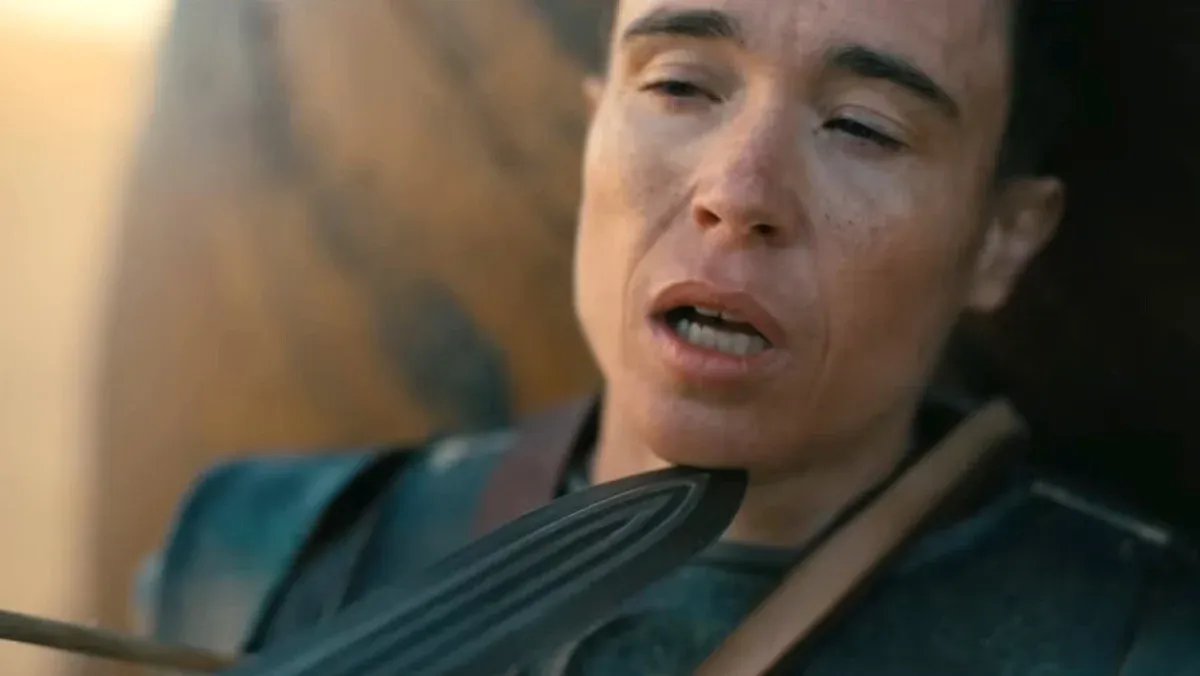
All told, no actor lets the director or writers down. No portrayal removes one from the movie, and predictably, Hathaway will receive a Best Actress nomination for her role, as it is eminently justified.
At the Movies
As I said, this is a very "movie" movie. Nolan is first and foremost a filmmaker who is attendant to the conventions and methods of his craft, and he displays that here. I used to really enjoy the theater-going experience in my misspent youth, but that was back when the Alamo Drafthouse was not a soulless corporate husk of its former self and Austin's film buff scene could gather in a converted warehouse for pizza, beer, and legendary movie nights. Nevertheless, The Odyssey definitely wants to be seen in a theater. Nolan, together with cinematographer Hoyte van Hoytema and composer Ludwig Göransson have put together something that embodies spectacle and chaos. The sound mix is loud, overwhelming at times, and almost certainly by Göransson's design. Scenes of storms at sea or battle (such as the eventual sack of Troy) are cacophonic, chaotic, and overwhelm the viewer with torchlight visuals, salt spray, and a crescendo-ing wall of sound that becomes nothing more than unbearable noise.
Göransson's composition is fittingly eclectic, blending modern electronic soundscapes with classical music and folk instrumentation as each scene demands. Some might find the shifts jarring, but I felt it reflected the timelessness of the story and never anachronistic. Harsh synth jabs as the crew races along the black-sand beaches beyond Oceanus to reach Hades sit alongside wistful pan flutes as we cover sweeping Ithacan pastoral scenes, and each fits in its own register.
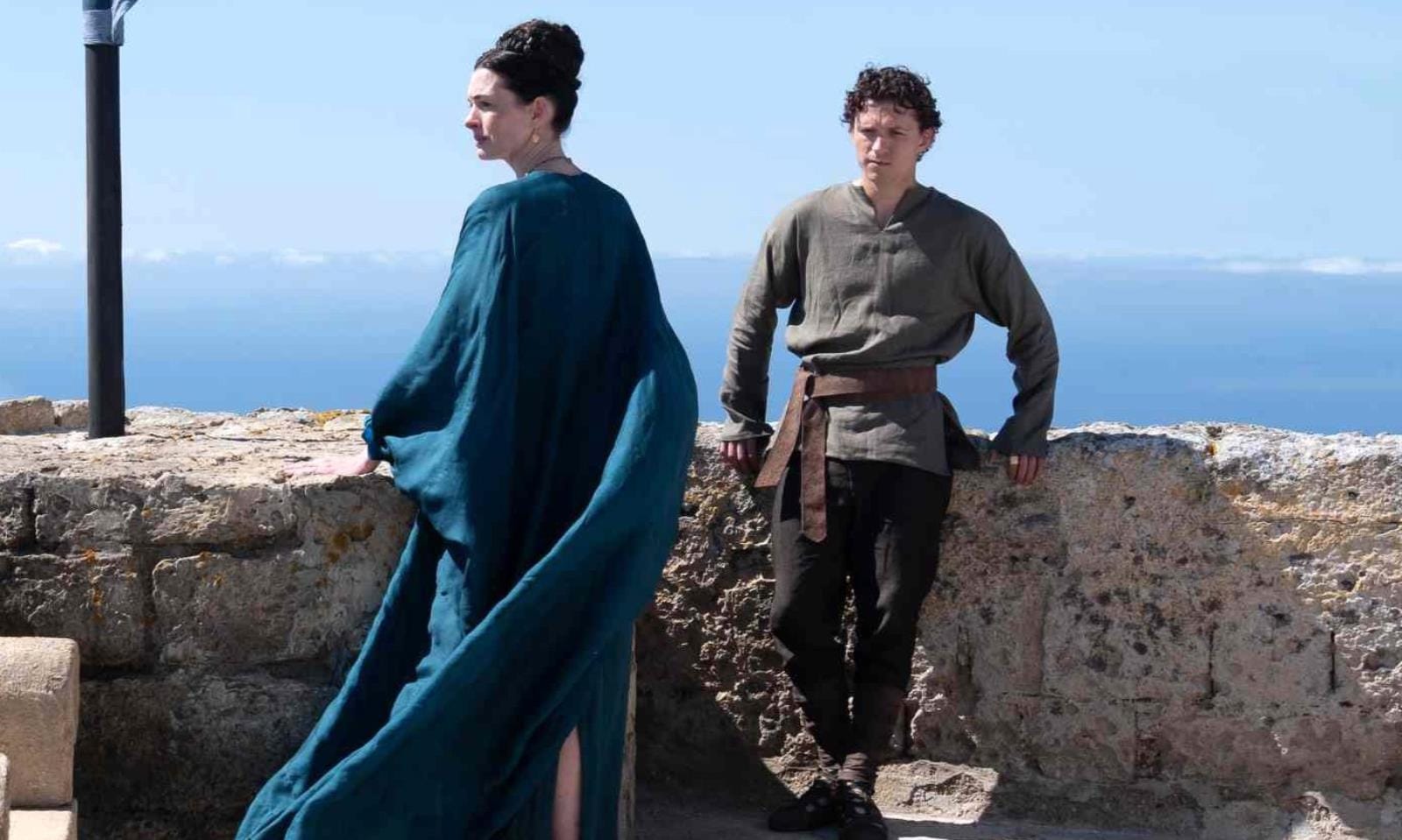
Nolan cannot help himself but engage in other filmmaking scenes that bring to life parts of The Odyssey in ways never seen before. Of particular note to me was his body horror pig transformation sequence, which was disturbing in all of the correct ways. Very rarely do I have a visceral, emotional reaction to something I see on screen (hazards of my own autistic psychology) but watching Circe work Odysseus's crew like human clay gave me a sick feeling in my stomach in a good way.
Tell Me, O Muse...
Overall, one of the major complaints we may lay against classic Greek drama such as The Odyssey is that the ending, with its literal deus ex machina, is too pat and too neat. Nolan avoids this by giving us a new ending bereft of Athena's correcting hand, setting up a climax that is sure to surprise even longtime readers and fans of the original epic. It nicely dovetails into actual history, bringing in Odysseus's awareness that Agamemnon's hubris will lead to the Late Bronze Age Collapse and the apocalypse of all the great civilizations, from Egypt to the Hittites to the Myceneans to the Indus Valley. Part of it is Odysseus's realization of his own role in that and how to make amends: sailing west, chasing the setting sun, there to seek the absolution of his wronged crew and abandoned family.
As I said, the agency of the gods is largely absent, save for Zendaya's Pallas Athena appearing in visions to Odysseus to remind him that the gods do not speak with words, but with thunder and fire. We hear Eurylochus tell Odysseus of Poseidon's displeasure, and Tiresias warns of the fate of Odysseus's crew if the touch Helios's cattle, but true to the Homeric form, each event has a dual explanation, one mundane and one supernatural in agency. The viewer is left wondering whether Athena really did appear and guide Odysseus (as obviously Odysseus and Penelope believe) or rather this all happened only "in a time of apparent magic," as the film opens.
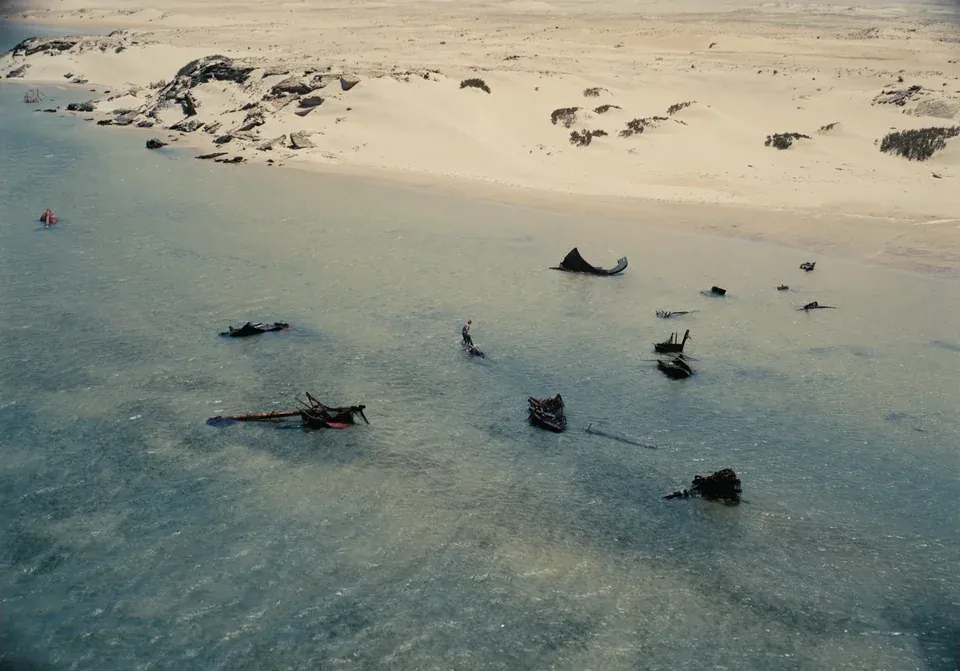
In doing so, Nolan invites us to investigate with him the nature of stories, of memories, of tales both tall and small, and our place within them as audience, as receivers, and as eventual transmitters. Am I now participating in the great oral tradition of retelling tall tales by giving you Lane's account of Christopher Nolan's Homer's The Odyssey? Probably. But that is the point of great stories; they impel us to retell them.
Had I been less affected by the movie, had it been just a good and entertaining film I watched, would I be compelled to spend my time putting thousands of words down for people to read about it? Hardly. But the fact that I was shows whatever else we may say about the movie, Nolan made his point and made it firmly.
What's in a Review?
Ultimately, the point of a movie review is to answer the question "should I see this movie?" I do not think anything I add here will materially affect that decision; if you are not incapable of feeling joy and passion, yes, you should see this movie. Even in my local theater, people cheered and clapped when it was over, something I have only ever encountered on a handful of rarities (after The Return of the King or Avengers: Endgame, notably). This places The Odyssey also among those fantasy greats... which is where it should be.
We must remember, at the end of the day, despite its status as classic literature and despite Nolan's attention to detail in giving us a recognizable, if not particularly historically accurate, Late Bronze Age hero tale, this is myth, and fantasy filmmaking is mythic in its register. In this regard, no viewer should walk away disappointed, and the people who have chosen to make this some sort of political moment about "wokeness" because Nolan accurately portrays that Black Africans were a part of Bronze Age society are missing something truly great for the stupidest of reasons. For all that racists and ethnonationalists like to carp about the superiority of the Western canon, here is a faithful and competent adaptation of one of the foundational texts of the Western canon for the big screen, done in a bombastic and exciting way, with top-flight actors and production values, in such a way that should drive people to their libraries and bookstores to pick up copies of Homer and devour it.
And they are going to miss it because for them, it was never about preserving "Western culture" or the classic texts that gave us the sediment of our modern day. It was only ever about skin color, and equally as deep.